Liverpool’s worst fears surrounding Hugo Ekitike appear to have been realized, as a devastating injury update has confirmed the young striker faces a long and uncertain road to recovery following a traumatic night at Anfield.
What began as a high-stakes UEFA Champions League clash quickly turned into a moment of shock and silence. Liverpool were hosting Paris Saint-Germain in a crucial fixture, but the focus shifted dramatically in the 27th minute when Ekitike suddenly went down with no immediate contact. The stadium, usually electric on European nights, fell into an uneasy hush as medical staff rushed onto the pitch.

From the outset, the signs were troubling. Ekitike clutched his lower leg in visible pain, and his body language suggested he immediately understood the seriousness of the situation. After several minutes of treatment, he was stretchered off, his face tense and distant—an image that left teammates and fans deeply concerned. He was replaced shortly after by Mohamed Salah, but by then, the emotional tone of the match had already shifted.
Liverpool would go on to lose 2-0, but the result quickly became secondary. All attention turned to the condition of their young forward, who had been growing into a key attacking role.
Manager Arne Slot did little to ease concerns in his post-match comments. Speaking candidly, he admitted that the injury “didn’t look right” and hinted that it could be serious. His words reflected what many had already feared from watching the incident unfold.
Those fears were later confirmed by Didier Deschamps, who delivered the official update that no player wants to hear.
In a statement, Deschamps revealed that Ekitike had suffered a severe injury that would not only end his club season but also rule him out of France’s upcoming FIFA World Cup campaign. The news was a crushing blow, particularly given the timing—just as Ekitike had begun establishing himself within the national team setup.
Deschamps emphasized how well the young striker had integrated into the squad, both on and off the pitch. He described Ekitike as part of a new generation of players bringing fresh energy to the team, making his absence all the more significant. Beyond tactics and selection, there was a clear sense of personal disappointment for a player whose momentum has now been abruptly halted.
For Ekitike, this injury comes at what should have been a defining period in his career.
After working his way into Liverpool’s attacking plans, he had started to show glimpses of his potential—combining pace, movement, and composure in front of goal. His role in such a high-profile Champions League fixture was itself a sign of growing trust from the coaching staff. Now, that progress has been put on hold indefinitely.

Early reports suggest the injury may involve the Achilles tendon—one of the most serious setbacks a footballer can face. While Liverpool have yet to release a detailed medical timeline, speculation indicates that his recovery could extend well beyond a single season. Some projections even suggest he may not return to full competitive action until 2027, though such estimates remain unconfirmed.
If accurate, that would represent not just a lost season, but a major interruption during crucial developmental years.
Inside the Liverpool camp, the reaction has been one of frustration and concern. This season has already been marked by a series of injuries, disrupting rhythm and consistency. Losing Ekitike in such circumstances only adds to the growing list of challenges facing the squad.
Slot acknowledged this reality, noting how difficult it has been to cope with repeated setbacks. But he also focused on the human side of the situation, emphasizing how painful it is for a player to suffer such an injury at a critical moment in the season—when opportunities, trophies, and international selection are all on the line.
Beyond Liverpool, the impact is equally significant for France.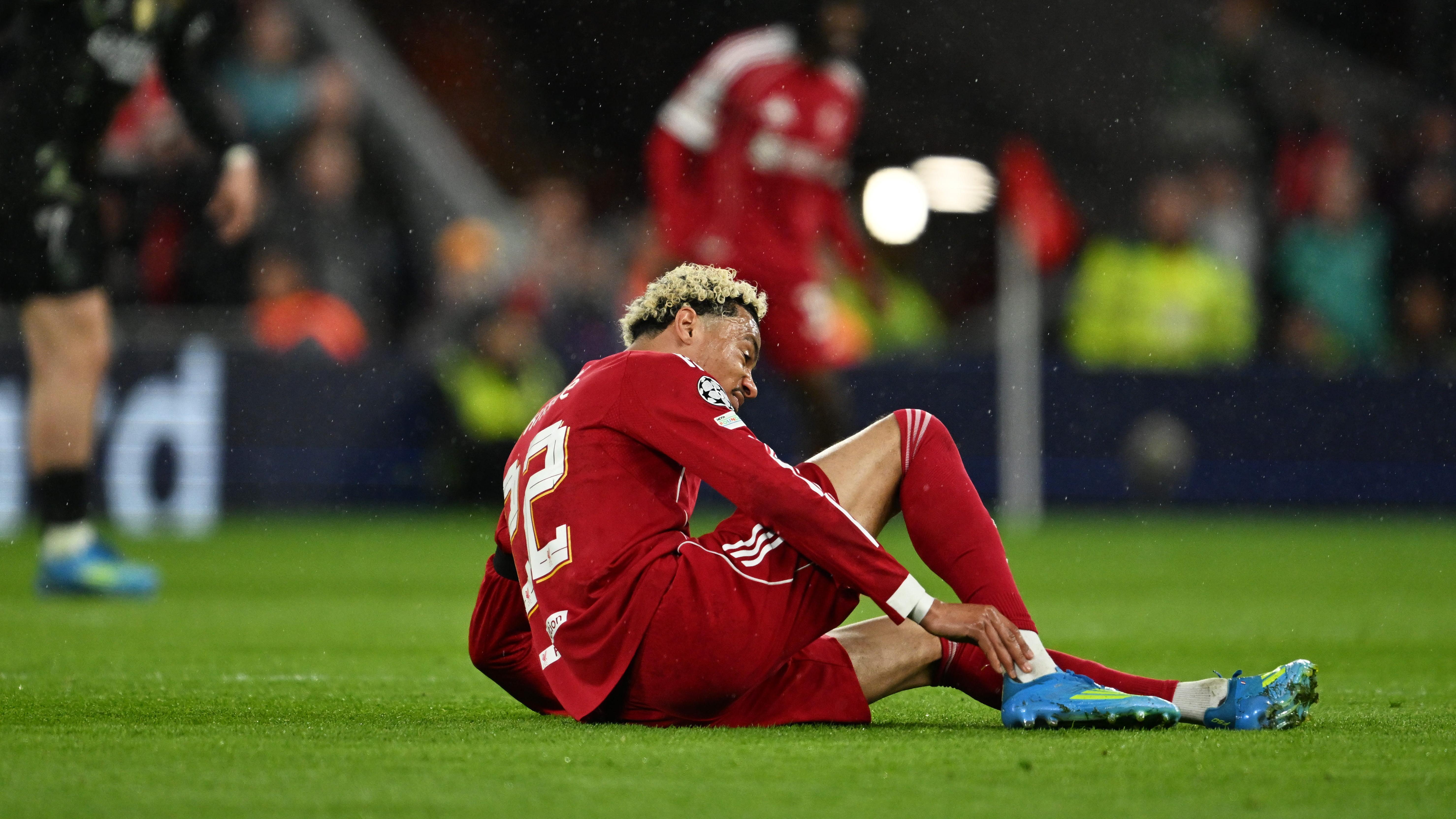
With the next World Cup set to take place across the United States, Mexico, and Canada, France national football team had been building a squad that blends experience with emerging talent. Ekitike was seen as part of that evolution—a player capable of adding depth and versatility to the attacking lineup.
His absence now forces Deschamps to rethink his options. While France remain rich in attacking talent, losing a player in form always disrupts planning. It also removes an opportunity for Ekitike to gain invaluable experience on football’s biggest stage.
There is, however, a longer-term perspective.
History has shown that players can return from serious injuries stronger, both physically and mentally. Achilles injuries, while daunting, are no longer career-ending in the way they once were. Advances in medical treatment and rehabilitation have improved recovery outcomes significantly.
Deschamps himself expressed confidence that Ekitike would return to top form, emphasizing his belief in the player’s resilience and determination. That message of support has been echoed by teammates and fans, many of whom have taken to social media to send encouragement.
Still, the psychological challenge should not be underestimated.
For a young player, being sidelined for an extended period can test patience, confidence, and identity. The rhythm of training, competition, and progression is suddenly replaced by rehabilitation and uncertainty. How Ekitike navigates that period may prove just as important as the physical recovery itself.
As things stand, Liverpool must now adjust without him, France must move forward without his contribution, and Ekitike himself begins a long journey back.
What remains from that night at Anfield is not just the image of a player being stretchered off, but the realization of how quickly momentum can change in elite sport. One moment, a player is stepping onto one of football’s biggest stages. The next, he is facing months—perhaps years—on the sidelines.
For Hugo Ekitike, the path ahead is undoubtedly difficult.
But if his career so far has shown anything, it’s that setbacks do not define the ending—only the next chapter.