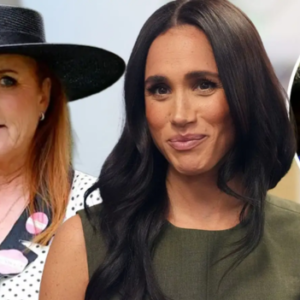
“DON’T TALK ABOUT COMPASSION WHILE DRIPPING IN LUXURY,” one critic wrote bluntly online, a comment that quickly ignited widespread backlash and intensified an already heated debate surrounding Meghan Markle’s recent appearance in Australia. What was intended as a charitable visit to support vulnerable women experiencing homelessness has instead spiraled into a controversy focused less on the cause itself and more on how the Duchess presented herself during the engagement.
Meghan Markle is facing criticism after attending a homelessness outreach program in Melbourne while dressed in what many observers described as extremely high-end fashion, including a reported $26,000 Cartier Tank Française watch and a full designer outfit from Dior. The visit, which was meant to highlight awareness and support for disadvantaged women, has been overshadowed by scrutiny over whether the visual message aligned with the intent of the event.
Critics argue that the optics of the situation undermined the purpose of the outreach. Instead of a low-profile, understated appearance, Meghan’s look was widely described as polished to the point of resembling a luxury brand campaign. “She showed up to ‘serve’ people in need looking like she was heading straight to a red carpet event,” one commentator remarked, capturing the sentiment shared by many online. Another added more sharply, “That’s not empathy—that’s a photoshoot.”
As images from the visit circulated widely across social media platforms, the discussion quickly escalated. The photos show Meghan calmly serving meals at a women’s shelter in Melbourne, smiling and engaging with residents. However, attention rapidly shifted away from the humanitarian setting and toward her accessories. Her jewelry and outfit reportedly included not only the Cartier watch but also a Cartier Love bracelet valued at nearly $8,000, along with designer clothing and luxury footwear. Altogether, critics estimated the value of her accessories alone at close to $35,000.
For many observers, that figure became the focal point of the controversy. Online commenters questioned whether such visible displays of wealth were appropriate in a setting dedicated to individuals facing severe financial hardship. One viral comment summarized the outrage: “You don’t wear $35,000 worth of jewelry to serve food to people in crisis—unless the goal isn’t helping, but being seen.”
The backlash intensified further as critics began drawing comparisons between the cost of Meghan’s outfit and the resources available to the shelter itself. Some argued that the value of her accessories alone could have funded weeks or even months of meals, counseling services, or housing support for the women attending the facility. Others accused the appearance of turning a moment of charity into what they saw as a staged media opportunity.
The visit itself was part of a broader multi-day trip to Australia, which included several high-profile engagements. According to critics, the pattern of events suggested a carefully managed public image strategy. Meghan and Prince Harry’s visit reportedly included stops at hospitals, community organizations, and charitable initiatives, all of which generated significant media attention and public discussion.
Supporters, however, argue that such interpretations miss the point of the visit entirely. They emphasize that public figures often attend charitable events in their usual style of dress and that focusing on clothing distracts from the real impact of the outreach work. From this perspective, Meghan’s presence at the shelter was meant to draw attention to important social issues such as domestic violence, homelessness, and women’s welfare services.
Still, the criticism online has remained sharp. Some users accused the event of being performative, suggesting that the emphasis was placed more on photography and branding than on meaningful engagement. “Shoving wealth into the faces of homeless people is not something to be proud of,” one widely shared comment read. Another user added, “Nothing says compassion like making sure every piece of wealth is visible while handing out help.”
The debate has also been fueled by the contrast between the glamorous imagery and the vulnerable environment of the shelter itself. The McAuley Community Services for Women facility in Melbourne supports women escaping homelessness and domestic violence, providing accommodation, counseling, and essential support services. Critics argue that such settings require sensitivity and understatement, rather than high-fashion visibility.
Observers noted that Meghan’s outfit included a striped apron layered over designer clothing, which some interpreted as an attempt to balance practicality with style. However, this detail did little to calm the criticism. Instead, it became another point of discussion, with some claiming it further emphasized the contrast between appearance and circumstance.
Social media reaction was swift and polarized. Viral posts on platforms such as X and Instagram attracted thousands of comments within hours. One widely circulated post highlighted Meghan calmly serving food while wearing luxury jewelry under shelter lighting, prompting reactions ranging from admiration to outrage. “That watch probably costs more than their entire yearly shelter budget,” one commenter wrote. Another said, “This feels like watching wealth perform generosity.”
Even some of Meghan’s supporters found themselves acknowledging the complexity of the optics. While they defended her intentions, they also admitted that the visual impact of the jewelry and designer attire made the situation harder to interpret positively. The tension between intent and perception became a central theme of the discussion.
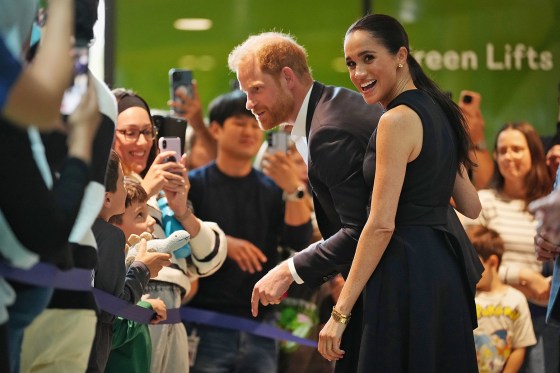
Fashion analysts and commentators also weighed in, describing the incident as a classic example of how public image can clash with charitable messaging. One fashion critic noted that regardless of intent, visual symbolism plays a powerful role in shaping public interpretation. In this case, the presence of extremely expensive accessories in a vulnerable setting created a perception gap that was difficult to ignore.
A former royal aide, speaking in a commentary-style analysis, suggested that the issue was not necessarily about individual items of clothing but about context. According to this perspective, high-value accessories in environments centered on poverty and hardship risk overshadowing the work being done. “It creates a visual imbalance,” the analyst explained, “where the focus shifts from the people being helped to the person delivering help.”
The criticism has been especially amplified by viral slogans and punchy social media remarks. One particularly harsh phrase—“Don’t talk about compassion while dripping in luxury”—has been repeatedly shared across platforms, becoming a shorthand summary of the controversy. Others echoed similar sentiments, arguing that the appearance undermined the sincerity of the outreach.
Despite the backlash, supporters maintain that charitable engagement should not be judged through the lens of fashion or personal wealth. They argue that focusing on clothing detracts from the real issue: the needs of vulnerable women and the importance of awareness campaigns that bring attention to homelessness and domestic violence.
Nevertheless, the controversy highlights the increasing scrutiny faced by public figures in the digital age, where every image is instantly dissected, reposted, and reinterpreted. In Meghan Markle’s case, what was intended as a humanitarian visit has instead become a global talking point about optics, privilege, and the fine line between awareness and performance.
As the debate continues, one thing is clear: in today’s media environment, even acts of charity are no longer judged solely by intent, but by how they look in a single photograph.
:max_bytes(150000):strip_icc():focal(749x0:751x2)/Meghan-Markle-and-Prince-Harry--989-04162026-a64bc4b1229a473d91d8986e4ac38b7e.jpg)