Australia has delivered a clear and uncompromising verdict on Prince Harry and Meghan Markle following their much-publicized visit: despite the couple portraying their four-day, semi-official “half-in, half-out” tour as a triumph, public opinion appears largely unmoved—and in some cases, quietly hardened.
According to newly released polling data, the trip failed to shift sentiment among the vast majority of Australians. An overwhelming 81 percent of respondents said their view of the couple had not improved at all, while only 19 percent reported a more favorable impression. The figures suggest that, despite extensive media coverage, emotional speeches, and a carefully curated schedule of appearances, the visit did little to reshape public attitudes.
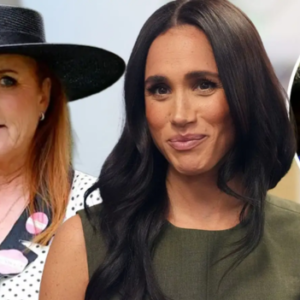
The tour itself blended elements of traditional royal duty with distinctly modern, commercial undertones. On one hand, Harry and Meghan paid respects at the Australian War Memorial and met survivors of the tragic Bondi terror attack—moments that echoed the humanitarian focus once central to their royal roles. On the other hand, their itinerary included high-profile media appearances and monetized engagements, such as Meghan’s cameo on MasterChef Australia and her attendance at an exclusive, high-priced women’s event in Sydney—dubbed “Megstock”—where tickets reportedly cost £1,700 each.

At this event, Meghan spoke candidly about her personal struggles, describing her life since marrying into the royal family as “very hard.” While some attendees expressed sympathy and admiration, critics argued that the setting—a luxury, ticketed gathering—undermined the authenticity of her message. The contrast between vulnerability and exclusivity became a recurring theme throughout the tour.
Despite Harry’s assertion during the visit that he never truly wanted to remain a working royal, and Meghan’s claim that she has been “the most trolled person in the entire world,” most Australians remain unconvinced that the couple has been unfairly treated. In fact, 69 percent of those surveyed believe the Royal Family has treated them fairly, challenging a narrative the couple has frequently advanced in interviews and public statements.
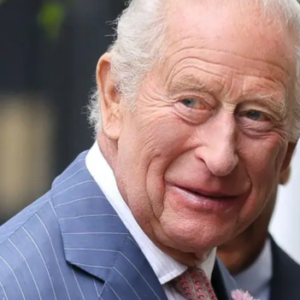
Even more striking is the skepticism surrounding Harry’s relationship with his father, King Charles III. Nearly nine in ten Australians—87 percent—believe the visit will do nothing to repair the strained bond between father and son. Only a small minority hold out hope that such public appearances might pave the way for reconciliation.

Behind the scenes, however, sources close to the Sussexes paint a very different picture. They insist the tour was a strategic success, describing it as a test run for a new hybrid model of public life—one that blends charitable work with financial independence. According to insiders, the couple sees this approach not as “half-in, half-out,” a term previously rejected by the Royal Family, but simply as forging their own path on their own terms.
“We’ve tested the playbook, and it worked,” one source reportedly said, suggesting that the couple views the trip as a blueprint for future international engagements. There is a sense within their circle that continued exposure—more events, more interaction with the public—will gradually soften perceptions and counter criticism.
Harry himself is said to be taking a philosophical stance toward the backlash. Those close to him claim he believes that, over time, consistent actions will speak louder than headlines. “The truth will always come out,” he reportedly tells friends, expressing confidence that public opinion may eventually shift.

Yet controversy has continued to follow the couple, particularly Meghan. During the visit to Bondi, where she met survivors of a recent terror attack, the outfit she wore was almost immediately promoted online through a fashion platform in which she has a financial stake. Items from her ensemble—including a designer shirt, jeans, trainers, sunglasses, and a suede bag—were listed for sale, with Meghan reportedly earning a commission on purchases.
Critics were quick to condemn the move, calling it insensitive and emblematic of a broader effort to commercialize their royal status. The timing—linking retail promotion to a solemn engagement—was described by some as deeply inappropriate.
Royal commentator Richard Palmer argued that this incident could have wider implications. He suggested it may raise concerns within palace circles about the ongoing use of royal titles for profit, particularly as the monarchy seeks to maintain a clear boundary between public service and private enterprise. While Harry and Meghan are no longer working royals, their connection to the institution remains highly visible—and, for some, problematic.
Public opinion in Britain mirrors some of these concerns. Separate polling indicates that a large majority of Britons oppose the Sussexes using their titles in commercial contexts, reinforcing the idea that their approach continues to divide audiences on both sides of the world.
Interestingly, Australians themselves appear somewhat split on the idea of the couple relocating permanently. While 41 percent would welcome such a move, a larger 59 percent oppose it, suggesting that while curiosity about the pair remains high, enthusiasm for a deeper presence is more limited.
There is also no clear consensus on how Queen Elizabeth II might have viewed the tour. Opinions are almost evenly divided, reflecting the enduring influence of her legacy and the uncertainty surrounding how she would have responded to this new chapter in the Sussex story.
In the end, the Australian tour seems to have reinforced an existing paradox. Harry and Meghan continue to command global attention, drawing crowds, headlines, and debate wherever they go. Yet visibility does not necessarily translate into approval. For many observers, the couple’s evolving identity—part humanitarian figures, part media personalities, part entrepreneurs—remains difficult to reconcile.
Whether their strategy will ultimately succeed in reshaping public perception is still an open question. For now, Australia’s verdict suggests that while the Sussexes can capture attention, winning hearts is proving far more complicated.