“He shows up in my dreams whenever the pressure feels too heavy.”
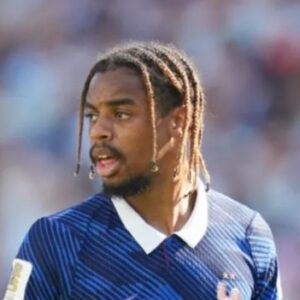
With those words, Rafael Leão revealed a deeply personal side of himself—one that fans rarely get to see. Known for his confidence and flair on the pitch, the AC Milan and Portugal star instead appeared vulnerable and reflective as he paid tribute to his late friend and teammate, Diogo Jota.
In a heartfelt message shared with supporters, Leão described a connection that extended far beyond football. What began as a professional relationship within the Portuguese national team had gradually evolved into a meaningful friendship—one built on quiet conversations, shared ambitions, and mutual respect. Now, in the absence of Jota, those memories have taken on a new and powerful significance.
Leão admitted that the loss still feels unreal at times. He spoke of moments when he expects to see Jota in the dressing room, smiling after a match or casually chatting with teammates. Instead, there is an empty space—one that cannot be filled, only remembered.

“When the pressure builds,” Leão explained, “when everything feels overwhelming, I close my eyes—and somehow, he’s there.”
It’s not a literal presence, of course, but something emotional and deeply rooted. In his dreams, Jota appears as he always was: calm, focused, and quietly encouraging. These imagined moments, Leão suggested, bring him a sense of clarity—almost as if his former teammate is still guiding him through difficult times.
The emotional weight of his words resonated across the football world, particularly as Portugal prepares for the upcoming global tournament. Within the squad, Jota’s memory has become more than a source of grief—it has transformed into a unifying force.
During a recent interview, Leão struggled to hold back tears as he reflected on what Jota meant to the team. He described him not only as a clinical forward with an instinct for goals, but as someone whose generosity defined his character.
“He was always thinking about others,” Leão said softly. “Even when he was quiet, you could feel it. If you needed something—advice, support, anything—he was there.”
Those who shared the dressing room with Jota often recall his understated nature. He wasn’t the loudest voice, nor the one seeking attention. Instead, he led through actions—small gestures that revealed a deeper sense of care. Whether it was checking in on a teammate after a tough match or sharing a laugh during training, his presence had a steadying effect.
Leão’s tribute also hinted at moments the public never saw. Behind the scenes, their friendship included conversations about life beyond football—family, future plans, and the pressures that come with representing a nation on the world stage. These exchanges, once casual and fleeting, now carry a profound emotional weight.
In one particularly touching reflection, Leão mentioned how Jota often spoke about balance—about staying grounded despite the demands of professional football. As a devoted husband and father, Jota placed immense value on family, and that perspective left a lasting impression on those around him.
As Portugal’s World Cup campaign approaches, the team carries not just tactical ambitions, but an emotional mission. For Leão and his teammates, every match is an opportunity to honor Jota’s memory. His influence is present in their preparation, their mindset, and even their celebrations.
“After every game, we think of him,” Leão said. “Before, he was there celebrating with us. Now, we celebrate for him.”
The idea of turning grief into motivation is not new in sports, but in this case, it feels especially personal. Jota’s absence is not just symbolic—it is deeply felt by those who knew him. And yet, that absence has created a shared purpose within the squad.
Leão described it as a kind of silent promise—one that doesn’t need to be spoken aloud. Each player understands what it means: to give everything on the pitch, to play with heart, and to carry Jota’s spirit forward.
Fans, too, have been moved by Leão’s honesty. In a world where athletes are often expected to project strength at all times, his willingness to show vulnerability has struck a chord. Social media has been flooded with messages of support, with many expressing admiration for the way he has honored his friend.
For some, his words have also reshaped how they view the game itself. Football, often seen as entertainment or competition, becomes something more when stories like this emerge. It becomes a space where human connections—friendship, loss, resilience—are just as important as goals and trophies.
Leão’s journey, shaped in part by his bond with Jota, now carries an added layer of meaning. Every sprint, every goal, every moment of brilliance is tied not only to his own ambition, but to the memory of someone who helped shape him.
There is also a sense that this experience has changed him. Teammates have noted a quieter determination in Leão—a focus that goes beyond personal success. While he remains one of the most exciting attacking players in Europe, there is now a deeper purpose behind his performances.
As the tournament draws closer, expectations for Portugal continue to grow. With a talented squad and a history of strong performances, they are seen as serious contenders. But for Leão, the objective goes beyond winning matches.
“It’s not just about lifting the trophy,” he said. “It’s about what it represents.”
If Portugal were to achieve success on the world stage, it would be more than a sporting triumph. It would be a tribute—a way of honoring a teammate who is no longer there, yet still present in every step of their journey.
In the end, Leão’s message is both simple and profound. Loss does not erase connection; it transforms it. The bond he shared with Jota continues to guide him, shaping not only how he plays, but how he sees the world around him.
And in those quiet moments, when the pressure feels overwhelming and the noise fades away, he finds comfort in a familiar presence—one that reminds him why he keeps going.
Not just for himself.
Not just for his team.
But for a friend whose legacy lives on in every game he plays.