When Performance Choices Come With a Price Tag
In television production, even the smallest creative decisions can have unexpectedly large consequences. That reality became strikingly clear during the making of Season 2 of Beef, where a seemingly simple acting technique adopted by Oscar Isaac and Carey Mulligan ultimately led to a costly post-production challenge.
The critically acclaimed Netflix series, known for its raw emotional intensity and layered storytelling, returned with a new narrative centered on a married couple whose relationship begins to unravel after a fateful encounter with another pair. As the story unfolds across eight episodes, the performances demand a high degree of emotional authenticity—something both Isaac and Mulligan sought to enhance through an unconventional approach.
What began as a creative experiment on set soon evolved into a recurring technique, one that enriched their performances but complicated the technical side of production in ways no one had fully anticipated.
Music as an Invisible Scene Partner
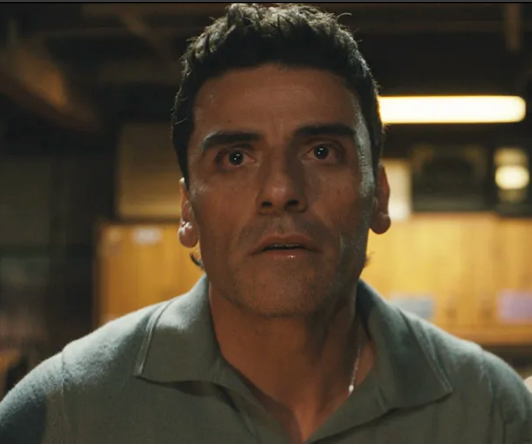
For Isaac, the idea started with a specific moment involving a Moog synthesizer. To immerse himself more deeply in the emotional tone of the scene, he began listening to music through discreet earpieces while performing. The effect was immediate: the rhythm, mood, and pacing of the music seemed to influence his delivery, adding a subtle layer of depth to the performance.
Recognizing the potential of this approach, he shared the idea with Mulligan, who quickly embraced it. What followed was a collaborative process in which both actors used music as a kind of invisible scene partner—something that guided their timing, emotional shifts, and physical interactions.
In one particularly memorable scene, the pair used synchronized music during a moment of intimacy. According to Mulligan, the timing aligned almost perfectly, with key beats in the music matching the emotional peaks of the scene. The result was a sense of rhythm that felt organic, as if the performance and the soundtrack were moving in harmony.
For the actors, this technique became more than just a tool—it became an integral part of how they approached their roles.
A Technique That Spread Across the Set
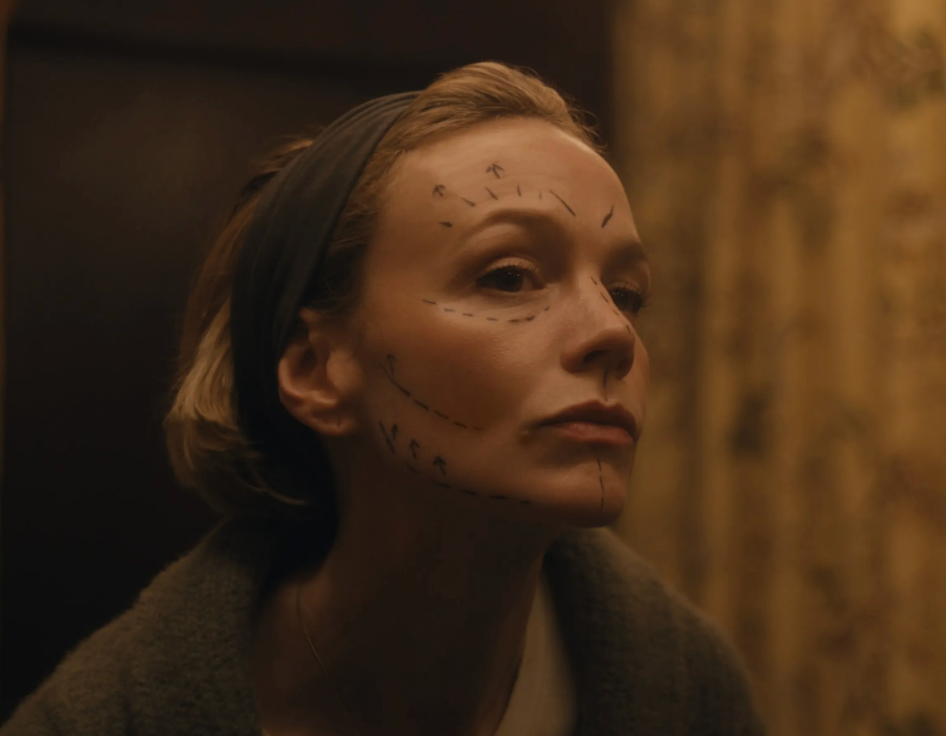
What began as a one-off experiment soon became a habit. Encouraged by the results, Isaac and Mulligan started incorporating music into multiple scenes, using different tracks to match the tone of each moment.
In more intense sequences—such as those involving confrontation or blackmail—they turned to chaotic, atmospheric compositions to heighten the tension. The music helped them access a specific emotional state, allowing their performances to feel more immediate and visceral.
However, not every experiment was successful. At one point, the pair attempted to use a well-known song that ultimately clashed with the rhythm of the scene. Despite multiple takes, the mismatch became evident, and the idea was quickly abandoned.
These moments of trial and error highlight the experimental nature of the process. While the technique offered clear benefits, it also required careful consideration to ensure that it enhanced rather than distracted from the narrative.
:max_bytes(150000):strip_icc():focal(1010x581:1012x583)/beef-oscar-isaac-carey-mulligan-032626-d8ae292559cb47ca9f37977c50d96933.jpg)
The Hidden Cost of Creativity
While the use of earpieces may have improved the performances, it created a significant challenge for the production team. Because the devices were visible on camera, they had to be digitally removed during post-production—a process that is both time-consuming and expensive.
Series creator Lee Sung Jin later revealed that this decision had a substantial impact on the show’s budget. Each instance of the earpieces appearing in a shot required meticulous editing, with visual effects artists tasked with “painting out” the devices frame by frame.
In a production already operating at a high level of detail, this additional workload translated into a significant financial cost. What had started as a creative enhancement became, in practical terms, a logistical and budgetary challenge.
Yet despite the expense, the decision was not viewed as a mistake. Instead, it was seen as part of the broader creative process—an example of how artistic choices can ripple through every stage of production.
:max_bytes(150000):strip_icc():focal(999x0:1001x2)/beef-season-2-041426-1-12707b426a40458f87ee4ce28109062e.jpg)
Balancing Art and Practicality
The situation raises an interesting question about the balance between artistic freedom and practical constraints. In an ideal world, actors would have complete freedom to explore techniques that deepen their performances. In reality, however, every choice must be weighed against its impact on the production as a whole.
In this case, the use of music created a tension between two priorities: the desire for authenticity and the need for efficiency. The performances may have benefited, but the additional cost required careful consideration.
For a platform like Netflix, which invests heavily in high-quality content, such trade-offs are part of the creative landscape. The willingness to absorb these costs reflects a commitment to storytelling, even when it comes with unexpected challenges.
The Emotional Core of Beef
At its heart, Beef is a series driven by emotion—by the complexities of human relationships, the intensity of conflict, and the unpredictability of personal connection. The decision by Isaac and Mulligan to use music as a tool aligns with this focus, offering a way to access and express those emotions more fully.
Their characters’ relationship is marked by volatility, passion, and underlying tension. Capturing these elements requires more than technical precision; it requires a level of emotional truth that can be difficult to achieve through conventional methods alone.
By integrating music into their performances, the actors found a way to bridge that gap, creating moments that feel both spontaneous and deeply felt.

A Collaborative Process
The success of this approach also speaks to the collaborative nature of filmmaking. While the actors introduced the technique, its impact was felt across multiple departments—from directing and cinematography to editing and visual effects.
Each team had to adapt, finding ways to accommodate the creative choices while maintaining the integrity of the final product. This kind of collaboration is essential in a project like Beef, where every detail contributes to the overall experience.
It also highlights the interconnectedness of the production process. A decision made on set can have far-reaching implications, influencing everything from performance to budget.
A Worthwhile Investment?
Ultimately, the question remains: was it worth it? From a purely financial perspective, the additional cost may seem significant. But in the context of a series that prioritizes emotional depth and authenticity, the answer is less straightforward.
If the technique helped elevate the performances—if it contributed to moments that resonate more deeply with audiences—then the investment may well be justified. In a medium where impact is often measured in emotional connection rather than dollars, such decisions can carry a different kind of value.
Creativity Comes at a Cost
The story behind Beef Season 2 serves as a reminder that creativity often comes with trade-offs. The pursuit of authenticity, innovation, and emotional truth can lead to unexpected challenges, requiring flexibility and resourcefulness from everyone involved.
For Oscar Isaac and Carey Mulligan, the use of music became a powerful tool—one that shaped their performances in meaningful ways. For the production team, it became a technical hurdle that demanded time, effort, and financial investment.
In the end, it is this interplay between art and practicality that defines the filmmaking process. And sometimes, the most memorable moments are the ones that come at the highest cost.