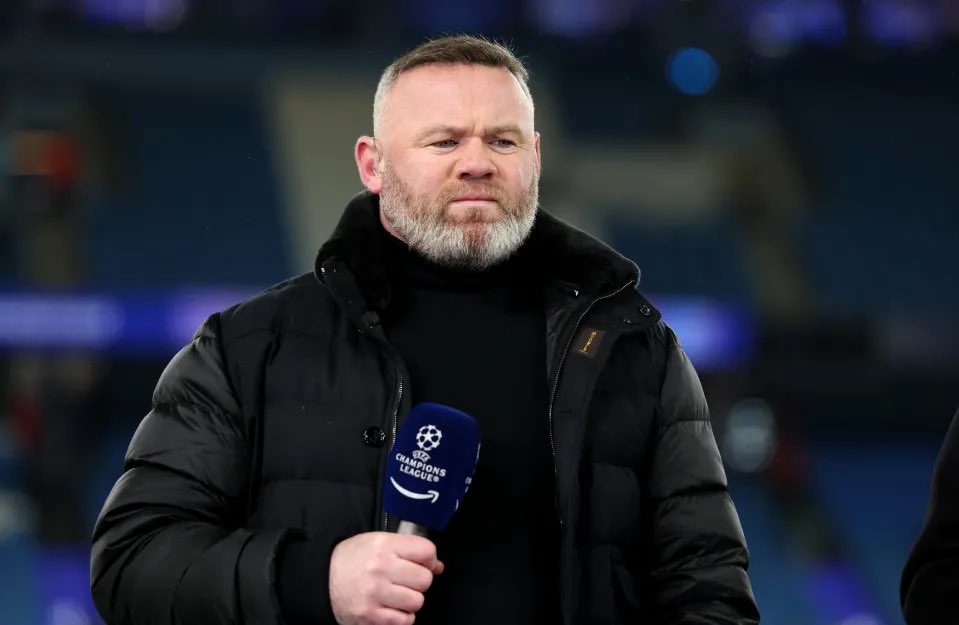
Wayne Rooney has offered a revealing glimpse into what really happened behind the scenes during his recent sit-down with Bruno Fernandes, shedding light on a refreshingly unstructured and candid conversation that stood out from the usual polished football interviews.
Now 40, Rooney—one of Manchester United’s most iconic figures—has transitioned into a media role following his time in management. As part of his growing presence in broadcasting, including work with BBC Sport, he recently hosted Fernandes on his podcast, creating a rare meeting between two influential figures from different eras of the club.
Although Rooney and Fernandes never shared the pitch as teammates at Old Trafford, their careers are closely linked through the same club legacy. Rooney had already departed for Derby County before Fernandes arrived from Sporting CP. That timing meant their connection has only developed off the field—through mutual respect and now, through this in-depth conversation.
Speaking on his podcast, Rooney explained that he deliberately avoided preparing a rigid structure for the interview. Rather than relying on pre-written questions or a strict format, he chose to let the discussion evolve naturally. According to him, this decision was intentional: he wanted Fernandes to feel comfortable enough to speak openly, without the pressure of a scripted exchange.
Rooney admitted that stepping into the role of interviewer came with uncertainty. Without a prepared list of questions, he didn’t know exactly how the conversation would unfold. Instead, he listened closely to Fernandes’ answers and built follow-up questions in real time. This spontaneous approach created a more relaxed atmosphere, allowing the discussion to flow organically rather than feeling rehearsed.
The result was a 40-minute conversation that offered insights into Fernandes’ career, mindset, and experiences at Manchester United. Topics ranged from his early days in Portugal to the pressures of captaining one of the world’s biggest clubs. He also touched on transfer speculation, including past links to moves outside Europe, giving listeners a broader understanding of the decisions that have shaped his journey.
Rooney later reflected that the success of the interview was partly due to timing. Fernandes is currently enjoying one of his strongest runs of form since joining United, playing a central role under interim manager Michael Carrick. With the team pushing for a top-four finish in the Premier League, the overall mood around the club has been positive—something Rooney believes made Fernandes more relaxed and open during their conversation.
He noted that when players are performing well and the team is in a strong position, interviews tend to feel easier and more natural. Confidence on the pitch often translates into confidence off it, and Fernandes appeared at ease throughout their discussion. Rooney described him as “brilliant” to work with, highlighting not only his professionalism but also his willingness to engage honestly.
Beyond the main interview, Rooney hinted that additional content was filmed during the day, suggesting that more behind-the-scenes or extended material could be released in the . This extra footage, he implied, may provide even deeper insight into Fernandes’ and the dynamic between the two football figures.

Fernandes’ performances this season have certainly given him plenty to talk about. Operating primarily in the No. 10 role, he has been instrumental in United’s attacking play, combining creativity with goal contributions. With 19 assists and eight goals in 32 appearances across all competitions so far in the 2025–26 campaign, he has once again proven why he is considered one of the team’s most influential players.
Rooney, who himself was known for his leadership and ability to perform under pressure, appeared to appreciate Fernandes’ role in guiding the current squad. During the conversation, there was a sense of mutual understanding—two players who, in different eras, carried significant responsibility at the same club.
Adding a personal layer to the story, sources close to the production revealed that the atmosphere during filming was far more relaxed than a typical studio setting. The two reportedly shared informal moments before recording began, discussing football memories, dressing room culture, and even lighter topics like pre-match rituals and off-day routines. These exchanges helped break the ice and contributed to the natural tone Rooney aimed to achieve.
At one point, Fernandes is said to have laughed about how unusual it felt to be interviewed by someone he had grown up watching. Rooney, in turn, acknowledged that the roles had reversed in an interesting way—going from being the player answering questions to the one asking them. That dynamic added a subtle layer of authenticity to the conversation, as both men navigated unfamiliar territory.
Rooney’s approach reflects a broader shift in sports media, where audiences increasingly value genuine, unscripted interactions over traditional, tightly controlled interviews. By allowing conversations to unfold naturally, presenters can often reveal sides of athletes that might otherwise remain hidden.
For Rooney, the experience also marks another step in his post-playing career. While he remains closely associated with Manchester United’s history, his growing presence in media suggests he is building a new identity—one that combines his deep understanding of the game with a more conversational, аналитical style.
As for Fernandes, the interview offered fans a chance to see beyond the intensity he displays on the pitch. Known for his passion and sometimes fiery demeanor during matches, he came across as thoughtful and reflective, discussing both successes and challenges with equal honesty.
In the end, what made the interview stand out was not just the content, but the way it was delivered. Without a script, without rigid structure, and without the usual formalities, it became a conversation rather than an interrogation—one shaped by curiosity, respect, and shared experience.
Rooney’s behind-the-scenes admission highlights that sometimes, the best insights come not from carefully prepared questions, but from simply letting the moment guide the discussion.