Andy Robertson Opens Up on Diogo Jota Tragedy as Liverpool Era Nears Emotional End
Andy Robertson has admitted that Liverpool’s players “didn’t care about football for weeks” following the devastating death of team-mate Diogo Jota, revealing the emotional trauma that deeply affected the squad during one of the darkest periods in the club’s recent history.
As Robertson prepares to make his final appearance at Anfield after an unforgettable nine-year journey with Liverpool, the Scotland captain reflected not only on the club’s future but also on the personal pain that shaped a difficult season behind the scenes.
Sunday’s match against Brentford is expected to be highly emotional for Liverpool supporters. Robertson, one of Jurgen Klopp’s greatest signings, is set to play his 378th and final game at Anfield. Mohamed Salah will also say goodbye on the same afternoon, marking the symbolic end of an era that delivered some of the club’s greatest modern achievements.
Together, the pair helped Liverpool return to the summit of English and European football, winning eight major trophies including the Premier League, Champions League, FA Cup, League Cup, UEFA Super Cup, and FIFA Club World Cup.
Yet despite the success, Robertson admitted this past season felt emotionally heavier than any campaign he had experienced before — largely because of the tragic loss of Diogo Jota in a car accident last July.
Speaking honestly about the aftermath, Robertson explained that football suddenly became meaningless for many members of the squad.
“It is not an excuse, but what we went through in the summer no team should ever have to go through,” Robertson said.
“The devastation was enormous. Football didn’t matter anymore. None of us wanted to train. That was the reality.”
The Scottish defender revealed that the atmosphere around Liverpool’s training ground completely changed after the heartbreaking news emerged. Players who normally arrived laughing, competing, and preparing intensely for the season instead struggled emotionally just to get through each day.
According to people close to the club, several players were left in tears during the first training sessions following Jota’s death. Some reportedly found it difficult to even enter the dressing room because reminders of their teammate were everywhere — his locker, his boots, his training gear, and photos from previous matches.
Robertson admitted that the emotional impact was impossible to fully explain to outsiders.
“As footballers, people expect you to move on quickly because the season starts again and life keeps going,” he said.
“But emotionally, we were nowhere near ready. We were grieving a friend, not just a teammate.”
Jota had become one of the most loved personalities inside Liverpool’s dressing room since arriving from Wolves in 2020. While supporters admired his goals and work ethic on the pitch, teammates often described him as one of the funniest and kindest members of the squad off it.
Robertson spoke warmly about Jota’s character, remembering how the Portuguese forward always brought energy and positivity into the dressing room.
“He could make everyone laugh within seconds,” Robertson recalled. “Even after difficult games or hard training sessions, Jots was always the one trying to lift the mood.”
Behind closed doors, Liverpool’s coaching staff reportedly adjusted training schedules during the summer because players were mentally struggling. Some sessions were shortened, while club psychologists and support staff spent significant time helping players cope with grief.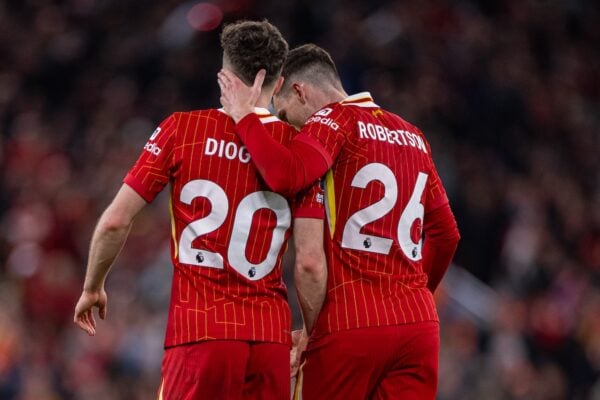
Robertson also described the emotional challenge of returning to competitive football so soon after the tragedy. Liverpool’s season opener against Bournemouth at Anfield became less about football and more about mourning a beloved teammate.
With Jota’s family present in the stadium, emotions overwhelmed both players and supporters.
“The Bournemouth game was unbelievably emotional,” Robertson admitted.
“When you saw his family there, it hit everybody again.”
He pointed to the tribute in the 20th minute — a reference to Jota’s squad number — as the moment emotions became impossible to contain.
“I think after the tribute you could actually see our level drop during the game,” Robertson said.
“The emotion affected all of us. You try to focus on football, but your mind keeps going back to your friend.”
Many fans inside Anfield were visibly crying during the tribute, while several Liverpool players reportedly struggled to maintain composure on the pitch. According to sources close to the dressing room, some players later admitted it was one of the hardest matches they had ever played emotionally.
The difficult start to the campaign eventually fueled criticism surrounding manager Arne Slot and Liverpool’s inconsistent performances. However, Robertson believes many people outside the club failed to understand the emotional burden the squad had been carrying for months.
“There were times when people questioned our mentality or our hunger,” Robertson explained. “But nobody outside truly understood what the lads were dealing with mentally.”
Despite the struggles, Robertson remains optimistic about Liverpool’s future. While Salah previously expressed concerns about standards slipping within the dressing room, Robertson believes the club’s new generation will eventually rise to the challenge.
Last summer’s £450 million rebuild brought major talents including Alexander Isak, Florian Wirtz, Jeremie Frimpong, and Milos Kerkez to Anfield. Although the transition period proved difficult, Robertson insisted the young squad possesses the quality and mentality needed to succeed.
“When we started this journey years ago, none of us were considered the best in the world,” Robertson explained.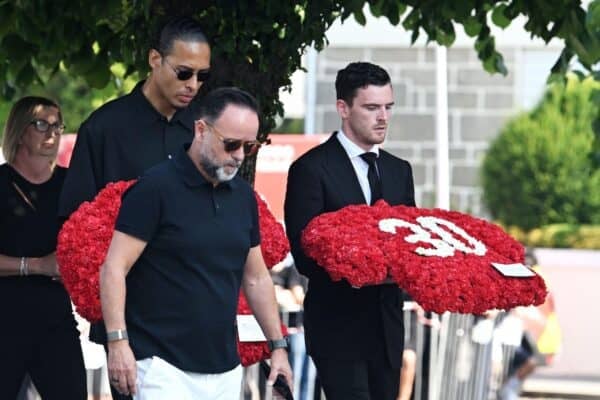
“Mo Salah wasn’t viewed as the world’s best winger yet. Virgil van Dijk wasn’t considered the best centre-back. Alisson wasn’t already the top goalkeeper. We all developed together.”
He believes Liverpool’s newest signings are going through a similar process.
“I’ve seen enough from them in training, in matches, and in their attitude to know they will become successful here,” he said.
“They’re young, they’re learning, and they’re carrying huge expectations. But the talent is definitely there.”
Robertson also praised the mentality within the dressing room despite the emotional hardships of the season.
“For the future of Liverpool, I still believe there’s more than enough quality and character in that changing room to achieve great things again.”
As his own Liverpool journey nears its conclusion, Robertson leaves behind a remarkable legacy. Signed from Hull City in 2017 for a relatively modest fee, he developed into one of the best left-backs in world football under Jurgen Klopp.
His relentless energy, leadership, and connection with supporters made him one of the most respected figures at Anfield. Beyond the trophies and assists, however, Robertson says the relationships he built with teammates will remain the most important part of his Liverpool story.
And among all those memories, the loss of Diogo Jota is something he knows the squad will carry forever.
“Some things are bigger than football,” Robertson said quietly.
“And losing Jots reminded all of us of that.”