Hugo Ekitike, a forward for Liverpool, is reportedly aiming for a highly optimistic return to action on Boxing Day as he continues his recovery from a serious Achilles tendon injury. Despite experiencing significant physical pain and emotional frustration, the striker remains determined and focused on returning to competitive football within his expected rehabilitation timeline.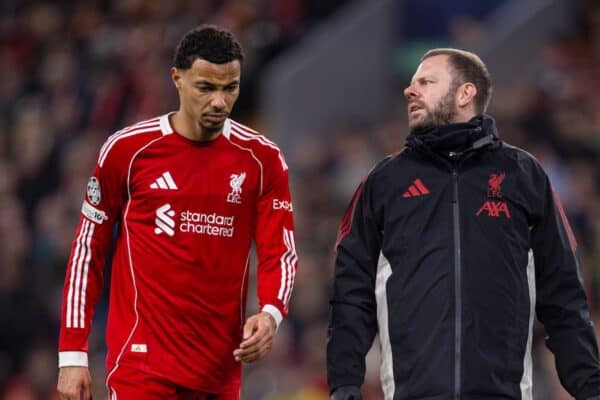
Ekitike had emerged as one of Liverpool’s brightest attacking performers during a challenging campaign last season. Among the club’s new arrivals, he stood out with consistent goal-scoring form, eventually reaching 17 goals by April. His performances had made him a key figure in the squad, especially as Liverpool navigated inconsistent results across domestic and European competitions.
However, his season took a devastating turn during a Champions League clash against his former club, Paris Saint-Germain. In the second leg of that tie, Ekitike suffered a ruptured Achilles tendon in his right leg following a forceful movement during a contested phase of play. The injury was immediately recognized as serious, with the forward collapsing in visible agony and requiring medical assistance on the pitch.
The incident not only ended his season prematurely but also ruled him out of selection contention for the upcoming FIFA World Cup with France. For a player in peak form and likely to be part of his national team’s plans, the timing of the injury was especially devastating. Reports suggest that the psychological impact was as difficult as the physical pain, as Ekitike had to come to terms with missing one of football’s biggest tournaments.
In the days following the injury, he was seen on crutches after Liverpool’s final match of the season against Brentford, signaling the severity of the setback. Shortly afterward, he traveled to London for surgery, where he underwent a successful operation performed by a team of specialists. Notably, the procedure involved the same medical expert who had previously treated NBA star Jayson Tatum of the Boston Celtics for a similar Achilles injury.
Medical experts have long highlighted the complexity of Achilles ruptures, especially for explosive attacking players who rely heavily on acceleration and agility. Historical comparisons have even been made to past footballers such as John Barnes, who suffered similar injuries during his time at Anfield. Such comparisons have fueled ongoing debate about whether players can return to their pre-injury level after such a significant physical setback.
Despite these concerns, Ekitike has remained remarkably focused throughout his rehabilitation process. According to reports from L’Équipe, the striker has endured “immense pain” during the early stages of recovery, particularly over the first two months following surgery. The emotional toll has also been considerable, as he reportedly struggled with the disappointment of missing the World Cup and briefly attempted to mentally disconnect from football altogether in order to cope with the frustration.
During this difficult period, he has focused on gradual recovery rather than rushing progress. Medical staff have implemented a structured rehabilitation plan designed to ensure long-term stability and reduce the risk of re-injury. This includes controlled mobility exercises, monitored physical therapy sessions, and strength-building routines aimed at maintaining overall fitness while the injured tendon heals.
Liverpool’s medical and performance departments have expressed satisfaction with his progress so far. The club has taken a cautious but positive approach, emphasizing patience over acceleration in his recovery timeline. Ekitike has reportedly dedicated much of his effort to upper-body conditioning during the early phases of rehabilitation, allowing him to maintain physical strength while his lower body remains restricted by a protective boot.
A notable addition to his recovery routine has been the use of advanced sports rehabilitation techniques inspired by elite athletes from other sports. These include progressive load management systems and aquatic training methods that reduce strain on the injured area while still maintaining cardiovascular fitness. Such methods are increasingly common in elite football rehabilitation programs and are designed to help players return in optimal condition.
The target of a Boxing Day return reflects both ambition and careful optimism. While medical staff have not officially confirmed a fixed comeback date, internal projections suggest that a return during the mid-season period could be realistic if recovery continues without complications. Boxing Day fixtures are traditionally among the most physically demanding in English football, which makes the target both symbolic and strategically significant.
Within the club, there is also growing awareness that Ekitike’s absence has affected attacking depth and tactical flexibility. His movement, finishing ability, and ability to stretch defensive lines had been key components of Liverpool’s attacking structure before the injury. As a result, his recovery is being closely monitored not only from a medical perspective but also in terms of long-term squad planning.
Interestingly, Liverpool manager Andoni Iraola has reportedly received encouraging updates regarding the player’s rehabilitation progress. While Iraola is primarily focused on broader team performance, the positive developments surrounding Ekitike are seen as a significant boost for squad morale and future tactical options.
In training discussions and internal reviews, staff have reportedly emphasized the importance of ensuring that Ekitike returns only when fully ready. The club’s previous experiences with long-term injuries have reinforced a conservative approach, prioritizing player longevity over short-term gains. This philosophy is particularly important given the physical demands placed on forwards in modern high-intensity football systems.
Outside the club environment, fans have also been following his recovery journey closely. Many supporters view Ekitike as a crucial part of Liverpool’s long-term attacking project, and there is widespread hope that he will return to his previous form once fully fit. His early-season performances had already established him as a rising figure within the squad, and expectations remain high for his future impact.
As his rehabilitation continues, Ekitike’s mindset appears to be one of cautious optimism. While the road back to full fitness remains long and uncertain, his commitment to structured recovery and mental resilience has been praised by those working closely with him. The Boxing Day target serves not only as a potential return date but also as a motivational milestone in a challenging recovery journey.
Ultimately, the story of Ekitike’s injury and recovery reflects both the fragility and resilience of professional athletes. A moment of misfortune during a high-stakes match changed the trajectory of his season, but his determination to return stronger highlights the mental strength required at the elite level of football. If his rehabilitation continues on its current path, Liverpool may yet see their forward return in time to make a significant impact in the second half of the season.