Jurgen Klopp Sparks Heated Exchange With Rafael van der Vaart Over Virgil van Dijk Criticism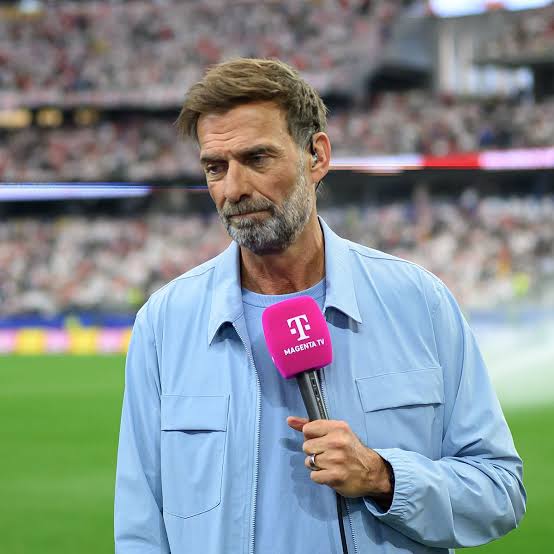
A public disagreement has emerged involving Jurgen Klopp and former Dutch international Rafael van der Vaart after comments were made about Liverpool captain Virgil van Dijk’s performance during the Netherlands’ World Cup campaign. Klopp firmly rejected Van der Vaart’s criticism, escalating a media debate that had already been gaining attention across Europe.
The controversy began after the Netherlands’ opening World Cup match, which ended in a 2-2 draw against Japan. Despite taking the lead twice during the game, the Dutch side were unable to secure victory after conceding a late equaliser from Daichi Kamada, resulting in shared points in Texas.
The result triggered immediate scrutiny of the Dutch national team, with analysts and former players questioning both their tactical setup and their inability to maintain control of the match. Much of the criticism focused on the conservative approach adopted by head coach Ronald Koeman, particularly after the team failed to protect their advantage.
Among the most vocal critics was Rafael van der Vaart, the former Tottenham Hotspur midfielder and Dutch international. Speaking on television after the match, Van der Vaart expressed strong dissatisfaction with the performance of several key players, including his compatriot Virgil van Dijk.
Van der Vaart singled out Van Dijk’s role in the late equaliser, suggesting that the Liverpool defender’s reaction to the situation was unusually slow. In his analysis, he used a striking comparison, saying he was “shocked” by Van Dijk’s movement during the decisive moment of the game.
He went on to describe the defender’s turning ability in unflattering terms, comparing him to a “Boeing 747,” implying that he appeared slow and heavy when attempting to react to the attacking play. Van der Vaart also added a sarcastic remark suggesting that Van Dijk would need to move more quickly if the Netherlands hoped to succeed in the remainder of the tournament.
Despite the criticism, Van Dijk had earlier contributed positively to the match, scoring the opening goal for the Netherlands and playing a key role throughout the game. His overall performance earned him the man-of-the-match award, highlighting the contrast between individual recognition and the team’s collective disappointment.
Following the draw, Van Dijk responded calmly to the criticism, defending both his own performance and the team’s tactical approach. He also pointed out that the Netherlands had delivered a convincing 5-1 victory over Sweden in a subsequent match, featuring strong attacking displays from Brian Brobbey and Cody Gakpo, which helped shift attention away from the earlier draw.
However, the discussion surrounding Van Dijk’s performance did not end there.
Jurgen Klopp, who previously managed Van Dijk at Liverpool and played a crucial role in developing him into one of the world’s top defenders, later entered the debate. Speaking in his capacity as a television pundit during coverage of the Sweden match in Germany, Klopp directly addressed the comments made by Van der Vaart.
Klopp, now serving as the head of global football development at Red Bull, used the opportunity to defend his former player while also dismissing the significance of Van der Vaart’s remarks. He expressed clear disagreement with the criticism and suggested that it lacked credibility.
According to Klopp, opinions like those expressed by Van der Vaart should not be taken too seriously, especially when directed at a player of Van Dijk’s calibre. He argued that assessments made in the heat of post-match analysis often fail to reflect the full complexity of a player’s role and responsibilities on the pitch.
Klopp’s response was notably blunt, as he made it clear that he did not place much value on Van der Vaart’s judgment in this case. His comments were widely interpreted as a strong defence of Van Dijk, whom he previously captained during Liverpool’s most successful recent era.
The exchange quickly gained attention across media outlets and social platforms, with fans and analysts weighing in on both sides of the argument. Some supported Van der Vaart’s right to critique performances openly, while others agreed with Klopp that the comments were exaggerated and unfair.

The situation also highlighted the ongoing scrutiny faced by high-profile defenders like Van Dijk, who are often judged harshly for isolated moments in matches despite otherwise strong overall performances. As one of the leading centre-backs in world football, Van Dijk has frequently been at the centre of tactical debates and public analysis.
In this case, the focus on a single defensive moment overshadowed his earlier contribution in scoring the opening goal and his leadership throughout the match. Many observers pointed out that such criticism is common in modern football, where analysis is often intensified by media commentary and social media reaction.
The Netherlands’ subsequent emphatic 5-1 victory over Sweden helped ease some of the early tournament pressure. The team displayed improved attacking cohesion, with standout performances from younger forwards such as Brobbey and Gakpo, both of whom scored twice. The result temporarily quieted concerns about Koeman’s tactical decisions and restored confidence in the squad’s ability to compete at a high level.
Van Dijk’s role in the team remained central, both as captain and defensive leader. Despite the external criticism, he continued to focus on maintaining stability at the back while contributing to the team’s overall structure and organisation.
Klopp’s intervention, however, shifted the conversation beyond tactical analysis and into a broader debate about respect, reputation, and the influence of former players in media commentary. His decision to publicly dismiss Van der Vaart’s opinion reflected both his loyalty to a former player and his frustration with what he viewed as overly harsh punditry.
The incident also underscored the emotional connections that often exist between managers and players, particularly those who have achieved significant success together. Klopp and Van Dijk shared multiple trophy-winning campaigns at Liverpool, including domestic and European honours, which strengthened their professional bond.
As the World Cup continues, attention is likely to remain on both the Netherlands’ performances and the ongoing discourse surrounding key players like Van Dijk. While early criticism has been partly offset by improved results, debates over tactics and individual displays are expected to continue throughout the tournament.
For now, Klopp’s outspoken defence has added another layer to the story, turning what began as a simple post-match critique into a wider public disagreement involving respected figures from both football management and punditry.