Former Liverpool manager Jürgen Klopp walked out of a post-match media interview after being questioned about controversial comments made by former Germany international Bastian Schweinsteiger regarding the Ivory Coast national football team during World Cup coverage.
The incident occurred following Germany’s 2–1 victory over Ivory Coast in a group-stage match at the World Cup, a result that secured Germany’s position at the top of Group E ahead of their final fixture. However, the post-match discussion quickly shifted away from the result and toward a developing controversy surrounding remarks made in the media booth.
Schweinsteiger, aged 41 and working as a television pundit for German broadcaster ARD, had earlier described the Ivory Coast side as playing what he termed “African football.” During his analysis, he suggested that the team’s style of play could be characterized as “a bit unorthodox at times, somewhat wild, and not quite as tactical.”
These comments immediately sparked criticism from viewers and commentators, with many accusing the former Bayern Munich and Manchester United midfielder of relying on outdated and stereotypical generalizations about African football and African players.
The remarks quickly gained traction on social media platforms, where they were widely debated. Some users defended Schweinsteiger, arguing that his intention was to describe playing style rather than ethnicity, while others insisted that his language reinforced harmful stereotypes about African athletes and teams.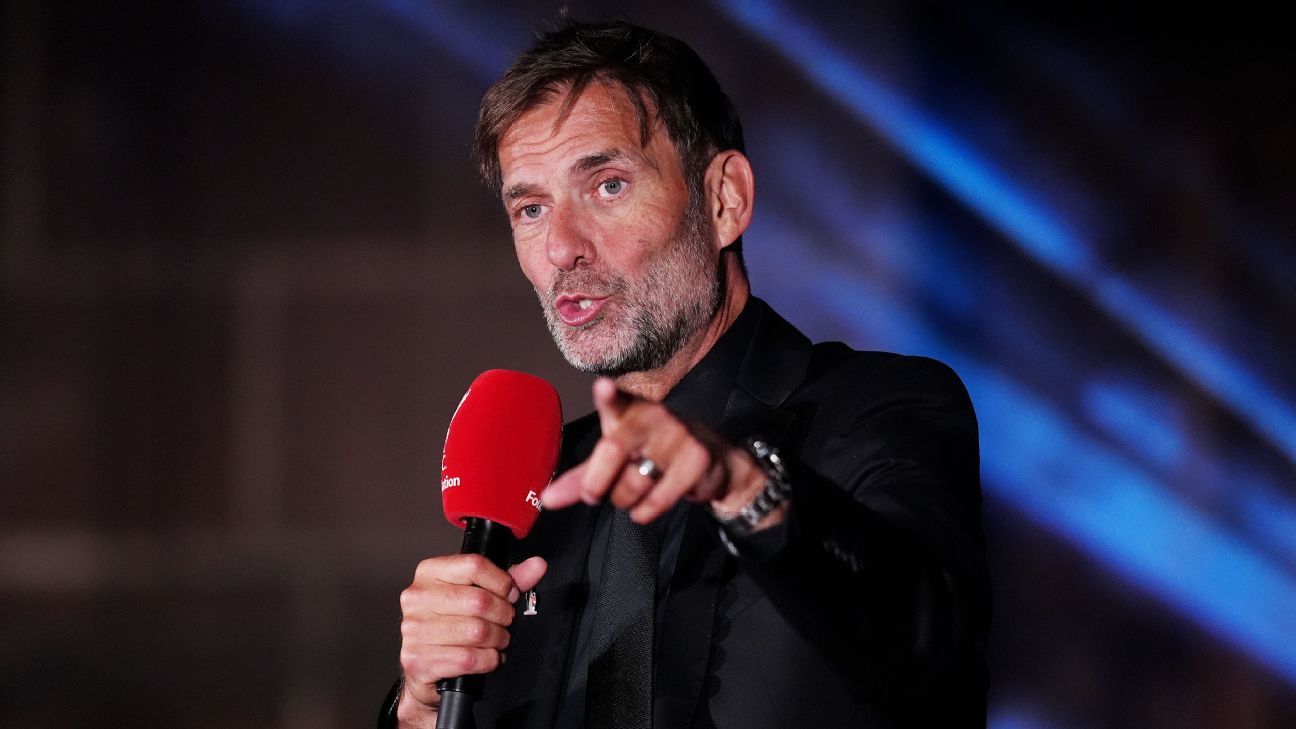
In the aftermath of the growing controversy, journalists sought reactions from prominent figures present at the tournament, including Jürgen Klopp, who is currently serving in a global football advisory and media role while also participating in World Cup broadcasting coverage.
When approached by a reporter from Deutsche Welle, Klopp was asked to comment on Schweinsteiger’s statements and the broader debate they had triggered. However, the exchange did not proceed as expected.
Before the journalist had finished posing the question, Klopp visibly reacted with frustration. He immediately interrupted, expressing discomfort with the direction of the inquiry and indicating that he did not wish to engage with the subject in the manner it was being presented.
Klopp stated that he felt he could not properly answer the question and suggested that the topic was being framed in a way that placed him in an uncomfortable position. He emphasized that the issue was sensitive and required careful consideration, noting that he was not in a position to provide a definitive judgment in a brief media exchange.
He further remarked that different groups of people might interpret the comments in different ways, highlighting the complexity of discussing cultural or racial issues in a public setting. Klopp suggested that such matters could not be reduced to simple soundbites or quick reactions immediately after a match.
The former Liverpool coach also expressed surprise at being asked to respond to the controversy, especially in a moment following a major international fixture. In a visibly irritated tone, he noted that he had not expected to be drawn into the debate and questioned the timing and framing of the question.
After briefly addressing the media, Klopp thanked the assembled journalists but then abruptly ended the interview and walked away from the press area, declining further comment.
The reaction from Schweinsteiger’s original remarks continued to intensify in Germany and beyond. Many analysts and journalists weighed in on the language used during the broadcast, arguing that it reflected deeper issues in football commentary and long-standing stereotypes.
One of the most detailed critiques came from Philipp Awounou, a Black German journalist and author, who spoke to Der Spiegel about the implications of the terminology used. He explained that descriptors such as “wild,” “unpredictable,” and “unorthodox,” when applied to African teams, can carry historical and cultural baggage that extends beyond sport.
Awounou argued that such language is often rooted in stereotypes that predate modern football and are linked to colonial-era perceptions of African societies. He stated that Black people of African heritage have historically been mischaracterized using terms that suggest a lack of discipline, structure, or intelligence, and that these ideas can still appear subtly in modern sports commentary.
While Awounou clarified that he did not consider Schweinsteiger to be racist, he maintained that the wording of his analysis was problematic and highlighted the need for greater awareness among commentators when describing teams from diverse backgrounds.
Other voices in German media echoed similar concerns. Content creator Patrick Schnitzler described the remarks as an example of racial stereotyping, pointing out that even well-intentioned analysis can unintentionally reinforce outdated narratives. He emphasized that public figures in sport carry a responsibility to be precise and mindful in their language, particularly given the global audience of events like the World Cup.
Despite the controversy, Germany’s focus remained on their performance on the pitch. The team’s victory over Ivory Coast saw them come from behind to secure an important win, ensuring they finished top of their group with one match remaining against Ecuador.
The result strengthened Germany’s position in the tournament and continued their progression toward the knockout stages. However, the post-match narrative was largely dominated by the media storm surrounding the punditry comments and Klopp’s reaction rather than the football itself.
Observers noted that the situation highlighted the increasingly complex relationship between sport, media commentary, and social responsibility. In modern international tournaments, where matches are broadcast to global audiences, even brief remarks made by analysts can quickly escalate into widespread debate.
Klopp’s decision to walk out of the interview further fueled discussion about the pressures faced by high-profile football figures when asked to respond to sensitive or controversial topics in real time. Some commentators argued that his reaction reflected a desire to avoid contributing to a divisive debate without full context, while others felt that public figures in his position should be willing to address such issues directly.
As the World Cup continues, attention remains divided between on-field performances and off-field controversies, with this incident becoming one of the most discussed moments of the tournament so far.
For now, neither Schweinsteiger nor the German broadcasting network ARD has issued any further detailed clarification beyond the initial remarks, and the debate surrounding language, interpretation, and responsibility in football commentary shows no sign of fading.