FIFA Opens Sweeping Disciplinary Case Against Argentina Stars Over Falkland Islands Banner and Disgraceful Post-Match World Cup Final Brawl
World football’s governing body FIFA has officially launched high-stakes disciplinary proceedings against Argentina following a string of explosive controversies that marred their World Cup campaign. The governing body’s investigation centers on a politically charged Falkland Islands banner displayed by senior international players following their semi-final victory over England, alongside serious allegations of discriminatory chants, racist abuse, and spectator misconduct across multiple tournament fixtures. Furthermore, the inquiry escalates into criminal-style charges for individual team members, with three key figures—including two starting players and a senior coach—facing formal assault charges following a violent post-match brawl that erupted against Spain immediately after the final whistle of the World Cup final.

The sweeping disciplinary action marks one of the most comprehensive investigations opened against a national team in modern World Cup history. According to official FIFA communications, the disciplinary committee is examining systemic rule breaches by the Argentine Football Association alongside specific acts of violence committed by individual players and staff. With potential international match bans, heavy financial penalties, and administrative sanctions looming over the South American champions, the fallout threatens to cast a long shadow over the climax of the global tournament.
Falkland Islands Banner Triggers Political Backlash and Premier League Scrutiny
The political storm surrounding the squad first erupted in the immediate aftermath of Argentina’s fiery semi-final triumph over England. Following the final whistle, several jubilant Argentine international stars gathered on the pitch to celebrate in front of global television cameras while holding aloft a controversial bedsheet banner. Prominently featured among the celebrating players were high-profile Premier League defenders Lisandro Martinez of Manchester United and Cristian Romero of Tottenham Hotspur. The banner displayed in front of thousands of supporters read ‘Las Malvinas son Argentinas’, utilizing the South American country’s territorial terminology to assert sovereignty over the British Overseas Territory in the South Atlantic.

The public display provoked immediate condemnation across the United Kingdom, sparking a fierce political backlash from senior government officials. Business Secretary Peter Kyle publicly demanded an immediate FIFA inquiry into the incident, a stance that was swiftly backed by former Prime Minister Sir Keir Starmer. Under strict FIFA statutes, the display of any political, religious, or personal messaging during official matches is explicitly prohibited. Although governing officials have historically turned a blind eye to the squad singing dressing room songs referencing the 1982 South Atlantic conflict—content that was even broadcast on social media channels managed by the Argentine Football Association—the public parade of the banner on the pitch crossed a definitive regulatory boundary that forced official governing intervention.

Shamed Stars Face Multiple Assault Charges Following Disgraceful Final Whistle Attacks
While the political banner ignited international debate, the situation degraded further following the conclusion of the World Cup final against Spain, where chaotic scenes of physical violence erupted on the pitch. FIFA’s disciplinary committee has opened specific individual cases against midfielder Leandro Paredes, defender Nahuel Molina, and assistant coach Roberto Ayala over allegations of outright assault against Spanish players and staff in the moments immediately following the final whistle.
The official report details a series of violent altercations across the pitch as emotions boiled over between the rival camps. Spanish captain Rodri was struck by defender Molina as he attempted to join his teammates in celebration, an incident that resulted in Molina facing two separate counts of assault (one completed and one attempted). Moments later, Spanish star Dani Olmo was allegedly punched by Argentina coach Roberto Ayala, who has been charged with one count of assault. Elsewhere in the chaos, midfielder Leandro Paredes launched a physical attack on Spain’s Eric Garcia, grabbing him by the neck before teaming up with international colleague Thiago Almada to forcefully throw unused Spanish substitute Gavi to the turf in full view of match officials.
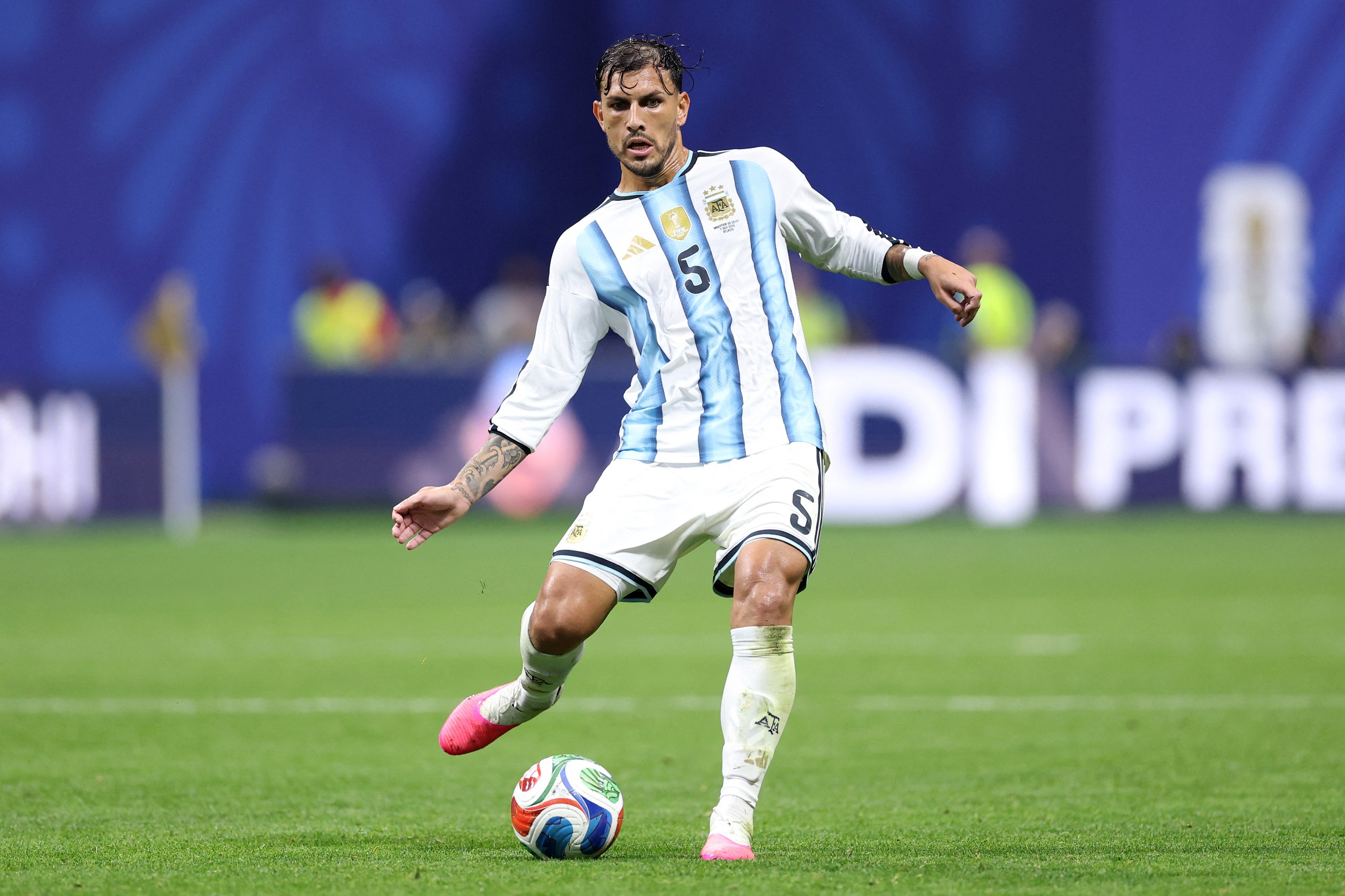
As a result of his aggressive actions during the brawl, Paredes faces three distinct counts of assault. In addition to the assault charges, the trio of Paredes, Molina, and Ayala—alongside winger Thiago Almada and Spanish midfielder Gavi—have all been hit with formal charges for unsporting behavior. The inclusion of players from both sides underscores the chaotic nature of the post-match breakdown, though the most severe physical charges remain concentrated against the Argentine contingent.
Racist Abuse, Security Breaches, and Spectator Chaos: FIFA Outline Full Inquiry Scale
Beyond the individual assault charges and the Falklands banner incident, FIFA’s formal statement outlined a far broader pattern of misconduct under investigation across several Argentina fixtures at the tournament. Disciplinary officials confirmed that proceedings have been initiated to address systemic operational and behavioral failures involving both the team and traveling supporters throughout their stay at the World Cup.

“Disciplinary proceedings have been opened in light of discriminatory chants and gestures, late kick-offs, failure to comply with match and security protocols, the display of inappropriate messages by the team and spectators, and the throwing of objects by spectators,” an official FIFA statement confirmed.
The governing body emphasized that all named parties, including the Argentine Football Association and individual players, have been formally notified of the charges and granted the opportunity to submit their legal defenses under the provisions of the FIFA Disciplinary Code. Once all written submissions and video evidence have been thoroughly reviewed, the FIFA Disciplinary Committee will issue its formal verdicts and hand down any associated bans or sanctions in due course.