Princess Eugenie’s Newborn Daughter Could Become Eligible for Portuguese Citizenship After Historic Overseas Royal Birth
Princess Eugenie and Jack Brooksbank’s newborn daughter may have the opportunity to gain Portuguese citizenship in the future after becoming one of the few British royal babies born outside the United Kingdom in the last century.
The couple welcomed their third child on Monday at a hospital in Lisbon, Portugal. The baby girl was reported to weigh 6 pounds 9 ounces at birth, with both mother and daughter said to be healthy and recovering well.
The birth represents a rare moment in modern royal history, as members of the British Royal Family are traditionally born in the United Kingdom. However, Eugenie and her husband have strong links to Portugal, where they have established a home and spend part of their time.
Although the baby was born overseas, she automatically qualifies for British citizenship because British law allows children born abroad to inherit citizenship if at least one parent is a UK citizen.
However, gaining Portuguese citizenship is a more complicated process.
Unlike some countries that automatically grant citizenship to anyone born within their borders, Portugal does not provide automatic birthright citizenship to children of foreign parents.
Possible Route to Portuguese Citizenship
The newborn does not immediately qualify for Portuguese nationality simply because she was born in Lisbon.
One possible route under Portuguese law would have been if at least one of her parents had legally lived in Portugal for five years before her birth.
However, this condition does not appear to apply because Eugenie and Jack only began spending significant time in Portugal in 2022, when Jack started a new professional role there.
Despite that, changes to Portuguese citizenship rules introduced in May could provide another opportunity in the future.
Under the updated regulations, the royal baby could potentially apply for Portuguese citizenship through naturalization after legally residing in the country for at least ten years.
This means that while Portuguese citizenship is not automatic, the child could eventually become eligible if she and her family maintain long-term residency in Portugal.
The Family’s Life Between Britain and Portugal
Princess Eugenie and Jack Brooksbank currently divide their time between two homes.
The couple maintains a residence at Ivy Cottage, located within the grounds of Kensington Palace in London, while also spending time at their property at the CostaTerra Golf and Ocean Club on Portugal’s Melides coast.
The exclusive coastal development is also known for being connected to other members of the Sussex family, as Prince Harry and Meghan Markle own a villa within the same resort.
The couple’s connection to Portugal has become an increasingly important part of their lifestyle, allowing them to balance family life with their professional commitments.
One of Only a Few Overseas Royal Births
Princess Eugenie’s daughter has become only the third British royal baby born outside Britain in approximately 100 years.
The most recent example before her was Princess Lilibet of Sussex, the daughter of Prince Harry and Meghan Markle.
Lilibet was born in Santa Barbara, California, in June 2021, after Harry and Meghan had stepped back from their roles as senior working members of the Royal Family the previous year.
Lilibet, who is currently seventh in line to the British throne, was born in the United States while her parents were building a new life away from the UK.
Another recent overseas royal birth was that of Maud Windsor in 2013.
Maud, the daughter of Lord Frederick Windsor and actress Sophie Winkleman, was born in Los Angeles while her parents were living in California.
She is the granddaughter of Prince and Princess Michael of Kent and currently sits 56th in line to the throne.
To find another British royal born abroad, historians have to go back more than a century to the birth of Prince Philip.
Philip was born on the Greek island of Corfu in 1921 as a prince of Greece and Denmark.
Before marrying the future Queen Elizabeth II in 1947, he gave up his foreign royal titles and became a naturalized British citizen.
The Baby’s Royal Position
Although she is a member of the Royal Family, Princess Eugenie’s daughter will not receive the title of HRH (Her Royal Highness).
She will instead be known as a member of the extended royal family and will hold a place in the line of succession.
The baby is currently 15th in line to the throne, meaning Prince Edward moves down one position to 16th.
She is also the 15th great-grandchild of the late Queen Elizabeth II and becomes the third great-grandchild born since the Queen’s death in 2022.
Her arrival adds another generation to the Royal Family and continues the expansion of Queen Elizabeth II’s descendants.
Waiting to Reveal Her Name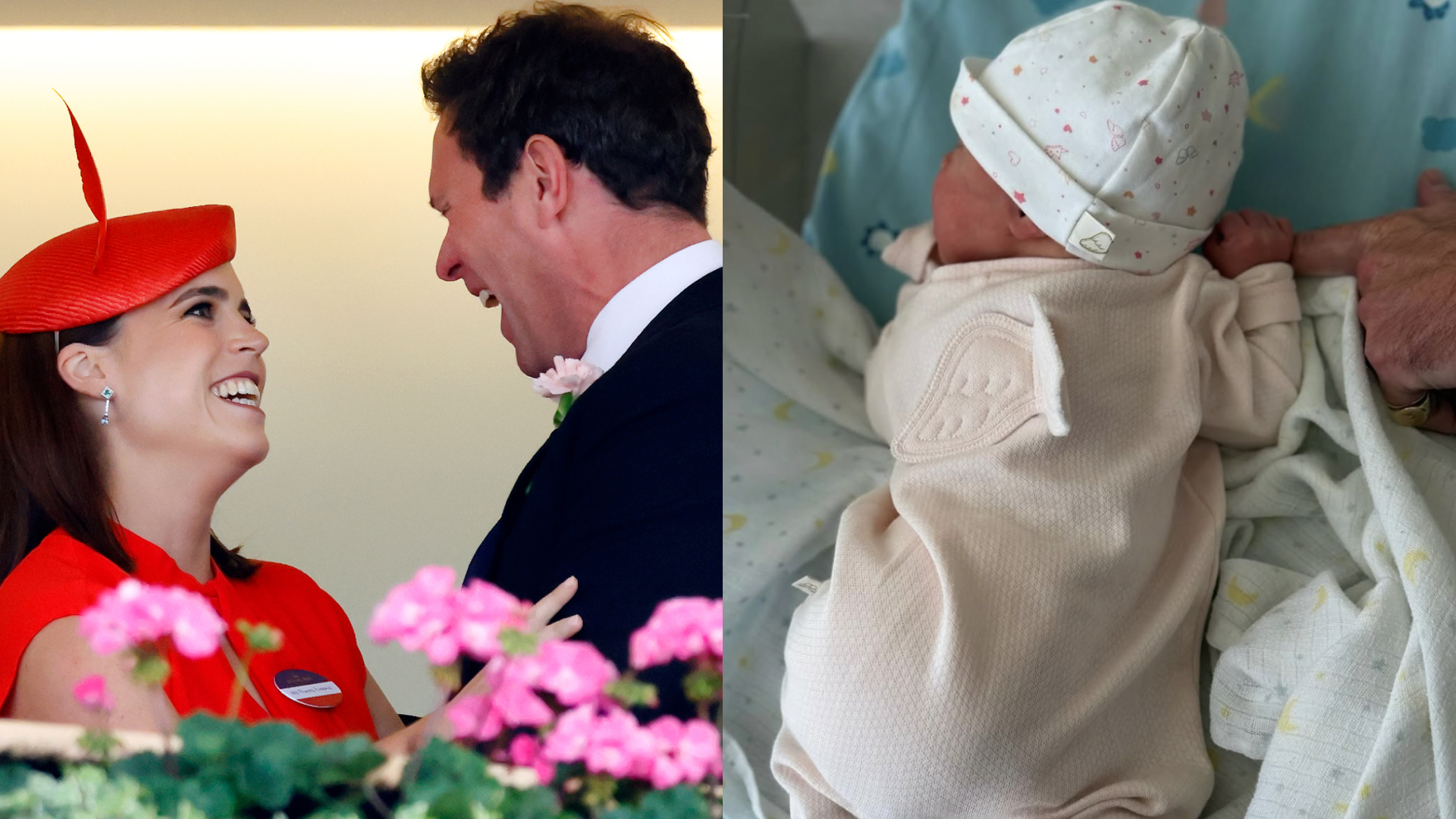
While in Portugal, Eugenie and Jack are expected to spend private time with their newborn daughter before announcing her name.
The couple has not yet confirmed the exact hospital where the baby was delivered, although Portuguese media reports have suggested she may have been born at a private medical facility in Lisbon.
The family has reportedly expressed deep appreciation toward the doctors and medical staff who supported them during the birth.
As with many royal births, the announcement has generated widespread interest, particularly because of the unusual location and the historical significance of an overseas royal birth.
Pregnancy Announcement
The couple revealed Eugenie’s pregnancy in May through a social media announcement.
The princess shared a photograph featuring her young sons, August and Ernest.
In the image, Ernest was wearing a Chelsea football shirt, while August appeared in a grey long-sleeved top while holding a picture of the baby scan.
The announcement marked the beginning of a new chapter for Eugenie and Jack, who are already parents to two sons.
With the arrival of their daughter, the couple now has three children and continues to balance family life between the United Kingdom and Portugal.
The baby’s birth may be a rare royal event, but it also reflects the increasingly international nature of the modern Royal Family.
As she grows up between two countries, Princess Eugenie’s daughter could potentially develop a unique connection to both British and Portuguese heritage.