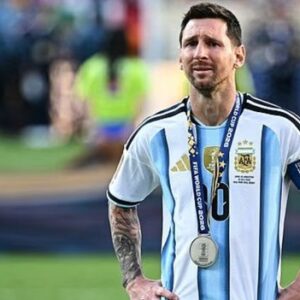
Antonela Roccuzzo pays tribute to Lionel Messi after international retirement: ‘I saw you suffer, fall and get back up’
Antonela Roccuzzo has shared an emotional public message to her husband, Lionel Messi, following his retirement from international football with Argentina. In an Instagram note that quickly circulated among fans, she reflected not only on the trophies and records but on the years of pressure, setbacks and persistence that defined his career in the national shirt. The tribute framed Messi’s departure from the albiceleste as the close of a long chapter that their family had lived together, often in full view of the world.

Messi announced his international retirement on Monday. He leaves as Argentina’s most-capped player and all-time leading scorer, with 207 appearances and 125 goals after being called up by José Néstor Pekerman in 2005 at the age of 18. Supporters had widely anticipated that the end might be near, particularly after Argentina’s defeat in the World Cup final, yet the confirmation still carried weight. Roccuzzo’s words captured that mixture of pride and farewell from the person who had watched the journey at closest range.
A note built around resilience
Roccuzzo began by expressing pride in the way Messi had chosen to close the chapter. She listed the accumulation of years, moments, joys and difficulties that had marked his time with the national team. “I saw you suffer, fall and get back up,” she wrote. “I saw you keep going when things weren’t working out and always try again.” The language emphasised endurance rather than pure triumph. Only after acknowledging those harder stretches did she turn to the fulfilment that eventually arrived: the chance to see him realise dreams that had once seemed distant and to share some of the happiest days of their lives.
The structure of the message mattered. By placing struggle before success, Roccuzzo presented the World Cup and the other titles as the product of repeated recovery rather than uninterrupted dominance. For a player whose international career included long periods of criticism and near-misses before the breakthrough of recent years, that framing aligned with a narrative many Argentina supporters already recognised. Coming from his wife, it carried an additional layer of private witness.
The children as spectators of the journey

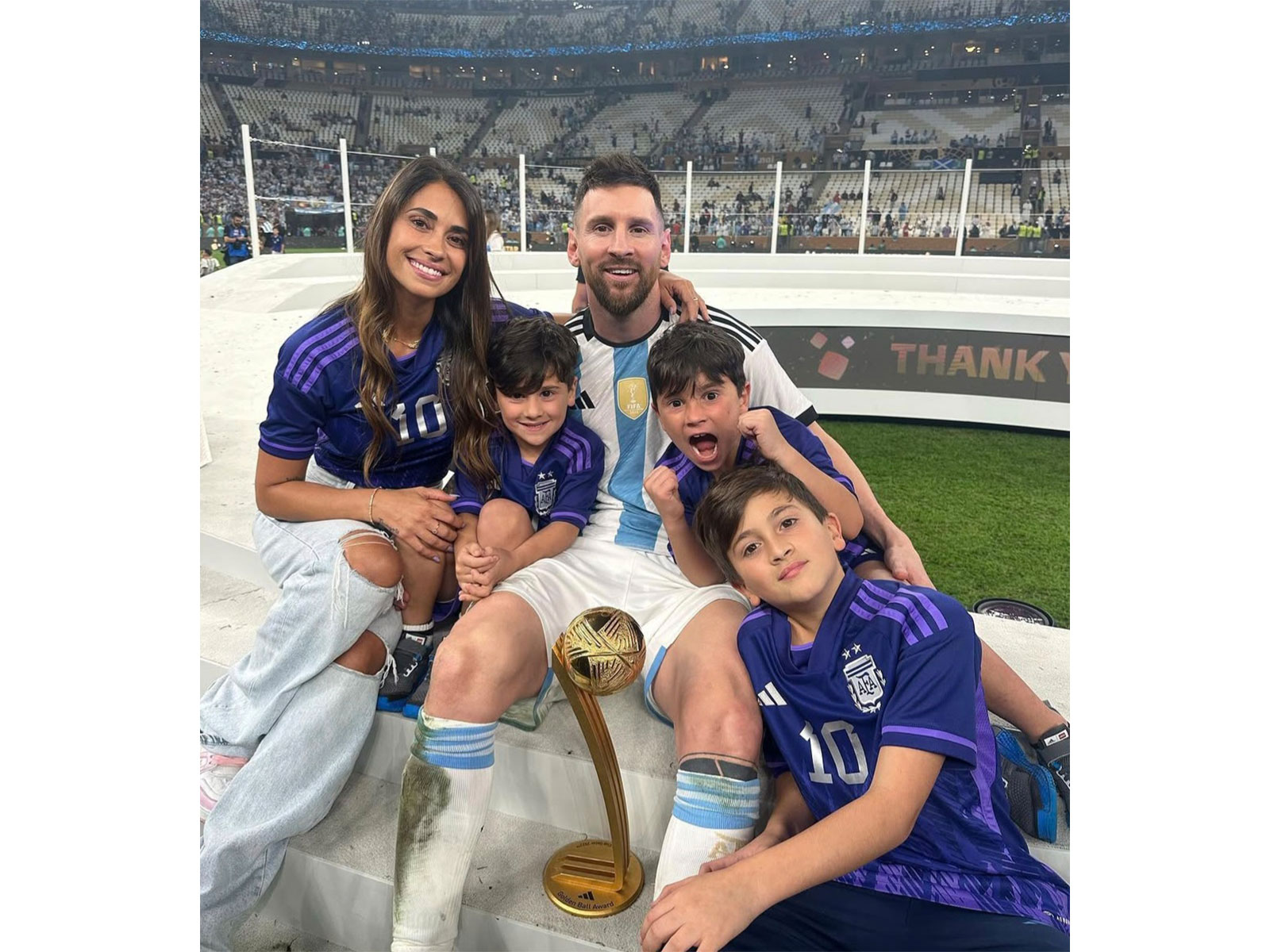
A central passage of the note focused on the couple’s children. Roccuzzo wrote that one aspect of the story moved her especially: that their sons had grown up watching their father’s career from so close. They had seen him fight for what he wanted, refuse to give up and continue to believe until the end. Later, they had been present to watch him achieve the ultimate goal and lift the World Cup. The observation turned the public history of Messi’s Argentina career into a family memory, one in which the children were not merely beneficiaries of success but witnesses to the effort that preceded it.
She added that the children might one day understand fully how extraordinary the story is. For now, she said, they are simply proud of their father. The distinction was gentle but clear. Adult fans and historians will catalogue the caps, goals and trophies; the boys, for the moment, experience Messi first as their dad. Roccuzzo positioned herself between those two perspectives—aware of the scale of the achievement, yet grounded in the everyday pride of a parent and partner.
Pride in the person behind the moments
In closing, Roccuzzo returned to a personal register. She stated that she was proud of Messi’s journey, of everything he had overcome, and above all of the person behind each of those moments. “What a privilege it has been to live through all of this by your side,” she wrote. “We love you endlessly.” The final lines avoided football jargon. They did not list tournaments or individual awards. Instead they emphasised character and companionship across a career that had been lived under intense scrutiny.
The note did not address the specific timing of the retirement or the details of Argentina’s recent World Cup campaign. Its purpose was different: to acknowledge the emotional arc of two decades in the national team from the standpoint of the partner who had accompanied it. In that sense it functioned as both a private letter made public and a contribution to the wider farewell that has followed Messi’s announcement.
Context of a long international career
Messi’s Argentina story began with a call-up as a teenager and stretched across more than twenty years of qualifiers, Copa América tournaments and World Cups. He became the face of the side through periods when major trophies remained elusive, and later through the years in which the team collected Copa América titles and the World Cup itself. Supporters and critics alike often reduced those years to results; Roccuzzo’s message insisted on the human cost and the persistence required to continue when outcomes were disappointing.
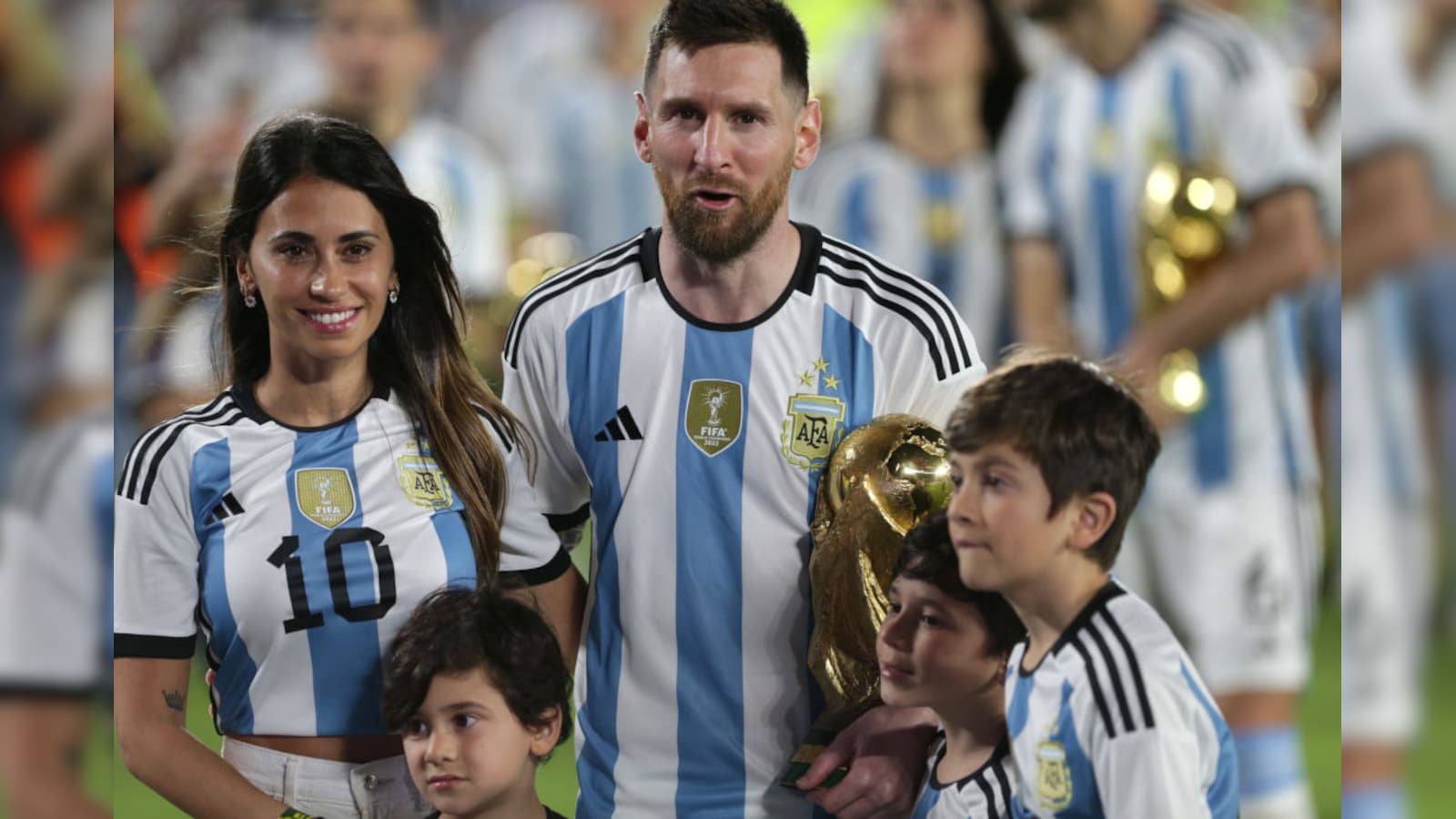
Her reference to seeing him fall and get back up resonated with well-known chapters of that career—the missed finals, the public debates about his commitment or leadership, and the eventual redemption narratives that accompanied the later successes. By stating that she had watched him keep going when things were not working, she offered an intimate confirmation of a quality that statistics alone cannot capture.
A family farewell within a public moment
International retirements of players of Messi’s stature generate institutional tributes, teammate testimonials and fan commemorations. Roccuzzo’s Instagram post occupied a different space. It did not speak for the Argentine Football Association or for the dressing room. It spoke for the household that had organised itself around training camps, away fixtures and the emotional aftermath of decisive matches. The children’s presence in the narrative underlined that the career had not been lived in isolation; it had been a shared family experience, with all the absences and pressures that elite sport imposes.
At the same time, the note remained measured. It did not criticise those who had doubted Messi, nor did it revisit controversies. Its tone was one of accumulated pride and affectionate closure. For readers following the retirement coverage, it supplied a perspective that match reports and career retrospectives cannot: the view of someone who had seen the cost of the failures as well as the joy of the triumphs, and who chose to highlight the former as the foundation of the latter.

What the message leaves behind
Messi’s decision to retire from international football ends one of the most documented careers in the modern game. Roccuzzo’s response does not attempt to summarise that career in numbers. Instead it offers a short emotional inventory: years and moments, joys and difficulties, falls and recoveries, dreams fulfilled, children watching, and a sustained pride in the person who lived it. She presents the World Cup not as an isolated peak but as the visible reward for a long refusal to stop believing.
In the days after an announcement of this magnitude, words from teammates, coaches and officials inevitably multiply. The message from Antonela Roccuzzo stands apart because of its vantage point. She was not analysing tactics or ranking greatness. She was marking the end of a chapter she had inhabited alongside Messi, and she did so by recalling the times he suffered and stood up again, the example that left for their children, and the privilege of having shared the journey. For a player whose public life has been defined by extraordinary achievement, it was a reminder that the private story—of endurance, partnership and family—ran alongside the records all along.