Princess Anne Recalls the Household Rule That Could Quickly Anger Queen Elizabeth II
Princess Anne has offered an amusing glimpse into the private habits of her late mother, Queen Elizabeth II, revealing how seriously the monarch took household chores and keeping things in their proper place. Although the late Queen was perfectly willing to get involved in everyday tasks herself, anyone who attempted to help her without knowing exactly what they were doing could quickly find themselves in trouble.
Queen Elizabeth was known for having a practical side that was not always visible during official royal engagements. During her summer stays at Balmoral Castle in Scotland, for example, she was reportedly happy to take on ordinary household jobs. She could even put on a pair of rubber gloves and help with the washing-up.
However, the Queen apparently had very particular standards when it came to how things should be organised. Guests and friends who wanted to lend a hand were therefore expected to know where everything belonged and to follow the established routine carefully.
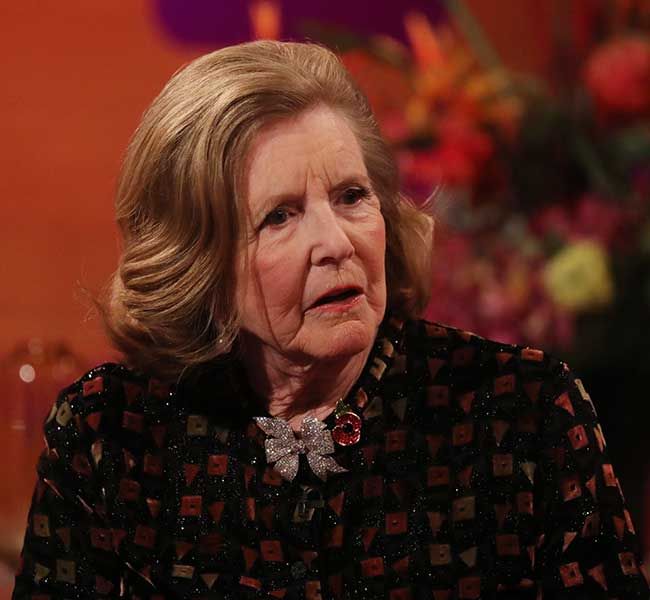
This aspect of the monarch’s personality was recalled by Lady Anne Glenconner, who had an unusually close connection to the Royal Family. Lady Anne served as a Lady in Waiting to Princess Margaret and consequently witnessed many moments of royal life away from the cameras.
In her memoir, Lady in Waiting: My Extraordinary Life in the Shadow of the Crown, Lady Anne described an entertaining incident that took place following one of the large summer picnics attended by members of the Royal Family and their friends.
According to her account, she and her husband, Colin Tennant, were attending one of these elaborate outdoor gatherings. After the meal, they decided to be helpful by carrying some of the items back towards the mobile kitchen. They apparently assumed that assisting with the clean-up would be appreciated.
Instead, they were suddenly confronted by Princess Anne.
Lady Anne recalled hearing Anne call out from behind them and demand to know what they were doing. The unexpected intervention immediately made the couple realise that they might have crossed an invisible royal boundary.
Lady Anne explained that they were simply attempting to tidy up after the picnic. She also reassured Princess Anne that they hoped they were returning everything to the correct location.
Princess Anne’s response made the situation very clear. She warned them that they had better be putting everything back exactly where it belonged because, otherwise, the Queen would be extremely angry.
The warning was apparently enough to convince Lady Anne and her husband to abandon their attempt to help. The prospect of upsetting Queen Elizabeth over something as seemingly minor as putting household items in the wrong place was sufficient to make them step away from the task.
Lady Anne later reflected that the incident demonstrated just how carefully the Queen managed her surroundings. For Elizabeth, maintaining order was evidently not a trivial matter. Everything had its designated place, and those who were unfamiliar with the system were better off leaving things alone.
The story offers a fascinating contrast between the Queen’s public image and her private personality. Although she was one of the world’s most recognisable figures, Elizabeth was also known for enjoying simple routines and taking responsibility for ordinary tasks.
Her willingness to wash dishes and participate in household chores demonstrated a practical nature. At the same time, her insistence on order showed that she had a strong sense of discipline and routine.
Lady Anne Glenconner was particularly well placed to describe these private royal moments. Now in her nineties, she has enjoyed a remarkable relationship with the Royal Family for much of her life.
Her association with the monarchy began at a young age. In 1952, she served as one of the Maids of Honour at Queen Elizabeth II’s Coronation. More than two decades later, in 1973, she became a Lady in Waiting to Princess Margaret.
Lady Anne remained closely involved with Margaret for many years, accompanying the princess on official occasions, social engagements and overseas journeys. She continued in the role until Princess Margaret’s death in 2002.
Her relationship with the royal family also extended beyond official duties. Together with her husband, Colin Tennant, Lady Anne played an important role in the development of Mustique, the private Caribbean island that later became famous as a holiday destination for wealthy and high-profile visitors.
In 1959, the couple gave Princess Margaret a substantial piece of land on Mustique as a wedding present. Margaret subsequently built a private villa there called Les Jolies Eaux, a French expression meaning “beautiful waters.”
The property became one of Princess Margaret’s favourite retreats and helped establish Mustique as a destination associated with members of the British aristocracy and international celebrities.
Over the years, other members of the Royal Family have also visited the island. Prince William and Catherine, Princess of Wales, have reportedly spent holidays there with their children. The island’s reputation for privacy and strict security makes it particularly attractive to people who want to escape public attention.
Mustique operates under unusually strong privacy rules. Visitors are expected to respect the confidentiality of other guests, while photographers and members of the press are kept at a significant distance from the island.
A former visitor to Mustique previously described the security arrangements and explained how carefully the island protects the privacy of its residents and guests. Photography is reportedly discouraged, helping to explain why occasional photographs of royals on the island are often taken from a considerable distance.
The visitor also explained that day-trippers are restricted to particular areas, while other parts of the island are reserved for people staying overnight. Visitors may also be asked to provide evidence of where they are staying.
The island’s security measures became particularly apparent when the visitor arrived by catamaran. According to the account, a member of the local security team approached the boat before it reached the island and informed the passengers that they could not bring cameras ashore.
The strict approach reflects Mustique’s status as a private and exclusive destination. Despite these restrictions, visitors can still explore some of the island’s attractions. Local taxi drivers are available to take tourists around and point out properties associated with famous residents.
The visitor recalled seeing homes linked to well-known figures such as musician Bryan Adams, fashion designer Tommy Hilfiger and rock star Mick Jagger. They also visited popular locations including Cotton House Hotel, Basil’s Bar and Macaroni Beach.
During the trip, the visitor even claimed to have spotted Jade Jagger swimming and Prince Harry with Chelsy Davy while having a drink at Basil’s Bar.
Another memorable feature of the island is its small, private airport. The runway is surrounded by vegetation, giving it a secluded appearance that the visitor compared to something from a James Bond movie.
Mustique’s combination of luxury, seclusion and strong privacy protections has helped make it an attractive holiday destination for members of the Royal Family.
The island also has a deep connection with Queen Elizabeth II herself. In 1977, the Queen and Prince Philip visited Mustique, and photographs from the trip show Princess Margaret welcoming her sister and giving her a tour of the island.
The story of Queen Elizabeth’s strict approach to household order and Lady Anne’s experience at the picnic provides another glimpse into the less formal side of royal life. Behind the ceremonies, official duties and carefully planned public appearances, the Queen could be surprisingly practical and particular.
Her willingness to wash dishes may have made her seem down-to-earth, but her insistence that everything be returned to exactly the right place revealed another characteristic: she valued organisation and routine.
For Lady Anne, a simple attempt to help with the washing-up after a picnic became a memorable lesson in royal etiquette. Princess Anne’s warning made it clear that good intentions were not necessarily enough. When it came to Queen Elizabeth’s belongings, knowing precisely where everything belonged was essential.
The anecdote is therefore more than a humorous story about a royal picnic. It offers a rare glimpse into the personality of Queen Elizabeth II, while also illustrating the close relationships between the monarch, Princess Margaret and the friends who were welcomed into their private world.