Mohamed Salah Reflects on Unsung Heroes and a Farewell That Still Feels Incomplete
In a candid and thoughtful conversation, Mohamed Salah offered a rare glimpse into how he views the players who helped shape one of Liverpool’s most successful modern eras. Sitting down with club legend Steven Gerrard, the discussion moved beyond goals and trophies, focusing instead on the quieter contributions that often go unnoticed.
When asked to name the most underrated teammate he had played alongside, Salah didn’t hesitate—but his answer wasn’t limited to just one name. Instead, he highlighted a group of players whose importance, in his view, went far beyond what fans and pundits typically recognize.
He first mentioned Trent Alexander-Arnold, acknowledging that while the right-back has received increasing praise in recent years, there was a time when his true quality wasn’t fully appreciated. Salah suggested that people may have initially underestimated Alexander-Arnold’s influence, particularly his vision and creativity from deep positions.
Still, Salah stopped short of labeling him the most underrated, noting that recognition has gradually caught up with performance. That distinction, he felt, belonged more clearly to others—players whose contributions were less visible but equally essential.
Among them was Georginio Wijnaldum, a midfielder whose consistency and intelligence made him a vital part of Liverpool’s system. Wijnaldum rarely dominated headlines, but his ability to control tempo, retain possession, and step up in crucial moments left a lasting impression on those who played alongside him.
Salah also pointed to James Milner, whose professionalism and versatility became a cornerstone of the squad. Whether filling in across multiple positions or providing leadership in the dressing room, Milner’s role extended far beyond what statistics could capture.
And then there was Jordan Henderson—a player Salah spoke about with particular emphasis.
“Without them, we wouldn’t have won anything,” he explained, referring collectively to Wijnaldum, Milner, and Henderson. It was a strong statement, one that underscored how much he values the balance between attacking flair and midfield stability.
Salah elaborated on this idea, noting that Liverpool’s attacking success often depended on the work done behind the scenes. While forwards like himself were responsible for scoring goals, the foundation was built by players who covered ground, broke up opposition play, and maintained structure.
“With how we played up front,” he said, “without these guys backing us up, we would not win anything.”
It was a reminder that football success is rarely about individuals alone. Even in a team known for its attacking brilliance, the less glamorous roles were just as critical.
The conversation then shifted briefly back to Alexander-Arnold, but in a more personal context. Asked whether he missed playing alongside him, Salah’s answer was simple and sincere.
“I do miss him,” he admitted.
He revealed that the two still keep in touch, exchanging messages from time to time. The comment hinted at a friendship that extends beyond the pitch—a connection formed through years of shared experiences, both good and challenging.
But it was when the topic returned to Henderson that the tone became more emotional.
Salah spoke about the former captain’s departure in 2023, describing it as abrupt and lacking the kind of farewell a player of his stature deserved. After more than a decade at the club, Henderson’s exit came without the traditional send-off that often marks the end of a long and influential career.
Now, with an upcoming match that could bring him back to Anfield as an opponent, Salah sees an opportunity to correct that.
“I hope he gets the send-off he deserves,” Salah said, referring to the final day of the Premier League season when Brentford visits Liverpool.
For Salah, the occasion carries symbolic weight. Henderson’s time at the club spanned 12 years—longer than many of his teammates, including key figures like Virgil van Dijk and Andrew Robertson. As captain, he played a central role in guiding Liverpool through one of its most successful periods, lifting major trophies and helping to define the team’s identity.
Yet, despite those achievements, his departure lacked closure.
Salah acknowledged that he doesn’t know how the club or supporters will approach the situation. Organizing a tribute for a former player—especially one now representing another team—can be complicated. But his hope is clear: that the fans will find a way to show appreciation.
“I really wish they do something special for him,” he said.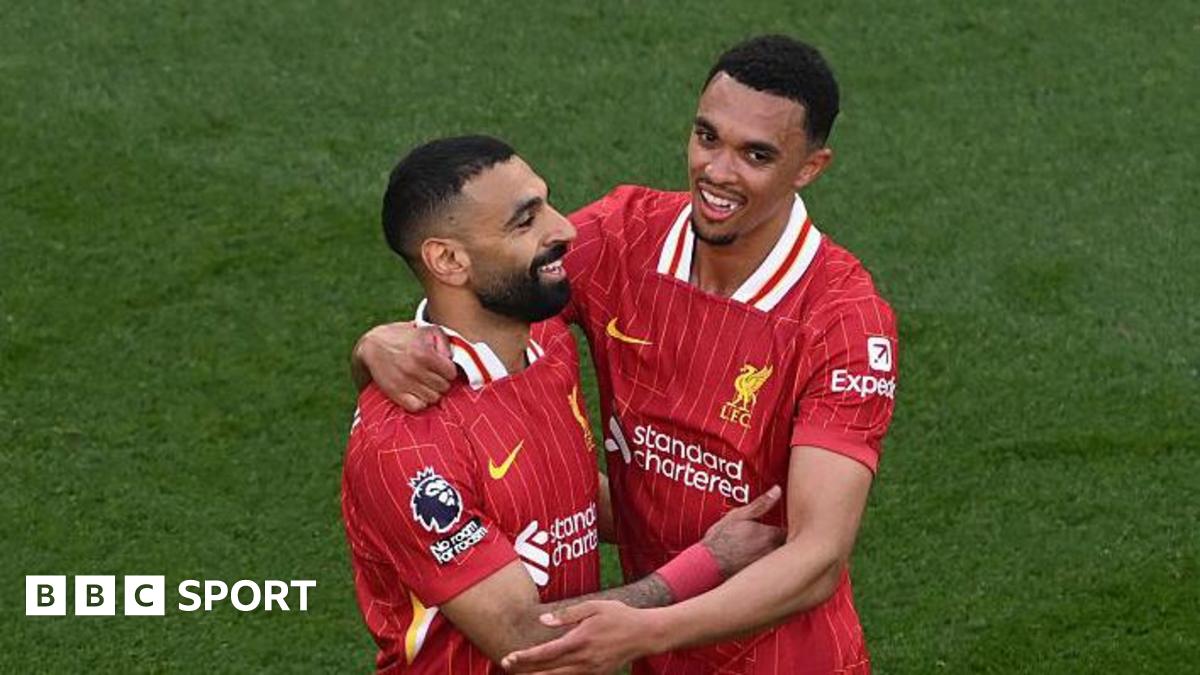
The sentiment reflects not just respect, but gratitude. For Salah, Henderson’s influence went beyond leadership on the pitch. In the dressing room, he was a unifying presence, someone who helped maintain standards and foster a sense of collective purpose.
“Without him,” Salah added, “we wouldn’t have achieved what we achieved.”
That statement echoes his earlier comments about underrated players, reinforcing a central theme of the interview: that success is built on contributions that don’t always receive public recognition.
As the conversation unfolded, it became clear that Salah was reflecting not just on individual teammates, but on an entire era. The players he mentioned were part of a core group that transformed Liverpool into a dominant force, competing at the highest level both domestically and in Europe.
Now, with changes happening across the squad and coaching staff, that era is gradually coming to an end.
For Salah himself, the moment carries additional significance. The same match that could see Henderson return to Anfield may also mark a farewell of his own. While he didn’t dwell on that aspect, it added an unspoken layer to his comments—a sense of transition, of chapters closing and new ones beginning.
In that context, his reflections feel almost like a tribute. Not just to specific players, but to the collective effort that defined their time together.
There’s also a broader message in what he said. In modern football, where attention often focuses on star players and highlight moments, it’s easy to overlook the quieter contributions that make those moments possible. Salah’s perspective challenges that narrative, shining a light on the importance of balance, teamwork, and mutual support.
As the interview came to a close, what remained was a sense of appreciation—for teammates, for shared experiences, and for the journey they had taken together.
And if there is one thing Salah seemed to hope for, it’s that those contributions—especially from players like Henderson—won’t be forgotten.
Because sometimes, the most important figures in a team aren’t the ones who score the goals, but the ones who make everything else possible.