Omar Berrada Explains Why Ruben Amorim’s Manchester United Spell Came to an End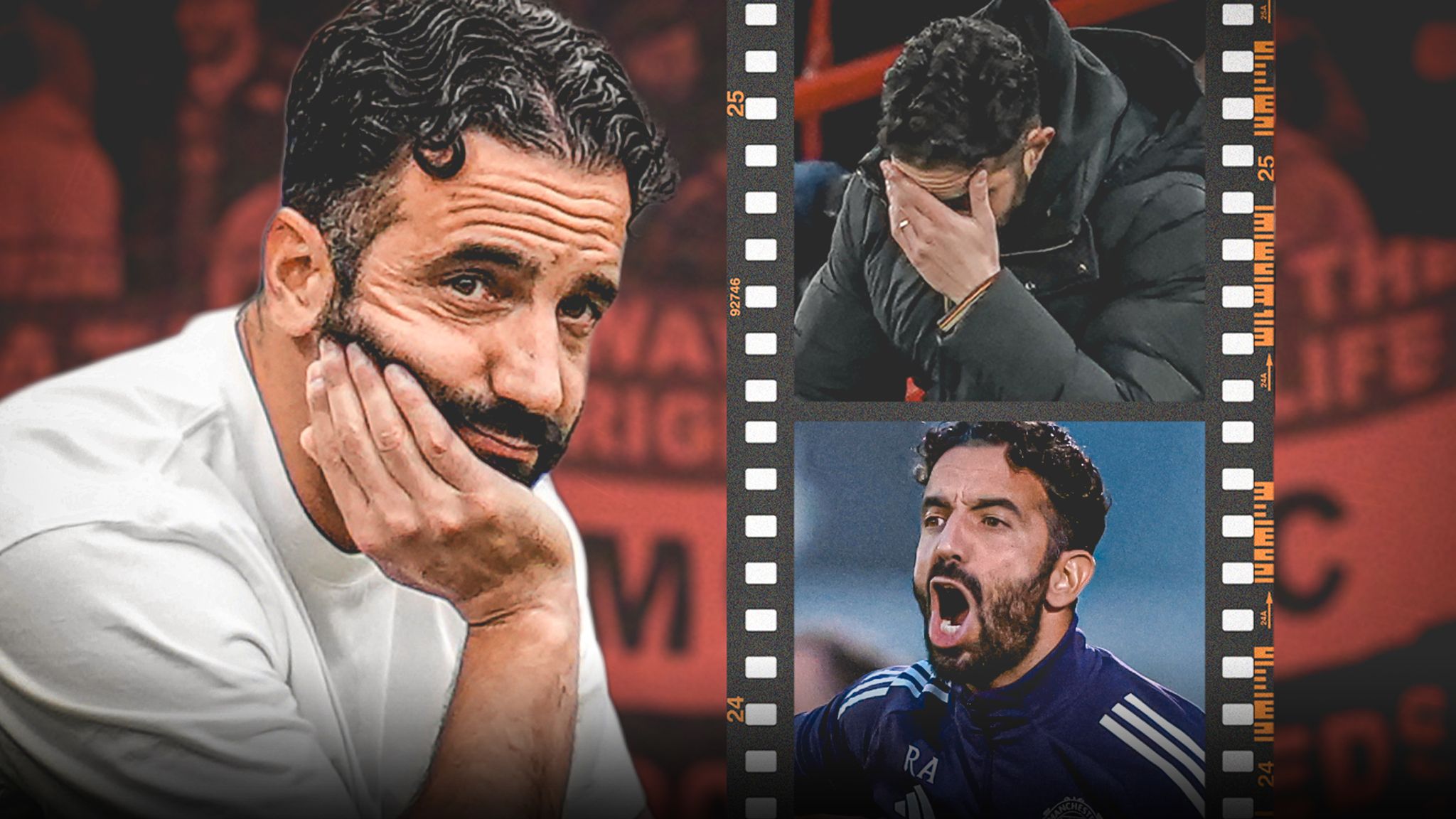
Manchester United chief executive Omar Berrada has offered his assessment of Ruben Amorim’s disappointing spell at Old Trafford, suggesting that the Portuguese coach’s downfall was not caused by a lack of coaching ability or tactical knowledge. Instead, Berrada believes Amorim’s unwillingness to adjust his football philosophy proved to be the biggest factor behind his dismissal.
Speaking during an appearance at the Financial Times Weekend Festival in New York, Berrada reflected on Amorim’s brief period in charge and explained why the former Sporting Lisbon manager struggled to succeed after arriving in Manchester.
According to the United executive, Amorim entered one of football’s most demanding jobs with a clear tactical identity but failed to adapt when circumstances required greater flexibility. Berrada stressed that modern football often demands compromises, particularly when a coach inherits an unbalanced squad midway through a season.
Amorim was appointed after Manchester United decided to part ways with Erik ten Hag in October 2024. The club paid Sporting Lisbon around £10 million in compensation to secure the services of one of Europe’s most highly regarded young managers, believing his success in Portugal could eventually be replicated in the Premier League.
However, his time at Old Trafford lasted only 14 months before the club chose to make another managerial change.
Throughout his career at Sporting, Amorim built his reputation around an aggressive 3-4-3 formation that delivered domestic titles and earned widespread praise across Europe. His tactical system became closely associated with his coaching identity, and many expected him to introduce the same philosophy at Manchester United.
The challenge, however, was that United’s squad had not been assembled with that formation in mind. Several players appeared uncomfortable in unfamiliar roles, while the club lacked specialists capable of executing the demanding tactical structure that had brought Amorim so much success in Portugal.
Despite those difficulties, Amorim remained committed to his preferred system. Rather than modifying his approach to suit the available personnel, he continued to rely on the same tactical principles even as results became increasingly inconsistent.
Earlier in his tenure, Amorim openly acknowledged that changing his football philosophy was never part of his plan. He insisted that abandoning the ideas which had shaped his career would represent a betrayal of his coaching beliefs, even suggesting that he would rather lose his job than compromise his principles.
Those comments attracted significant attention, particularly as Manchester United struggled to produce consistent performances.
During the summer transfer window, the club attempted to strengthen the squad by investing more than £200 million in attacking reinforcements. The expectation was that additional quality in forward areas would help Amorim implement his preferred style more effectively.
Despite the substantial financial backing, performances failed to improve consistently. While there were occasional encouraging displays, United continued to experience periods of poor form, ultimately leaving the club outside the Premier League’s leading positions.
Amorim’s reign eventually came to an end following a 1-1 draw away to Leeds United in January. After the match, the Portuguese coach publicly expressed frustration regarding his authority within the club, raising questions about decision-making and the level of control he had been given.
Those comments further increased speculation surrounding his future, and it was not long before Manchester United confirmed his departure.
Looking back on the situation, Berrada suggested the central issue was not tactical knowledge but a lack of adaptability.
He explained that Amorim inherited an extremely difficult situation after arriving in the middle of the campaign without the benefit of a full pre-season. Under those circumstances, coaches often need to adjust their methods while gradually introducing long-term ideas.
Instead, Berrada believes Amorim remained too committed to his established philosophy at the exact moment greater flexibility would have offered the team a better chance of improving results.
According to the chief executive, the intense pressure surrounding Manchester United only increased the importance of adapting quickly. Every match attracted enormous scrutiny from supporters, media and former players, leaving little time for experimentation or prolonged rebuilding.
Although Berrada accepted that Amorim possessed considerable coaching talent, he argued that success at a club of United’s size also requires the ability to respond to changing circumstances rather than relying exclusively on one tactical model.
Interestingly, Berrada himself played an important role in bringing Amorim to Old Trafford. He strongly supported the appointment after Erik ten Hag’s departure and viewed the Portuguese manager as someone capable of leading the club into a new era.
The decision initially generated excitement among supporters, many of whom admired Amorim’s achievements with Sporting Lisbon and believed he represented one of Europe’s brightest coaching prospects.
Unfortunately, those expectations were never fully realised.
Amorim inherited a squad already experiencing significant problems, making his task particularly difficult from the beginning. While many observers acknowledged that he could not be held entirely responsible for the team’s struggles, the overall results under his leadership remained disappointing.
Manchester United endured one of the worst Premier League campaigns in the club’s modern history, eventually finishing in 15th place. The disappointing domestic season was compounded by defeat in the Europa League final, denying the club an opportunity to salvage the campaign with silverware and qualification for European competition.
Several poor runs of form severely damaged confidence throughout the season. December proved especially difficult, with United suffering five defeats in six matches. Even more concerning was the fact that three of those losses came at Old Trafford, traditionally regarded as one of English football’s most intimidating venues.
Throughout the campaign, Amorim also attracted attention with several frank post-match interviews. Rather than avoiding criticism, he frequently spoke openly about the team’s shortcomings and the scale of the rebuilding task facing the club.
One of his most memorable remarks came after another disappointing performance when he described his side as “the worst United team in history.” Although many supporters appreciated his honesty, others questioned whether such comments further damaged confidence within the dressing room.
Despite the disappointing outcome, there remains widespread recognition that Amorim inherited an extremely challenging situation. Years of inconsistent recruitment, managerial changes and uneven squad planning had already created significant structural problems before his arrival.
Nevertheless, football at the highest level is judged primarily by results, and Manchester United ultimately concluded that a change of direction was necessary.
Berrada’s reflections provide an insight into the club’s thinking following Amorim’s departure. Rather than criticising the former manager’s tactical intelligence or commitment, the chief executive highlighted adaptability as the decisive quality required to succeed in one of football’s most demanding environments.
For Manchester United, the experience has reinforced the importance of appointing a coach capable not only of implementing a long-term philosophy but also of adjusting that philosophy when circumstances demand. As the club continues searching for sustained success, the lessons learned from Amorim’s brief spell are likely to influence future decisions both on and off the pitch.