Prince Harry and Meghan Markle’s First Archewell Documentary Faces Unexpected Competition From Cat Videos
Prince Harry and Meghan Markle have entered a new chapter of their entertainment careers with Cookie Queens, the first movie executive-produced by the Duke and Duchess of Sussex to receive a theatrical release under their Archewell banner. However, the documentary’s opening weekend produced an unexpected result: a collection of viral cat videos earned considerably more money despite playing in fewer theaters.
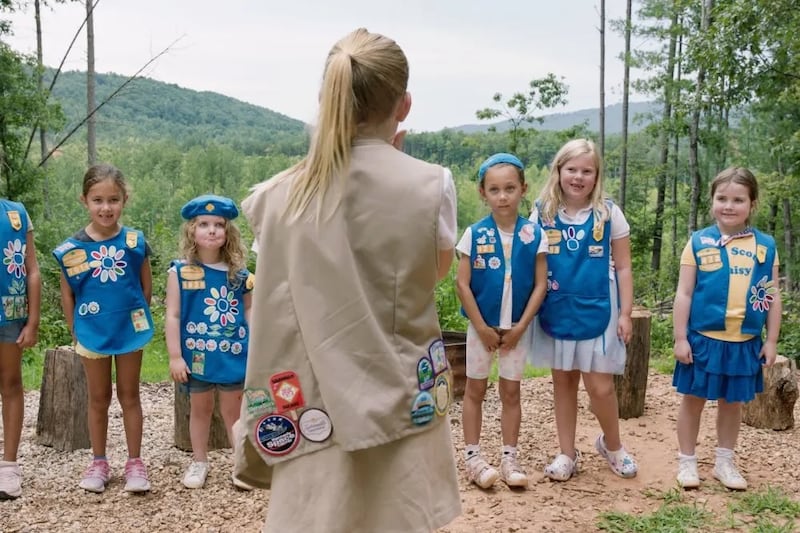
Cookie Queens follows four ambitious young Girl Scouts as they compete to become highly successful cookie sellers. The 91-minute documentary presents their experiences as more than a simple competition over baked goods, focusing instead on determination, confidence, entrepreneurship and the challenges young girls encounter as they pursue their goals.
With themes of female empowerment and personal ambition, the film seemed well suited to the kind of positive, socially conscious storytelling Harry and Meghan have promoted through Archewell.
Yet its commercial debut proved relatively modest.
The documentary arrived in U.S. theaters on Friday, opening across 446 locations. During the weekend, it generated approximately $327,797 at the domestic box office, according to figures reported by Box Office Mojo.
That would normally be judged in the context of the movie’s limited theatrical rollout and documentary status. Unfortunately for Cookie Queens, another unusual release provided an eye-catching comparison.
CatVideoFest Delivers a Surprisingly Strong Performance
Opening on the same Friday was CatVideoFest 2026, a 71-minute compilation featuring a selection of popular and entertaining cat videos from the internet.
Unlike Cookie Queens, the concept does not involve a traditional narrative or a group of characters pursuing a central goal. Instead, audiences essentially pay for the experience of watching funny, charming and memorable feline clips together on a cinema screen.
Despite its unconventional format, the movie comfortably outperformed Harry and Meghan’s documentary during their shared opening weekend.
CatVideoFest 2026 was released in only 255 theaters, significantly fewer than the 446 locations showing Cookie Queens. Nevertheless, the cat compilation earned approximately $569,414 over the weekend.
The difference becomes even more striking when the average revenue per theater is considered.
Cookie Queens averaged around $735 per location, while CatVideoFest generated approximately $2,233 per theater.
In other words, the cat movie not only earned more overall while appearing on fewer screens, but also produced roughly three times as much revenue per location.
That unusual result quickly became a talking point surrounding the Sussexes’ first theatrical documentary project.
British Media React to the Box Office Numbers
The comparison naturally attracted attention from British publications that have closely followed Harry and Meghan since the couple stepped away from their positions as senior working members of the royal family.
The Times of London highlighted the disappointing financial comparison, with an unnamed industry source offering a particularly critical assessment of the film’s opening performance.
The source argued that being beaten by a cat-video festival represented a weak commercial result for a project connected to such globally recognizable executive producers.
However, the raw box office numbers do not necessarily provide a complete assessment of the documentary.
Films of this type rarely compete financially with major Hollywood releases, and documentaries can develop audiences through streaming, digital rentals and other forms of distribution after their theatrical runs.
More importantly, critical reaction to Cookie Queens has not been universally negative.
Critics Offer Mixed but Sometimes Positive Reviews
Reviews of the documentary have varied considerably.
Some critics felt the movie lacked focus and occasionally resembled reality television more than a tightly structured feature documentary.
Variety, for example, compared its format to a combination of competition-based television programs and documentaries about talented young people.
The publication suggested that the film contained elements reminiscent of Dance Moms, The Apprentice and the acclaimed 2002 spelling-bee documentary Spellbound. However, the review argued that Cookie Queens did not reach the same level as the latter film.
The central criticism was that the documentary sometimes wanders rather than developing a consistently focused narrative.
Other reviewers were considerably more enthusiastic.
Roger Ebert’s website awarded the film three and a half stars out of four, describing the documentary in highly positive terms.
Critic Tomris Laffly acknowledged that the Girl Scout cookie-selling system inevitably introduces themes of consumerism and capitalism into the story. Nevertheless, she argued that those elements eventually become less important than the personalities and ambitions of the girls themselves.
According to the review, what ultimately makes the documentary meaningful is seeing young girls develop the confidence and determination that could help them become future leaders.
That interpretation aligns closely with the film’s broader themes of empowerment.
More Than a Documentary About Selling Cookies
On the surface, Cookie Queens is about children attempting to sell large quantities of Girl Scout cookies.
But the filmmakers use that familiar American tradition to examine larger ideas.
The four girls at the center of the documentary must communicate with customers, establish goals, deal with disappointment and learn how to compete while remaining confident in themselves.
Selling cookies becomes a framework through which the movie explores ambition and personal development.
For Harry and Meghan, those themes may explain why the project appealed to them as executive producers.
Since establishing their independent media activities, the couple have frequently expressed interest in stories involving social issues, personal resilience and communities whose experiences might otherwise receive less mainstream attention.
Cookie Queens represents another attempt to develop that type of content, although its theatrical performance suggests that positive intentions do not automatically translate into strong ticket sales.
Harry and Meghan Supported the Sundance Premiere
The Duke and Duchess of Sussex publicly supported the documentary earlier this year when they attended its premiere at the Sundance Film Festival in January.
Their presence naturally generated substantial media attention and helped place the film in the spotlight.
Reports suggested that the Sundance screening was generally well received by those attending.
The event did experience a minor delay, however. The screening reportedly began approximately 15 minutes later than planned after Meghan, who was introduced as the Duchess of Sussex, addressed the audience.
Her appearance demonstrated that the couple were prepared to personally support the project during its festival launch.
Since Sundance, however, observers have noted that promotional activity surrounding the film appears to have become considerably quieter.
The Archewell publicity operation has not maintained the same visible level of promotion as the movie moved toward its theatrical release.
Consequently, Cookie Queens has largely had to attract cinema audiences through reviews, word of mouth and interest in its subject matter.
That may have contributed to the relatively modest opening numbers.
Why Cat Videos May Have Had an Advantage
Although the idea of a serious documentary being defeated by internet cat videos creates an amusing headline, the result may not be as surprising as it initially appears.
Cats have been an enormous part of online culture for decades.
Funny and adorable feline videos attract huge audiences across social media platforms, and CatVideoFest transforms that familiar online entertainment into a communal cinema experience.
Audiences already understand exactly what they are getting: more than an hour of entertaining cat footage watched alongside other cat lovers.
Cookie Queens, meanwhile, requires potential viewers to become interested in unfamiliar young participants and a documentary about Girl Scout cookie sales.
Even with Harry and Meghan attached as executive producers, convincing casual moviegoers to purchase tickets may be more difficult.
The box office comparison therefore says as much about the enduring popularity of cat content as it does about the Sussexes’ documentary.
A Modest Beginning for Archewell’s Theatrical Ambitions
Whether Cookie Queens should ultimately be considered a disappointment will depend on what happens after its theatrical release.
Its opening weekend clearly fell behind CatVideoFest 2026, both in total revenue and average earnings per theater. That provides an easy target for critics of Harry and Meghan, particularly those already skeptical of the couple’s entertainment projects.
But box office revenue represents only one measure of success.
The documentary has received some strong reviews, and its message about young girls developing ambition, confidence and leadership skills has been praised.
It could also find a larger audience outside movie theaters.
For Harry and Meghan, the experience may provide useful lessons about the difficulty of translating celebrity recognition into ticket sales. Their names can generate enormous media attention, but audiences still make decisions based on subject matter, reviews, marketing and entertainment value.
For now, the first theatrical documentary associated with their Archewell banner has encountered an unlikely competitor—and lost the opening-weekend battle.
Four determined Girl Scouts may have been trying to become America’s cookie queens, but at the box office, at least for one weekend, the cats were the ones wearing the crown.