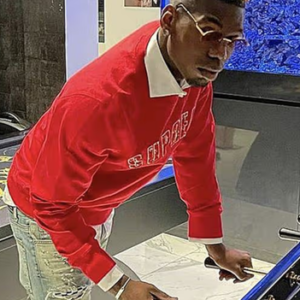
How Liverpool landed Bradley Barcola: the £120m winger Andoni Iraola believes can replace Mohamed Salah
Liverpool are on the brink of completing the signing of Bradley Barcola from Paris Saint-Germain in a deal worth £120 million, a move that would hand Andoni Iraola the high-impact winger he has been seeking and transform the perception of a transfer window that had threatened to disappoint. The 23-year-old France international, a two-time European champion and PSG’s top scorer in Ligue 1 last season, has signalled his desire to move to Merseyside, and all parties are confident the transfer will be finalised even though formalities remain outstanding.
Iraola has been clear about the profile he wants in wide areas. He has spoken of the need for game-changers and superstars capable of making the difference in isolation, attacking space, contributing to the press and tracking full-backs, while also providing goals and assists. Barcola, in the manager’s estimation, ticks those boxes. For a club that has been searching for a new winger since Mohamed Salah announced his departure in March, the Frenchman’s arrival would address a long-standing requirement that was not fully met even after Luis Diaz left.

A protracted negotiation and a reduced fee
The path to an agreement was not straightforward. PSG initially valued Barcola at £145 million, a figure Liverpool were never prepared to meet. After a stand-off, the clubs settled on a structure of £100 million guaranteed and a further £20 million in add-ons. Transfer officials on both sides had privately expected a deal to materialise eventually, a confidence reflected in PSG’s decision to recruit three forwards—Ferran Torres, Mika Godts and Maghnes Akliouche—during the same window. Arsenal had shown interest earlier, yet Barcola’s preference was always for Liverpool.
The successful conclusion of talks represents a significant result for sporting director Richard Hughes. Until this point the summer had been defined by unfulfilled pursuits. Liverpool lodged a bid of around £86 million for RB Leipzig’s Yan Diomande, only for the player to join Real Madrid in a £120 million move. Approaches for Brighton’s Yankuba Minteh at £50 million and then £60 million, and an enquiry for Crystal Palace’s Ismaila Sarr, likewise failed to yield a signing. With Barcola now close, a window that risked being viewed as a failure looks considerably more respectable. The addition of a second forward, or a defensive midfielder, would elevate it further in the eyes of supporters who have grown frustrated with the pace of business.

Why Barcola wanted to leave Paris
At PSG, Barcola found himself competing for minutes in a star-laden squad under Luis Enrique. In Ligue 1 opportunities were shared, but in the biggest matches the coach tended to prefer Khvicha Kvaratskhelia and Desire Doue on the flanks. Barcola appeared as a substitute in the last two Champions League finals and has concluded that he is ready to be a primary attacking option rather than a rotational piece. Liverpool, by contrast, can offer him a central role in a side rebuilding its wide threat.
His numbers explain the interest. Last season he recorded 20 goal involvements; the campaign before that produced 42. Speed and close control earned him the nickname La Sauterelle—the grasshopper—as a youngster. Those attributes align with Iraola’s demand for players who can stretch defences and decide matches in moments of isolation.

Recruitment timeline and alternatives
Liverpool’s first major target of the summer was Diomande. Contact with his representatives began early in the year and the club appeared well placed before the World Cup. Reports suggested the player favoured PSG, yet the French champions never tabled the necessary funds, clearing the path for Real Madrid. Liverpool then pivoted to Barcola while continuing to seek an additional forward. They examined the possibility of signing PSG teammate Ibrahim Mbaye as a second wide option but judged his valuation excessive. Minteh and Sarr remained on the radar, and earlier in the window the club had also monitored Lille’s Matias Fernandez-Pardo, a player linked with Newcastle.

Interestingly, Barcola had been available for a significantly lower fee twelve months earlier. Liverpool briefly considered a move when the price was around £70 million but chose not to proceed, partly to protect the development pathway of teenager Rio Ngumoha. That decision now looks costly in pure transfer-market terms, yet it left the door open for the more expensive pursuit this summer once Salah’s exit crystallised the need for a proven senior winger.

Squad balance and tactical versatility
One complication is that most of Liverpool’s current wide players prefer operating on the left. Iraola wants greater interchangeability and expects Barcola, despite his price tag, to adapt to both flanks. Ngumoha, still only 17, started the opening match of the season on the right and retains the potential to feature on either side of central forwards Alexander Isak or Hugo Ekitike once the latter returns from a long-term injury. New signing Victor Munoz, a £34.5 million arrival from Osasuna, is also pushing for inclusion after a bright cameo at Newcastle in which he won the late penalty that secured a point.
The arrival of Barcola, particularly if followed by another attacking addition, would have consequences for existing squad members. Cody Gakpo has been linked with Tottenham and more recently Manchester City. Harvey Elliott finds himself in an uncertain position after being overlooked for the matchday squad at Newcastle, with Italian clubs expressing interest but yet to formalise bids. Youngster Lewis Koumas was preferred on the bench for that fixture, underlining the competitive nature of the forward group.

Background of a late bloomer
Barcola’s rise was not linear. He came through the Lyon academy alongside Manchester City’s Rayan Cherki and was one of six siblings; his brother Malcolm, a goalkeeper, also played for Lyon, and his mother had played football when younger. Kylian Mbappe, speaking during the World Cup, described Barcola’s ascent to the highest level as inevitable and praised his understated character. Yet only a few years earlier there had been doubts. Laurent Blanc, then in charge at Lyon, came close to moving him to St Gallen in Switzerland. A selection crisis changed the trajectory. After barely featuring in the first half of a season, Barcola became a regular from January onwards, scoring seven goals and adding eight assists. Blanc noted his decisiveness, finishing ability and capacity to beat opponents with technique and pace. PSG paid £40 million that summer and now stand to record a substantial profit.

Pressure of the price tag
Barcola will become the fourth forward Liverpool have signed for £75 million or more in the past year, following Isak, Florian Wirtz and Ekitike. Fitness problems have hampered the previous arrivals, particularly the most expensive ones, and none has yet delivered the sustained impact their fees demanded. The expectation on the Frenchman will be immediate: to supply the creativity and end product that declined after Salah’s form dipped and Diaz departed, and to justify a outlay that sits among the highest in the club’s history.

For Richard Hughes the deal represents the centrepiece of a window that still contains unfinished business. He is widely expected to leave his post in the coming months. Securing Barcola converts a potentially damaging summer into a respectable one; adding another forward or a defensive midfielder would allow him to depart with a stronger sense of completion. Until then the focus remains on closing the formalities with PSG and integrating a player Iraola believes can be the difference-maker his side have been missing. Barcola’s speed, trickery and proven output in France suggest he has the tools. The Premier League, and the weight of a £120 million valuation, will supply the ultimate test.