Premier League Captains Agree to Continue Taking the Knee Twice Next Season
Premier League players will continue to take the knee before selected matches next season after club captains discussed the issue and agreed to maintain the practice, Daily Mail Sport understands. The anti-racism gesture is expected to be performed twice during the campaign, in line with the pattern followed last season, when it was observed during fixtures linked to the league’s No Room for Racism initiative and Black History Month in October.
The decision keeps the Premier League on a different path from much of the Women’s Super League. Last season most WSL sides chose not to take the knee during Black History Month, reflecting a view among some players and staff that the action had lost meaning at a time when racist incidents were still being reported. The men’s competition has opted for continuity, albeit in the reduced form adopted three years ago rather than the match-by-match ritual that marked the early phase of the practice.

Origins of the Gesture in English Football
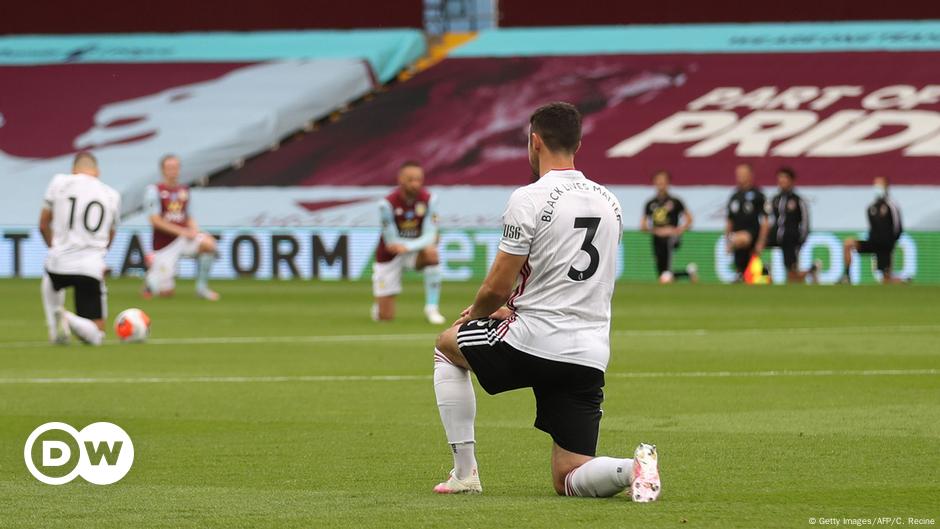
Taking the knee arrived in the British game in the summer of 2020, following the death of George Floyd in Minneapolis police custody and the global protests that followed. Premier League players adopted the pose before kick-off as a visible signal of opposition to racism and of solidarity with the broader Black Lives Matter movement. For two full seasons the gesture was performed before every fixture, becoming one of the most recognisable shared rituals in the competition.
By August 2022 the intensity of that routine had been reviewed. After consultation with players, clubs agreed to stop taking the knee before every game. The compromise was to reserve the action for designated No Room for Racism rounds, preserving a collective statement without requiring its repetition every matchday. That framework has governed the practice since. Last season the knee was taken twice in October, coinciding with Black History Month in the United Kingdom. Current expectations are that a similar twice-yearly pattern will apply again.
Captains’ Role in the Latest Agreement
The latest confirmation emerged from discussions among club captains rather than from a top-down directive. Captains function as the formal link between dressing rooms and the league on issues that affect all squads. Their willingness to continue the reduced schedule suggests that a majority still see value in a limited, scheduled show of opposition to racism, even while broader public debate about the gesture’s effectiveness continues.
The Premier League itself has been contacted for comment and had not issued a fresh public statement at the time the captains’ position became known. In the absence of a detailed league release, the understanding rests on the reported outcome of those internal conversations: the knee will remain part of the seasonal calendar, performed twice, rather than being retired or restored to every match.
Women’s Super League Takes a Different View
The contrast with the Women’s Super League is instructive. Last season most WSL teams decided against taking the knee during Black History Month fixtures. The reasoning, reported at the time, centred on a sense that the gesture had become performative and insufficient in the face of ongoing racist abuse directed at players. When an action is repeated without clear evidence that it changes behaviour or reduces incidents, some athletes conclude that energy is better spent on other forms of advocacy or on simply refusing to participate in what they regard as empty ritual.
That divergence leaves English elite football with two concurrent approaches. The men’s Premier League retains a symbolic schedule; much of the top women’s tier has stepped away. Neither stance is neutral. Continuing the knee invites criticism that the league is clinging to symbolism at the expense of harder measures. Stopping it invites criticism that the game is losing interest in visible anti-racism statements. Captains in the Premier League have, for now, chosen the first risk over the second.
Debate Over Effectiveness
From the outset the gesture has been contested. Supporters argue that regular, visible opposition to racism matters, that young supporters see players they admire taking a public stance, and that abandoning the knee would be interpreted as retreat. Critics contend that the action has been absorbed into pre-match choreography, that racist abuse online and inside grounds has not disappeared, and that resources and attention should shift toward education, reporting systems, tougher sanctions and support for victims.
The 2022 decision to reduce frequency was itself an attempt to manage that tension. By limiting the knee to specific rounds, clubs hoped to preserve sincerity and avoid the dilution that can accompany weekly repetition. Whether two performances a season achieve that balance remains a matter of opinion. What can be said is that the compromise has proved durable enough for captains to endorse its continuation into another campaign.
Context of Ongoing Problems
Any discussion of symbolic gestures occurs against a background of persistent problems. Players continue to report racist abuse on social media and, on occasion, in stadiums. Governing bodies maintain reporting tools, partner with police and promote educational campaigns. The existence of those measures does not resolve the argument about the knee; it simply situates the gesture as one element among several, rather than as a complete response.
Some players have always been more comfortable with the action than others. For every participant who experiences it as meaningful solidarity, another experiences it as an obligation that has outlived its original emotional force. Captains must navigate those differences when they meet. The reported agreement implies that enough of them still judge the scheduled knee worth keeping to present a collective position to the league.
What Fans Will See Next Season
If the understanding holds, supporters attending Premier League matches next season will see players take the knee on two occasions, most likely clustered around the league’s anti-racism fixtures and Black History Month. The posture will be familiar: players, staff and officials on one knee before kick-off, often accompanied by LED messaging and broadcast graphics restating the competition’s opposition to discrimination. Then the game will begin, and the practical business of points and performances will resume.
The ritual’s survival in this limited form suggests that the Premier League’s leadership group is not ready to declare the gesture finished. At the same time, the refusal to return to weekly observance shows that the 2022 consultation still shapes policy. The WSL’s more decisive step away from the practice supplies a live alternative model that the men’s game has so far declined to follow.
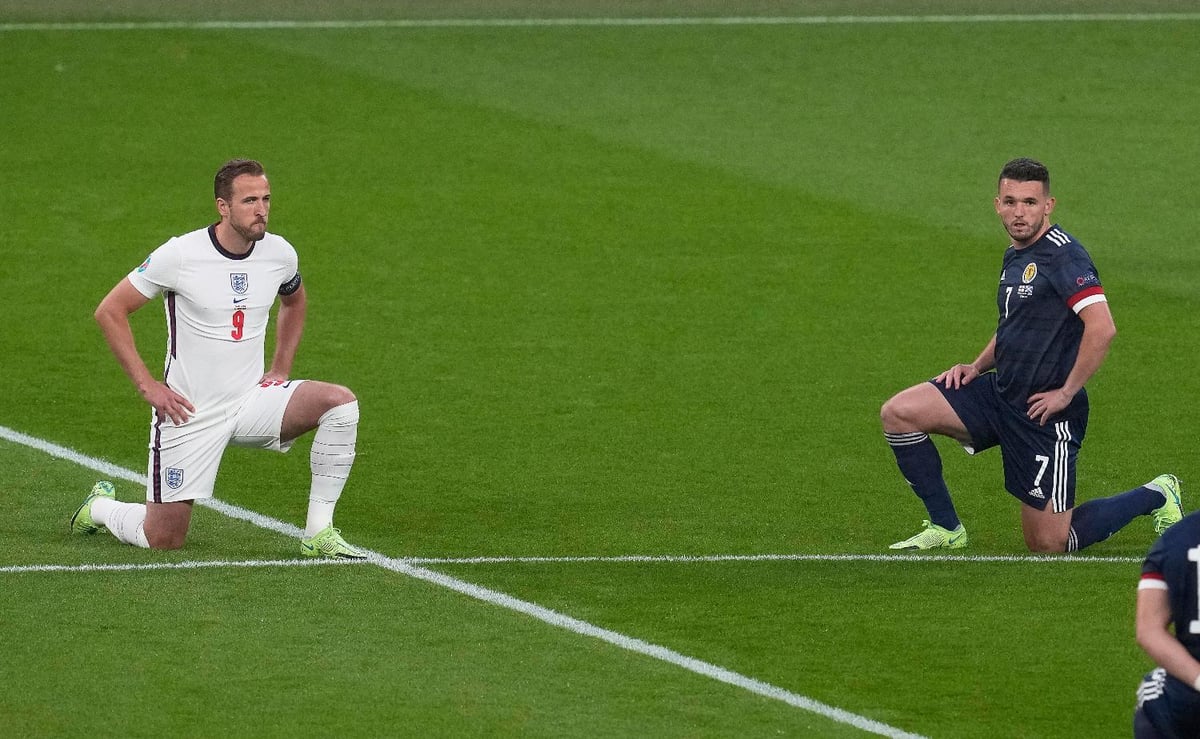
A Quiet Continuity
In the end the story is one of quiet continuity rather than dramatic change. Captains have talked, a consensus has formed, and the twice-yearly schedule looks set to roll forward. There is no claim that the knee alone will eradicate racism in football. There is only a decision that, for another season at least, the Premier League’s players will continue to make the gesture on agreed dates as a public signal of intent. Whether that signal still lands with force, or whether it has become background noise, will be judged differently by different observers. The captains’ choice is simply that the signal should not yet disappear.