‘An Overwhelming Vindication of Our Journalism’: Prince Harry’s Phone Hacking Case Against the Daily Mail Is Dismissed in Full
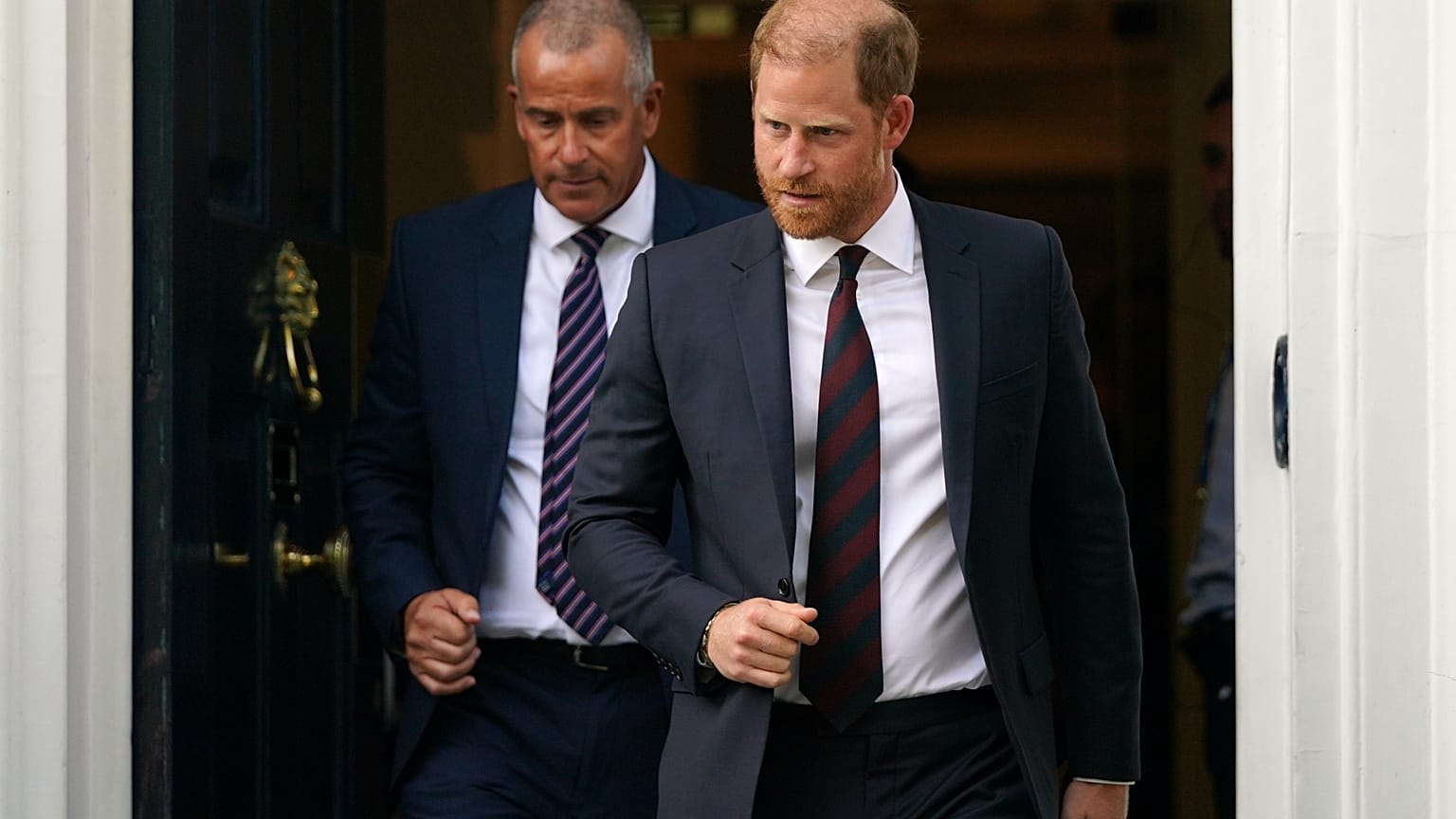
Prince Harry and Doreen Lawrence’s £50million phone hacking case against the Daily Mail was yesterday demolished by a judge.
In a ‘momentous victory’ for the free Press, the Mail’s journalists were completely exonerated when allegations they hacked, bugged and blagged to get stories were thrown out in full.
Paul Dacre, Editor-in-Chief of the Daily Mail’s publisher Associated Newspapers, hailed the landmark ruling as ‘an overwhelming vindication of our journalism’.
Mr Justice Nicklin’s resounding judgment leaves the Duke of Sussex, Baroness Lawrence and their five fellow claimants, including Sir Elton John, on the hook for millions of pounds in costs.
The emphatic result, after a three-month trial, prompted an extraordinary backlash from Harry and Baroness Lawrence, who chose to attack the High Court judge, branding his meticulous findings ‘a complete and obvious whitewash’.
In his 436-page ruling, Mr Justice Nicklin – who said Harry had strayed beyond ‘factual evidence’ while in the witness box – accepted the ‘honest’, ‘credible’ and ‘impressive’ testimony of a parade of Mail staff.
During the trial, more than 40 journalists had explained the legitimate sourcing of their articles the claimants had alleged came from unlawful activity.

Hacked Off, which campaigns for tighter controls on the Press, had crowed before the ruling that just ‘one finding’ would be enough to prove ‘devastating’ for the Mail.
In the end, the judge found in favour of the newspaper on every single allegation.
Mr Dacre said: ‘Today’s verdict is not just a victory for Associated’s magnificent journalists – several of whom have had a terrible toll imposed on their health and lives – but a free Press generally. Make no mistake: this was a conspiracy, supported by Hacked Off, to destroy a paper.
‘The truth is that this trumped-up action – which has cost well over £50million and wasted a huge amount of valuable court time – should never have been brought to trial.’
In a blaze of publicity, the seven claimants had falsely accused dozens of professional reporters and writers of commissioning crimes including phone hacking, burglaries, car bugging, landline phone tapping and placing ‘sticky window microphones’ on celebrities’ homes. None of it was true.
The extraordinary allegation of burgling homes was struck out before the trial even began.
It was Harry who recruited Baroness Lawrence as a ‘trophy’ claimant against the newspaper that had tirelessly championed her and successfully campaigned to jail two of her murdered son Stephen’s killers.
The campaigners alighted on Baroness Lawrence as a ‘national treasure’ after suggesting Gary Lineker was unsuitable because ‘he has no dead children’.
Encouraged by Harry and anti-Press campaigners, Baroness Lawrence turned on the Mail, accusing the newspaper and its award-winning crime reporter Stephen Wright of landline tapping, blagging, hacking into voicemails and making corrupt payments to serving police officers.
It was all found to be false, and yesterday Mr Wright was comprehensively exonerated.
Mr Justice Nicklin declared Mr Wright a ‘truthful’ witness whose explanations were ‘coherent and plausible’, and roundly dismissed the allegation he had corruptly paid police officers.
When he was editor of the Daily Mail, Mr Dacre wrote the famous front page headline ‘Murderers!’, which ultimately led to the jailing of two of Stephen’s killers.
Mr Dacre said: ‘Why Baroness Lawrence – for whom we have always had profound respect and sympathy – chose to turn on both the paper, and the brilliant reporter who campaigned for justice for her son for over two decades, is something I will never be able to comprehend.’
He described Prince Harry as ‘a confused and angry young man’.
The judge also hailed the Mail’s Royal Editor Rebecca English as ‘an impressive and honest witness’, and ruled her explanations for where she had sourced stories were ‘entirely plausible’.
He threw out an allegation she had tried to get the flight details of Prince Harry’s former girlfriend Chelsy Davy.
The four-year legal battle was launched in 2022 by the duke, 41, Baroness Lawrence, 73, Sir Elton, 79, and his husband David Furnish, 63, model and actress Elizabeth Hurley, 61, actress Sadie Frost, 61, and former Lib Dem MP Sir Simon Hughes, 75.
They are all jointly liable for any legal costs that may be awarded against them. A hearing to examine who pays what is scheduled for July 29.
Associated Newspapers said: ‘We will look to resolve outstanding issues, including the recovery of the costs we have incurred while defending ourselves against this egregious litigation. Mr Justice Nicklin cleared the Daily Mail and The Mail on Sunday, and dismissed every single one of the 97 allegations made by the claimants.
‘In every case, the judge accepted the honesty of our journalists’ evidence on how they sourced their stories. This is a magnificent vindication of the Daily Mail’s journalism.

‘For some of the most outrageous allegations made when the case was launched in a blaze of publicity four years ago… no credible evidence was ever presented.
‘As we said at the time, these allegations were “lurid” and “preposterous”, and were a fishing expedition by the claimants and their legal teams in a politically-motivated campaign to muzzle the free Press.
‘The reputations of our decent and hard-working journalists were terribly impugned, and today they have been exonerated. As the judgment clearly shows, every single article was legitimately sourced.’
Media lawyer Louis Charalambous called the case ‘a calamity for all seven claimants’ and said: ‘In all likelihood it spells the end of this kind of litigation.’
The claimants’ case was initially bankrolled by fascist Oswald Mosley’s millionaire son Max, whose donations were subsequently used to ‘pay for testimony’ from potential witnesses. Also funding the scheme was Geoff Stunt, father of playboy James Stunt.
The plot to ‘bring down the Mail’ – codenamed Operation Bluebird – formed part of a political strategy to pressure the Government into holding a second Leveson inquiry into Press reform.
The claimants’ own supposed star witness, a private investigator named Gavin Burrows, said his ‘confession’ statement had been written for him and was ‘a pack of lies’.
He said Baroness Lawrence had been ‘duped’ into joining the case by the campaigners who boasted suing newspapers was a lucrative ‘gravy train’.
In a joint statement with Baroness Lawrence, the Duke of Sussex said the outcome was ‘a complete and obvious whitewash… the lengths to which the court has gone to exonerate the Mail is as shocking as it is totally unwarranted’.
The Landmark Ruling’s Significance
The High Court’s dismissal of Prince Harry and Doreen Lawrence’s phone hacking case against the Daily Mail represents a significant victory for press freedom. Mr Justice Nicklin’s comprehensive 436-page judgment thoroughly examined the allegations and found them to be without merit. The ruling’s emphasis on the honest testimony of Mail journalists demonstrates the strength of the newspaper’s defence.
Paul Dacre’s description of the judgment as an overwhelming vindication of the Mail’s journalism reflects the importance of this outcome for the newspaper and the broader media industry. The situation highlights the challenges of high-profile legal actions against the press and their potential impact on public interest reporting. The ruling has significant implications for future cases involving similar allegations.
The Claimants’ Reaction
Prince Harry and Baroness Lawrence’s response to the judgment was highly critical of the court process. Their description of the ruling as a “complete and obvious whitewash” reflects their disappointment with the outcome. The situation has highlighted the emotional toll of high-profile legal battles and the challenges of accepting unfavourable judgments.
The joint statement from Harry and Baroness Lawrence has generated significant media attention and discussion. Their decision to attack the judge’s findings has been noted by legal experts as unusual. The situation has prompted important conversations about the proper way to respond to court decisions in high-profile cases.
The Financial Implications
The judgment leaves Prince Harry, Baroness Lawrence, and their fellow claimants facing substantial legal costs. The four-year legal battle has reportedly cost well over £50 million, highlighting the significant financial burden of such cases. The upcoming hearing on July 29 will determine the exact cost distribution among the claimants.
The financial implications of the case have raised questions about the sustainability of similar legal actions against the press. The situation has prompted discussion about the need for careful consideration before pursuing high-cost litigation. The outcome serves as a reminder of the potential financial risks involved in such cases.

The Role of Hacked Off
Hacked Off’s involvement in supporting the claimants has been highlighted in the judgment. The campaign group’s pre-ruling comments about the potential impact of even one finding against the Mail have been noted in light of the comprehensive dismissal of all allegations. The situation has prompted discussion about the role of campaign groups in legal actions against the press.
The judgment’s reference to Hacked Off’s involvement reflects the broader context of the case as part of a campaign for press reform. The situation has highlighted the complex relationship between campaign groups, the press, and the legal system. The outcome has significant implications for future campaigns involving similar objectives.
The Impact on the Daily Mail’s Journalism
The judgment represents a significant vindication for the Daily Mail’s journalism and its staff. The acceptance of the journalists’ testimony as honest and credible demonstrates the strength of their reporting practices. The situation has highlighted the importance of maintaining high standards in investigative journalism.
Paul Dacre’s comments about the toll on the journalists’ health and lives reflect the personal impact of such legal actions. The situation has prompted discussion about the challenges faced by journalists when defending their work in court. The outcome serves as a reminder of the importance of supporting journalistic integrity in the face of legal challenges.
Public Interest in the Case
The high-profile nature of the case has generated significant public interest and discussion. The involvement of Prince Harry and other well-known figures has added to the case’s prominence. The situation has prompted important conversations about press freedom, privacy, and the role of the media in society.
The judgment’s comprehensive dismissal of all allegations has been welcomed by supporters of press freedom. The situation has highlighted the importance of robust legal processes in addressing claims against the media. The outcome has significant implications for how similar cases are approached in the future.
Looking Ahead for Press Freedom
As the legal costs hearing approaches on July 29, the focus remains on the broader implications of the judgment for press freedom. The situation has prompted important discussions about the balance between privacy rights and the public’s right to information. The outcome serves as a significant precedent for future cases involving similar allegations against the press.
The judgment’s emphasis on the legitimate sourcing of stories highlights the importance of proper journalistic practices. The situation has reinforced the value of investigative journalism in holding power to account. As the media landscape continues to evolve, the principles established in this case will remain relevant for future challenges to press freedom.
The story of Prince Harry’s phone hacking case against the Daily Mail and its dismissal continues to generate significant discussion. The situation has highlighted the importance of robust legal processes and the value of press freedom in a democratic society. As the legal costs are determined and the broader implications are considered, the focus remains on maintaining the balance between privacy and public interest in media reporting.