A New Chapter for Dan Levy — Familiar Themes, Different Flavor
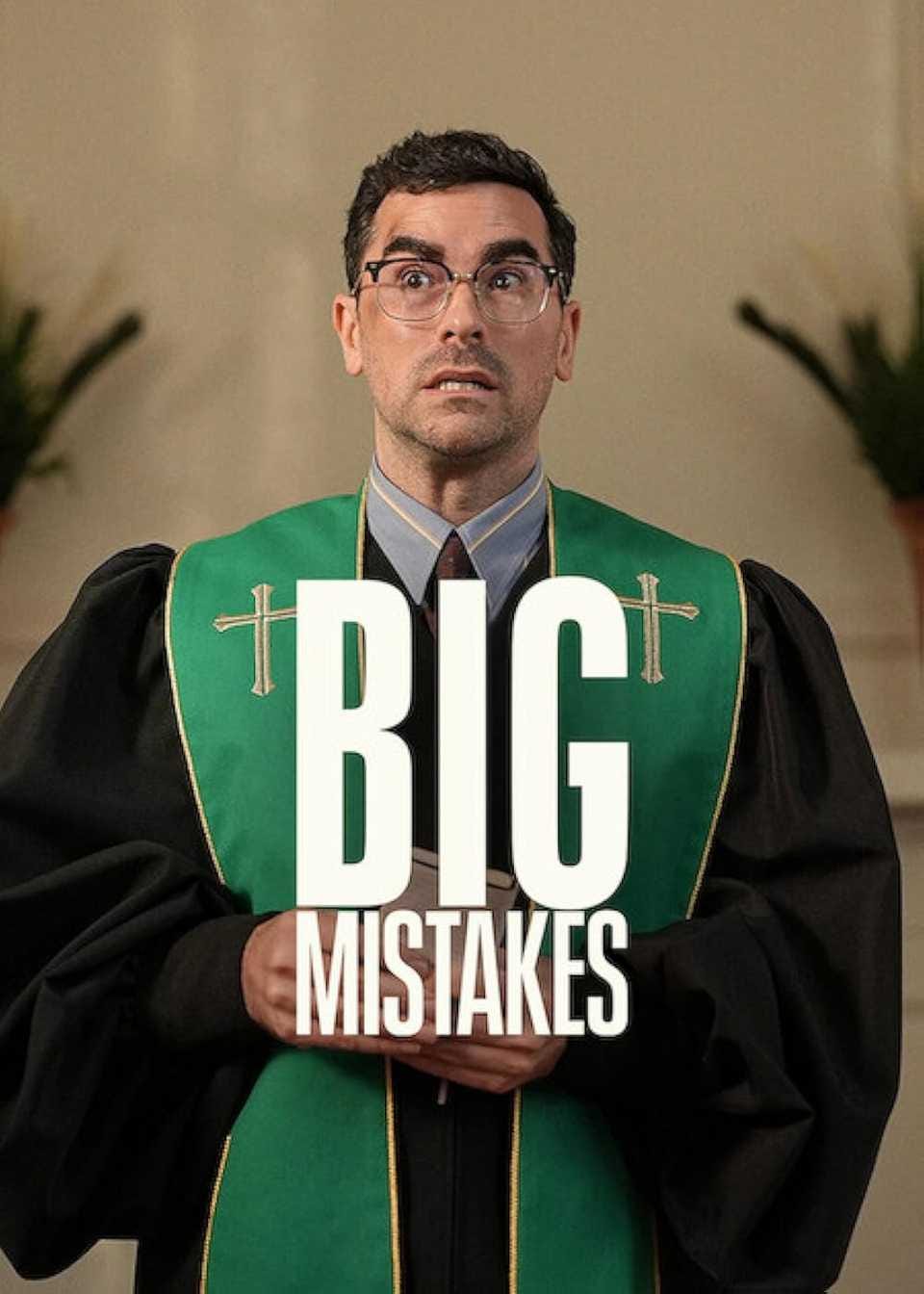
With Big Mistakes, Dan Levy returns to television in a project that, while distinct from his previous success with Schitt’s Creek, still carries echoes of the storytelling instincts that made him a household name. This time, however, the tone shifts toward something messier, louder, and more chaotic. The warmth is still there—but it’s buried beneath layers of poor decisions, escalating consequences, and a family that seems almost destined to complicate its own life at every turn.
The series, co-created with Rachel Sennott, unfolds across eight tightly constructed episodes that balance absurd comedy with moments of emotional sincerity. It may take a little time to find its rhythm, but once it does, Big Mistakes becomes an engaging and unpredictable ride—one that thrives on its characters’ flaws as much as their loyalty to one another.
A Simple Decision That Spirals Out of Control
At the heart of the story is a seemingly small act that sets everything in motion. Siblings Nicky (played by Levy), Morgan (Taylor Ortega), and Natalie (Abby Quinn) are gathered with their mother, Linda (Laurie Metcalf), during an emotional moment at the bedside of her dying mother. In the midst of grief, Linda expresses a wish tied to memory—a necklace reminiscent of one her mother once owned.
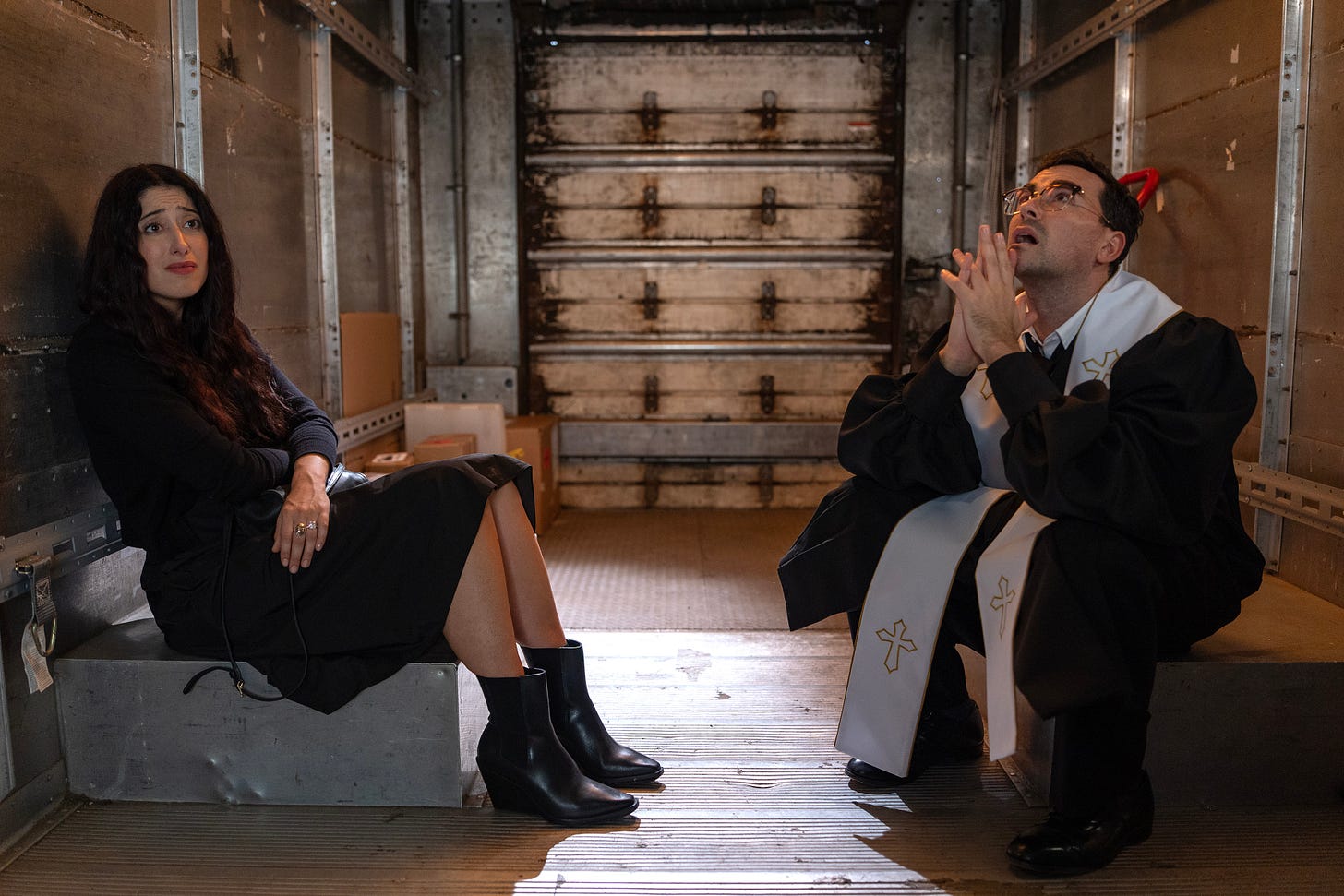
What follows is a decision that feels impulsive, almost trivial in the moment, but ultimately catastrophic. When Morgan spots a similar necklace in a shop owned by Yusuf (Boran Kuzum), the siblings attempt to purchase it. When the shopkeeper refuses to sell, Morgan makes a split-second choice to steal it. That act—reckless, desperate, and oddly well-intentioned—becomes the catalyst for a chain of events that spirals far beyond anything they could have anticipated.
Suddenly, the siblings find themselves entangled in a web of organized crime, navigating increasingly bizarre and dangerous situations. Each attempt to fix their problems only seems to make things worse, creating a narrative driven by escalation, tension, and a steady stream of darkly comic consequences.
Comedy Built on Escalation and Momentum
One of the show’s greatest strengths lies in its pacing. Each episode builds upon the chaos of the last, creating a sense of momentum that keeps viewers engaged from start to finish. Rather than relying on isolated, stand-alone plots, Big Mistakes leans into a serialized structure, where every decision carries weight and every mistake compounds the last.
This approach may not appeal to viewers who prefer more self-contained storytelling, but it works remarkably well within the show’s framework. The sense of unpredictability—of never quite knowing how far things will spiral—becomes part of the appeal. Yet, despite the escalating madness, the narrative never feels directionless. There is always a clear thread connecting each episode, ensuring that the story remains cohesive even at its most chaotic.
The humor itself is sharp and often irreverent, rooted in character dynamics rather than punchlines alone. It is not simply about what happens, but how these particular characters respond to what happens—often in ways that are ill-advised, impulsive, and deeply human.
Characters That Carry the Story
At the center of it all is Nicky, Levy’s character, who emerges as the most fully developed of the siblings. A minister grappling with his own secrets—particularly his hidden relationship with Tareq (Jacob Gutierrez)—Nicky embodies the show’s central tension between outward composure and internal chaos. His struggle to reconcile personal truth with public identity adds emotional depth to the otherwise frenetic narrative.
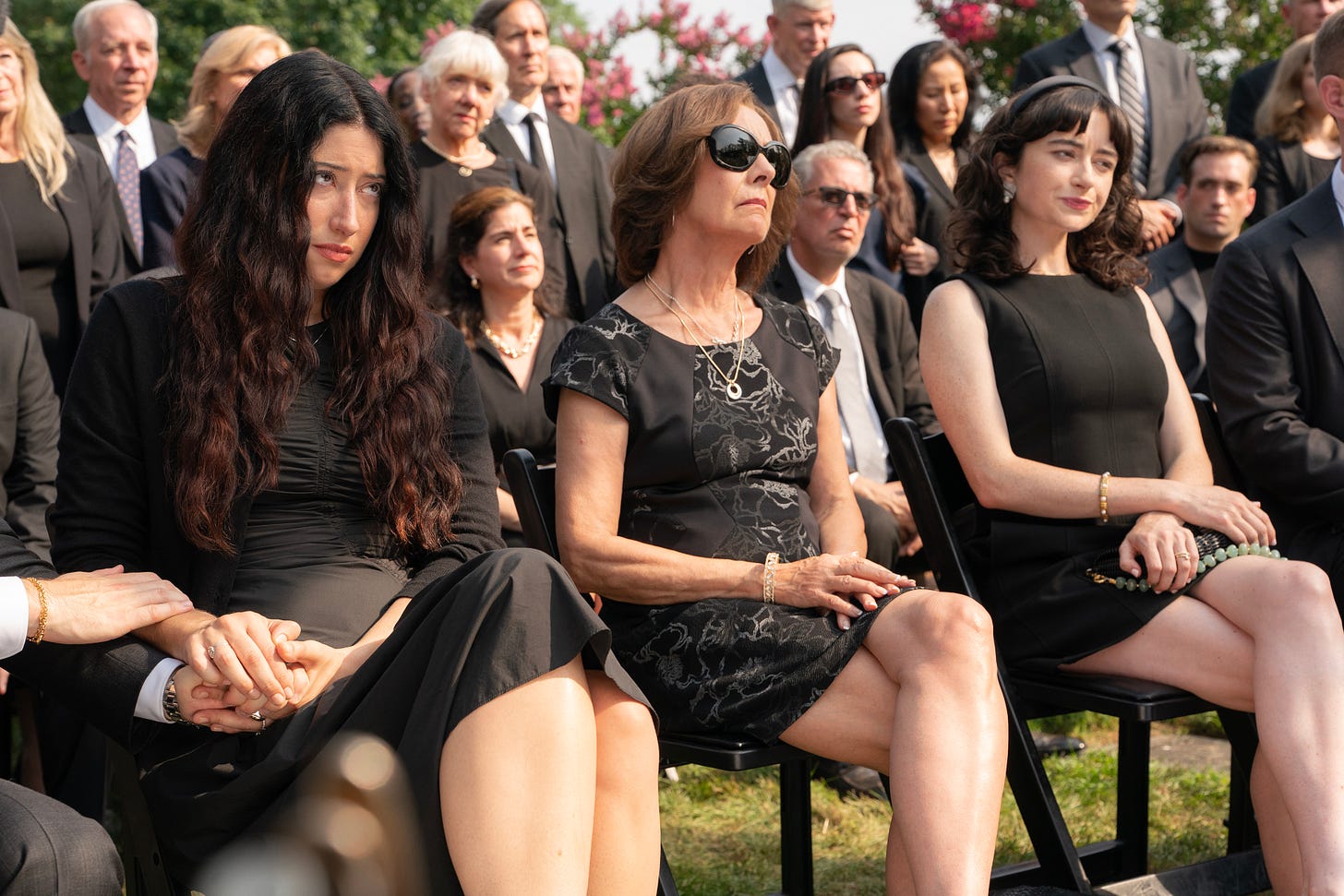
Morgan, meanwhile, represents a different kind of restlessness. As a teacher longing for something more exciting than her current life—and her long-term relationship with Max (Jack Innanen)—she becomes one of the primary drivers of the story’s chaos. Her impulsiveness, combined with a desire for change, makes her both relatable and unpredictable. It is here that Sennott’s creative influence is most apparent, shaping a character who feels modern, flawed, and vividly real.
Linda, played by Metcalf, is another standout. A local political candidate running for mayor, she brings a distinct energy to the series—one that blends ambition, vulnerability, and a touch of eccentricity. Metcalf’s performance elevates the character, capturing the nuances of someone balancing public image with private turmoil. If anything, the only drawback is that the show does not give her enough screen time, as her presence consistently enhances every scene she appears in.
The Missing Piece in the Family Puzzle
Not every character, however, receives the same level of development. Natalie, the youngest sibling, remains somewhat underexplored throughout the season. While Abby Quinn delivers a solid performance, the character itself lacks a clear identity beyond her role in supporting her mother’s political campaign.
This absence of definition makes Natalie feel more like an accessory to the story rather than a fully realized participant. In a show that thrives on strong, distinct personalities, her relative ambiguity stands out. That said, this could easily be addressed in future seasons, where there may be more space to explore her motivations and perspective.

A Balance Between Chaos and Heart
What ultimately sets Big Mistakes apart is its ability to balance its chaotic premise with genuine emotional resonance. Beneath the crime, the lies, and the increasingly absurd situations lies a story about family—about the ways people support each other even when they are the source of each other’s problems.
This is where Levy’s signature style becomes most evident. Much like in Schitt’s Creek, there is an underlying tenderness that prevents the story from becoming cynical. The characters may be flawed—often spectacularly so—but their connection to one another remains sincere.
The show suggests that family is not defined by perfection, but by persistence. Even as the siblings make one disastrous decision after another, their loyalty never wavers. It is this emotional anchor that keeps the series grounded, ensuring that the humor never feels hollow.
Not the Same, But Just as Compelling
It would be easy to compare Big Mistakes to Schitt’s Creek, but doing so misses the point. While both shows explore family dynamics, they do so in fundamentally different ways. Where Schitt’s Creek leaned into warmth and gradual transformation, Big Mistakes embraces chaos and immediacy.
Yet, despite these differences, there is a shared sensibility—a belief in the importance of connection, even in the most dysfunctional circumstances. It is this thread that links the two projects, offering a sense of continuity without repetition.
:max_bytes(150000):strip_icc():focal(999x0:1001x2)/taylor-ortega-dan-levy-big-mistakes-040926-1-b5c5b29da63e4723b03d77aaed453dd6.jpg)
A Promising Start With Room to Grow
As a first season, Big Mistakes succeeds in introducing a compelling set of characters and a narrative that is both entertaining and emotionally engaging. It may not be perfect—some characters need further development, and the tone occasionally wavers—but it lays a strong foundation for future seasons.
If the series continues to refine its character arcs while maintaining its distinctive blend of humor and heart, it has the potential to become something truly memorable. For now, it stands as a bold, messy, and ultimately rewarding addition to Netflix’s lineup—a show that proves even the biggest mistakes can lead to something meaningful.