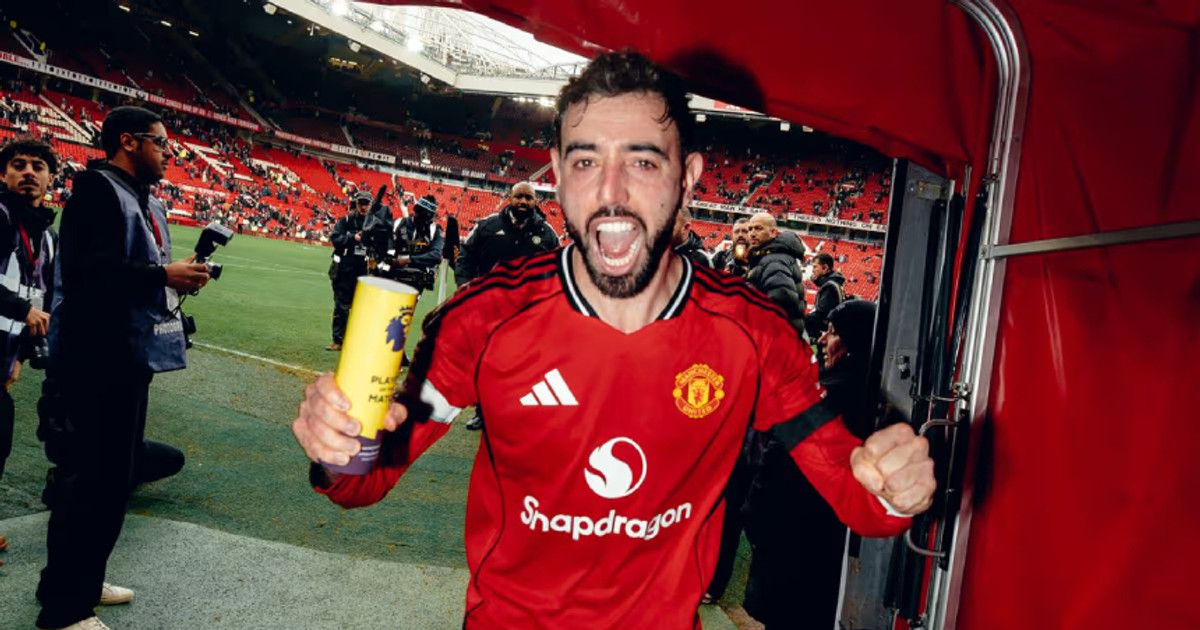
Bruno Fernandes has offered a revealing look into the revival of Manchester United, crediting a dramatic shift in mentality and tactical discipline under interim manager Michael Carrick. In contrast, he did not shy away from acknowledging the struggles endured during the turbulent spell overseen by Ruben Amorim—a period he implied was marked by inefficiency, inconsistency, and missed opportunities.

Speaking candidly, Fernandes described how subtle but crucial adjustments have reshaped the team’s identity. Carrick, stepping into a high-pressure role, did not attempt to overhaul everything overnight. Instead, he introduced targeted changes—altering player positions, experimenting with formations, and most importantly, redefining how the team behaved both with and without the ball. These tweaks, according to Fernandes, gradually restored confidence and cohesion within the squad.
Under Amorim, United often dominated key metrics without translating them into results. Fernandes explained that while the team was effective at creating chances and even limiting opposition entries into dangerous areas, there was a persistent fragility. “We were doing many things right,” he suggested, “but the final outcome was missing.” Chances went unfinished, and when defensive lapses occurred, they proved costly. It created a frustrating paradox: a team that looked strong statistically but failed to control matches where it mattered most.
Carrick’s approach, by contrast, has emphasized compactness and resilience. Fernandes highlighted a renewed willingness among players to endure difficult phases during matches—moments when control slips and pressure builds. “We’ve learned how to suffer,” he implied, pointing to a more mature and pragmatic mindset. Rather than panicking or overcommitting, the team now stays organized, trusting their structure until opportunities arise again.
To illustrate this transformation, Fernandes recalled the immediate challenges Carrick faced upon taking charge. Two high-stakes fixtures—against Manchester City and Arsenal—arrived almost instantly. Instead of being overwhelmed, United used these matches as a springboard. Victories in such demanding circumstances not only boosted morale but also reinforced belief in the new system. Fernandes suggested that these wins were not just about tactics, but about rediscovering a winning mentality.
He elaborated further, adding a new perspective: in training sessions, Carrick encouraged players to embrace imperfection. Mistakes were treated as part of the process rather than failures to be punished. This created a more relaxed yet focused atmosphere, allowing players to express themselves while still adhering to a disciplined structure. Fernandes noted that this balance between freedom and responsibility has been key to their resurgence.
Another significant shift has been the team’s efficiency in front of goal. Fernandes acknowledged that under the previous regime, United frequently struggled to convert opportunities. Now, there is a sharper edge in the final third. Players appear more decisive, more composed, and more aware of their roles in attacking sequences. This improvement has translated into tangible results, with the club climbing to third place in the table after winning seven of Carrick’s first ten matches in charge.

Fernandes himself has been central to this revival. With eight goals and sixteen assists in the league so far, he has reestablished himself as the creative heartbeat of the team. Crucially, Carrick has restored him to a more advanced role, allowing him to influence play closer to the opposition’s goal. This contrasts with periods under Amorim where Fernandes was deployed deeper, limiting his attacking impact and forcing him into unfamiliar responsibilities.
Adding an intriguing twist, Fernandes revealed that if he could choose any club legend to play alongside, he would pick Carrick himself. While names like Eric Cantona or Roy Keane might seem more obvious, Fernandes’ choice reflects his admiration for Carrick’s intelligence on the pitch. He recalled training sessions during Carrick’s earlier coaching stint, where the former midfielder occasionally joined drills.
According to Fernandes, Carrick possessed an exceptional ability to control tempo and deliver perfectly timed passes between defensive lines. “As a No. 10, that’s exactly what you want,” he explained. “Someone who doesn’t hold onto the ball unnecessarily but finds you in the right space at the right moment.” He even shared a vivid memory of one training session where Carrick, stepping in as a deep-lying playmaker, orchestrated play so smoothly that the younger players paused in admiration. “It felt effortless,” Fernandes said, “like he was always two steps ahead of everyone else.”
Beyond tactics and individual performances, Fernandes emphasized the psychological transformation within the squad. Under Carrick, there is a stronger sense of unity and accountability. Players communicate more, support each other during difficult spells, and celebrate defensive contributions with the same enthusiasm as goals. Fernandes described moments where crucial tackles or interceptions were met with roars of encouragement, signaling a collective commitment to the team’s success.
He also hinted at a cultural reset behind the scenes. Team meetings have become more interactive, with players encouraged to voice opinions and share insights. Carrick, rather than dictating every detail, fosters dialogue and mutual understanding. Fernandes believes this inclusiveness has strengthened trust between players and coaching staff.
Despite the positive momentum, uncertainties remain about Fernandes’ long-term future. With just one year left on his contract and a significant release clause attracting interest from abroad, speculation continues—particularly from clubs in Saudi Arabia. However, Fernandes appeared focused on the present, expressing determination to maintain United’s upward trajectory and secure a strong finish to the season.
As the campaign enters its phase, Fernandes believes the team’s newfound resilience will be crucial. “Big clubs don’t always win beautifully,” he suggested, “but they find ways to win.” This philosophy, instilled by Carrick, could define United’s season.
In reflecting on the journey so far, Fernandes painted a picture of renewal—one built not on dramatic revolution, but on thoughtful evolution. Under Michael Carrick, Manchester United have rediscovered structure, belief, and identity. And for their captain, the difference is clear: where once there was frustration, there is now purpose—and a growing sense that the club is finally moving in the right direction.