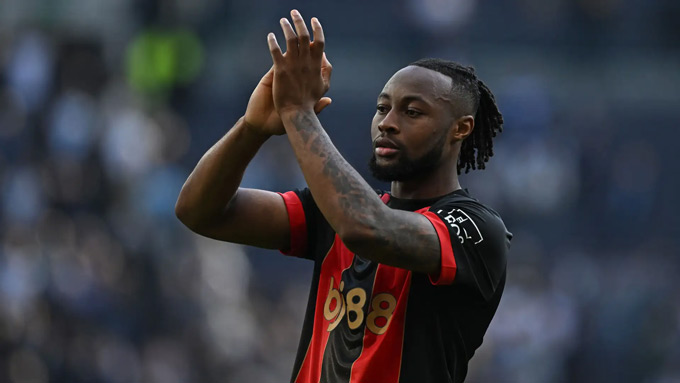
Antoine Semenyo has offered a revealing and surprisingly personal glimpse into life under Pep Guardiola at Manchester City—and the picture that emerges is far more nuanced than the usual image of a relentlessly intense tactical mastermind.
When Semenyo first arrived at the club, he expected a demanding, high-pressure environment from the outset. Guardiola’s reputation as one of football’s most exacting coaches is well established, built on years of success and an obsessive attention to detail. Yet their first meeting did not unfold in the way he had imagined. Instead of tension, he encountered calm.
Walking into Guardiola’s office, Semenyo was struck by the atmosphere. Soft music played quietly in the background, creating a sense of ease rather than urgency. The room carried a subtle, pleasant fragrance—something carefully curated, it seemed, to put visitors at ease. It felt less like stepping into a manager’s office and more like entering a thoughtfully designed personal space.
Guardiola himself reinforced that impression. Rather than launching straight into instructions or expectations, he greeted Semenyo warmly, expressing genuine enthusiasm about having him at the club. He encouraged the forward to continue the form that had brought him there and spoke about competing for major honors in a tone that was both ambitious and reassuring. For a player joining one of the world’s top teams, the moment could have been intimidating—but instead, it felt welcoming.
That calm, however, did not tell the whole story.
According to Semenyo, the real Guardiola reveals himself in team meetings. It was during his first squad session that he encountered a completely different side of the manager—one defined by intensity and relentless energy. As players gathered, Guardiola began pacing back and forth across the room, deep in thought, his focus absolute.
At first, Semenyo wasn’t sure how to interpret the behavior. He glanced around, half-expecting others to react, perhaps even laugh. But no one did. The room remained serious, attentive. It quickly became clear that this was normal—that Guardiola’s pacing was not a sign of nerves, but of passion.
In those moments, the manager transforms. His voice sharpens, his gestures become more animated, and every detail matters. Tactical instructions are delivered with precision, often accompanied by quick movements across the room as he visualizes plays and scenarios. For newcomers, it can feel intense, even overwhelming—but it also underscores the level of commitment he expects from his players.
Semenyo admitted that he nearly misread the situation at first, momentarily unsure whether the behavior was unusual. But over time, he came to understand it as a reflection of Guardiola’s deep engagement with the game. It’s not anxiety—it’s immersion.
On the pitch, Semenyo has made an immediate impact, contributing goals and assists in his early appearances. Yet his adaptation to Guardiola’s system has not been without adjustment. One of the more surprising changes involves a skill that had previously been a key part of his game: the long throw.
During his time at AFC Bournemouth, Semenyo’s powerful throw-ins were a valuable attacking weapon, often creating dangerous opportunities in the box. Under former manager Andoni Iraola, that ability was actively encouraged and strategically deployed.
At Manchester City, however, things are different.
Guardiola’s philosophy prioritizes control, precision, and fluid passing. The idea of launching long throws into the penalty area does not align with his preferred style of play. As a result, Semenyo has found that one of his natural strengths is rarely utilized. Teammates occasionally joke about whether he will take a long throw, but the answer is usually uncertain—and often no.
This contrast highlights a broader difference in managerial approach. Iraola, as Semenyo describes, fostered a sense of freedom in training and matches alike. Sessions could feel chaotic, with players encouraged to experiment, improvise, and express themselves without fear of making mistakes. It was an environment where creativity thrived, even if it meant attempting risky or unconventional moves.
Guardiola, by comparison, operates within a more structured framework—but that doesn’t mean creativity is stifled. In fact, Semenyo points out that both managers share an underlying belief in player expression. The difference lies in how that freedom is applied. At City, creativity exists within a carefully organized system, where every movement contributes to a larger tactical plan.
Semenyo has worked to balance these influences. He continues to embrace the confidence instilled in him at Bournemouth—playing freely, trusting his instincts—while also adapting to the positional discipline and strategic demands of Guardiola’s setup. It’s a combination that, when executed well, can elevate a player’s performance to a new level.
Behind the scenes, there are also lighter moments that reveal the human side of life at the club. Semenyo hinted at small interactions among teammates, including playful conversations about his sidelined long-throw ability. Some players, he suggested, are curious to see it in action, even if it doesn’t fit the manager’s blueprint. These moments of humor help balance the intensity of training and competition.
He also described how Guardiola’s attention to detail extends beyond tactics. From the ambiance of his office to the structure of meetings, every element seems intentional. Even the music and scent in the room serve a purpose—creating a space where players can feel both comfortable and focused.
Over time, Semenyo has come to appreciate this duality. Guardiola is demanding, yes—but also deeply invested in creating an environment where players can succeed. The warmth of that first meeting was not an illusion; it was simply one part of a much larger picture.
For Semenyo, the transition has been both challenging and rewarding. He has had to adapt aspects of his game, rethink certain instincts, and operate within a system that leaves little to chance. But he has also gained insight into what makes one of football’s greatest managers so effective.
In the end, his experience reflects a broader truth about elite sport: success often lies in the balance between discipline and freedom, structure and expression. Under Guardiola, that balance is carefully calibrated—sometimes at the expense of individual quirks like long throws, but always in pursuit of collective excellence.
And while Semenyo may not be launching the ball into the box anytime soon, he is learning something arguably more valuable: how to thrive in one of the most sophisticated football systems in the world, guided by a manager whose intensity is matched only by his attention to detail.