WILLIAM’S FURY OVER KATE — The Tiny Royal Detail That Reportedly Sparked A Major Family Clash
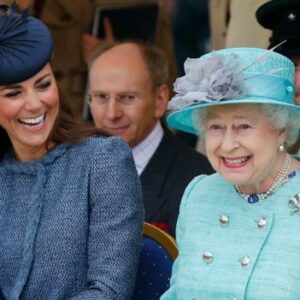
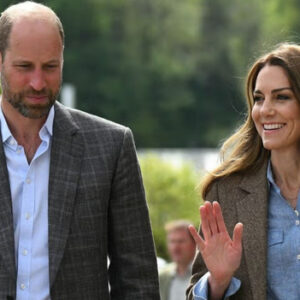
Prince William was reportedly left fuming when his wife Kate Middleton was allegedly asked to change the spelling of her first name after joining the Royal Family, according to claims from royal biographer Christopher Andersen. The seemingly minor request reportedly became a surprisingly personal issue because it involved the name Catherine, which Kate had been given by her parents and has continued to use formally throughout her royal life. Andersen claims that King Charles and Queen Camilla were concerned about the number of royal monograms beginning with the letter C, since both already had cyphers featuring the initial beneath a crown. According to the author’s account, they wondered whether Kate would consider changing the spelling of Catherine to Katherine, thereby giving her a K rather than another C. What might appear to be nothing more than a branding decision reportedly struck a very different chord with William. Andersen claims the Prince of Wales considered the request insulting not only to his wife but also to the Middleton family. The story is particularly striking because Kate is generally portrayed as someone who adapted carefully to royal expectations, rarely creating public confrontation and maintaining a measured relationship with senior family members. Yet behind that calm public image, the account suggests that William has long been willing to defend his wife when he believes she is being treated unfairly. The alleged name dispute therefore offers a fascinating glimpse into the personal tensions that can exist behind the polished image of the modern monarchy.
The reasoning behind the alleged request was reportedly connected to royal branding rather than any dislike of Kate’s name. Charles and Camilla had royal cyphers featuring interlocking Cs beneath a crown, and Andersen says they were concerned that adding another C-based emblem would be excessive. In the highly traditional world of royal insignia, monograms, coats of arms and official symbols carry considerable importance, so the concern may have appeared logical from an institutional perspective. However, changing someone’s formal given name to accommodate a visual branding preference is a very different matter from changing a logo or adjusting a design. Catherine had been Kate’s name long before she became a member of the Royal Family, and the spelling had a direct connection to her identity and family history. The suggestion therefore reportedly crossed a line for William. The irony is that most of the public already knew her primarily as Kate, meaning the proposed switch from Catherine to Katherine would not necessarily have transformed how millions of people referred to her anyway. British royal commentators have since questioned the logic of the alleged idea, with some describing it as trivial or even absurd. Others have suggested that it reflected the monarchy’s extraordinary sensitivity to symbolism and presentation. The incident, if accurately reported, would demonstrate how deeply branding can influence royal thinking, extending beyond crowns and ceremonial objects to something as fundamental as the spelling of a person’s name.
For William, however, the issue reportedly went far beyond a letter on a royal cypher. Andersen portrays him as someone who has consistently been protective of Kate and particularly sensitive to threats involving her dignity, privacy and wellbeing. One of the most frequently cited examples is the 2012 topless photograph scandal, when private photographs of Kate sunbathing during a holiday in France were published by a magazine. William and Kate responded strongly, with legal action eventually resulting in a French court ruling against the publication. Andersen argues that William’s response reflected the seriousness with which he regarded Kate’s privacy and safety. The author also claims that William has attempted to ensure Kate was not overwhelmed by royal duties when doing so would take her away from their children for excessive periods. These examples form part of Andersen’s wider argument that William’s relationship with Kate is not simply a partnership in front of the cameras. Instead, he sees William as someone who has repeatedly acted as a protective figure when he believes his wife is being placed under unnecessary pressure. That interpretation is important when considering the alleged name-change dispute. If William genuinely viewed the request as an attack on something personal rather than a harmless administrative suggestion, his reported anger becomes easier to understand. Nevertheless, these details remain claims made by commentators and biographers rather than a complete public record of private conversations inside the Royal Family.
Kate’s own reported reaction adds another layer to the story. Andersen claims that she was offended by the suggestion but did not hold a lasting grudge against Charles, whom she is described as genuinely fond of. That detail is significant because it portrays Kate as capable of distinguishing between an uncomfortable incident and a broader personal conflict. Rather than allowing an unusual request to permanently damage her relationship with the King, she reportedly accepted that it was something she could move beyond. Andersen suggests that Kate assumed Charles may have been influenced by someone else and did not necessarily regard the incident as evidence of deeper hostility. This interpretation also fits the public image Kate has developed throughout her royal career: cooperative, restrained and rarely publicly confrontational. Yet the story suggests that being cooperative does not mean having no boundaries. Andersen describes Kate as possessing a strong will beneath her calm exterior, arguing that she is secure about her identity and how she wants to be perceived. That combination may help explain why she has been able to adapt to royal life without completely surrendering her individuality. She has accepted titles, traditions and expectations, but her formal name has remained Catherine. The fact that she is still widely known as Kate adds an interesting contrast: she has allowed the public nickname to become part of her identity while retaining the formal name chosen by her parents. The alleged request to change that spelling therefore touched something much more personal than a simple letter.
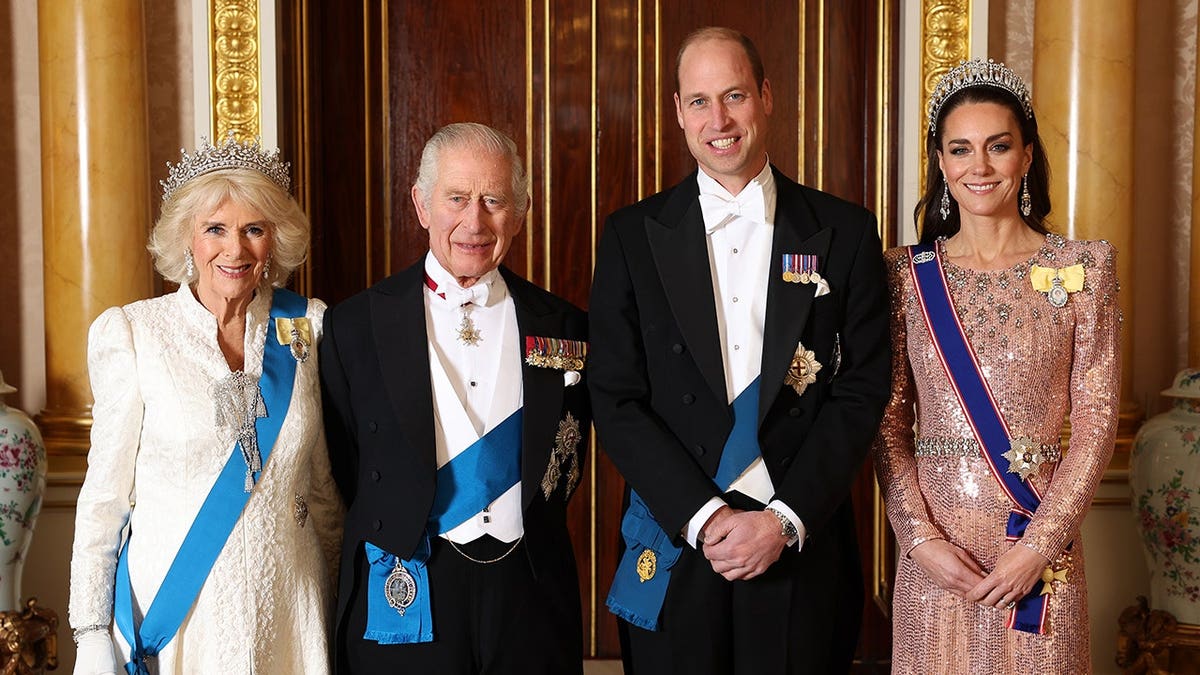
The episode also raises questions about the complicated relationship between Kate and the wider royal institution. Joining the Royal Family means entering an environment where individual identity frequently has to coexist with centuries of tradition, hierarchy and symbolism. New members are expected to adapt, but they also bring their own backgrounds, families and personalities with them. Kate’s situation was particularly notable because she came from a non-aristocratic family and became the future queen through her marriage to William. Over the years, she has built a public role that combines traditional royal duties with issues she appears personally passionate about, particularly early childhood development, mental wellbeing and family life. Her gradual evolution has allowed her to become an important part of the monarchy without appearing to reject its traditions. The alleged name request therefore represents an intriguing example of where institutional expectations might collide with personal identity. From the Palace’s perspective, the proposed change may have seemed like a minor solution to an aesthetic problem. From Kate’s perspective, it could understandably have felt unnecessary. The fact that the issue reportedly became a point of frustration for William shows how seemingly insignificant details can acquire much greater emotional significance within a family operating under constant public scrutiny. The monarchy may be built around ceremony and symbolism, but its members still experience these decisions as people with personal histories and attachments.
There is also an important irony in the fact that the alleged dispute was ultimately about a problem that may never have mattered to the public in the first place. Around the world, millions of people already refer to the Princess of Wales as Kate, regardless of the formal spelling of her name. Her official royal title is Catherine, Princess of Wales, but her nickname has remained deeply established in popular culture. Even royal coverage has sometimes struggled to balance the formal title with the name by which she has been known for decades. That makes the reported concern over having another C-based royal cypher appear particularly small when compared with the much larger pressures facing the monarchy. Royal families must manage succession, public confidence, charity work, international relations and relentless media attention. Yet the alleged dispute shows how much importance can be placed on visual identity within the institution. Christopher Andersen has argued that the story illustrates how conscious senior royals can be of symbols, branding and ceremonial details. Other commentators have been far less impressed, describing the alleged request as unnecessary. Both interpretations can exist simultaneously: the request may have been trivial in practical terms while still revealing something meaningful about how the monarchy thinks about its image. For William, the issue reportedly became personal because it involved his wife. For the institution, it was apparently considered a branding problem. The contrast between those perspectives is what makes the story so intriguing.
Ultimately, the alleged clash over Kate’s name is less important because of the letter C or K than because of what it reveals about the relationship between William, Kate and the Royal Family. According to Andersen, William has consistently viewed himself as someone who must protect Kate when she is placed under unnecessary pressure, while Kate herself has demonstrated that she can adapt to royal life without abandoning her sense of identity. The reported name-change request may have been a small incident, but it became symbolic of a much larger question: how much personal identity should a future queen be expected to surrender in order to fit perfectly into the institution? Kate ultimately continued to be known formally as Catherine, while the world continued calling her Kate. There is no indication that the proposed change ever became a lasting issue between her and Charles, and the family’s later challenges placed the matter firmly into perspective. The monarchy has faced far more consequential disagreements than a royal monogram. Yet the story remains compelling because it presents a different kind of royal drama — one involving family, identity and the limits of institutional control. William’s reported anger suggests that even the smallest decisions can become significant when they touch someone he loves. And as Kate’s role continues to grow, the question may no longer be whether she can fit into the Royal Family, but how much of her own identity she will bring with her as she eventually becomes queen.