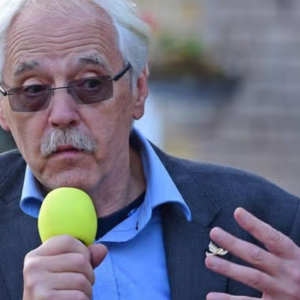
Jamie Carragher has once again raised serious concerns about Liverpool’s midfield structure, insisting that the current system could continue to cause problems unless the team finds a better balance between attack and defence.
The former Liverpool defender was particularly frustrated after the Reds were held to a 2-2 draw by Newcastle United at St James’ Park. Liverpool needed a late penalty to rescue a point, but for long periods of the match they struggled to control the game defensively. Newcastle repeatedly exposed them on the counter-attack, with both of their goals coming after quick transitions that caught Liverpool’s midfield and defence vulnerable.
For Carragher, the problem was not entirely unexpected. He had already expressed concerns about Liverpool’s midfield during pre-season, arguing that too many players were committing themselves forward at the same time. The Newcastle match, in his view, provided further evidence that the issue had not been resolved.
Liverpool started with Florian Wirtz operating in the advanced No. 10 role, while Ryan Gravenberch and Dominik Szoboszlai were positioned behind him. On paper, the setup offered plenty of technical quality, creativity and attacking movement. However, the lack of a natural defensive midfielder once again appeared to leave Liverpool exposed when possession was lost.
That weakness became particularly obvious whenever Newcastle regained the ball. Liverpool’s midfielders often found themselves too far ahead of the play, creating large spaces for Newcastle’s runners to exploit. Rather than being able to immediately slow down attacks, Liverpool were frequently forced to retreat towards their own penalty area.
The first Newcastle goal highlighted the issue. Anthony Elanga gave the home side the lead after just four minutes, taking advantage of Liverpool’s vulnerability in transition. The early goal immediately put the visitors on the back foot and provided Newcastle with confidence to continue attacking at speed.
Carragher reacted almost immediately, criticising the way Liverpool’s midfielders were pushing forward. He argued that the same pattern had repeatedly appeared during pre-season and questioned why the coaching staff had not found a solution before the competitive campaign began.
Liverpool were eventually able to respond, but their defensive problems did not disappear. Newcastle continued to threaten whenever they recovered possession and were able to turn Liverpool’s attacking commitment into opportunities of their own.
The second goal was particularly frustrating from Carragher’s perspective. Yoane Wissa was allowed to carry the ball a considerable distance through the Liverpool team before setting up Joe Willock. The amount of space available to Wissa once again highlighted the lack of protection in front of Liverpool’s defence.
Carragher reacted by repeating his previous criticism. He argued that the midfield configuration was fundamentally unbalanced and maintained that the system could not consistently work if Liverpool continued selecting three midfielders without a specialist defensive presence.
His concerns are rooted in Liverpool’s midfield history under Jurgen Klopp. During the club’s most successful years under the German manager, the midfield often contained players whose roles complemented each other perfectly. Fabinho provided defensive security, Georginio Wijnaldum offered energy and control, while Jordan Henderson combined leadership, work rate and tactical discipline.
That trio gave Liverpool a strong foundation behind their attacking players. Fabinho was particularly important because he could remain in front of the defence, break up opposition attacks and provide cover when Liverpool’s full-backs moved forward.
The current midfield has different characteristics. Gravenberch and Szoboszlai possess significant athleticism and technical ability, while Wirtz offers creativity and attacking intelligence. However, none of them naturally provides the same defensive presence that Fabinho once supplied.
That does not necessarily mean Liverpool cannot succeed with the current players. Modern football allows teams to defend in different ways, and midfielders can compensate for the absence of a traditional holding player through positioning, pressing and collective movement. The problem, according to Carragher, is that Liverpool currently appear to be taking too many risks simultaneously.
When several midfielders advance at once, the team can become vulnerable if possession is lost. The full-backs may already be positioned high up the pitch, while the midfielders are also ahead of the ball. That can leave the centre-backs facing fast attackers with limited protection.
Newcastle demonstrated exactly how dangerous that can be. Rather than trying to dominate possession themselves, the home side were happy to absorb pressure and attack quickly when Liverpool made mistakes. Their direct running caused Liverpool significant problems throughout the match.
The issue is especially relevant for a team with ambitions of competing for major honours. Liverpool are expected to challenge at the top of the Premier League and compete in Europe, meaning they will face opponents capable of exploiting even small tactical weaknesses.
Carragher’s argument is therefore not simply about one disappointing performance. His concern is that the same weakness could become a recurring pattern throughout the season.
Liverpool may dominate possession against many opponents, but possession alone does not guarantee control. A team can have the majority of the ball and still be vulnerable if its midfield is poorly positioned when the ball changes hands.
The Newcastle match provided a clear example. Liverpool had plenty of the ball, but Newcastle were able to create dangerous opportunities through quick transitions. The visitors ultimately had to rely on a late penalty to avoid defeat, which underlined how close they came to leaving St James’ Park without a point.
For Carragher, the solution could involve changing the balance of the midfield. Liverpool may need a player who is more disciplined defensively, capable of staying behind the ball and protecting the centre-backs when the team attacks.
Another possibility would be adjusting the roles of the existing players. Rather than allowing all three midfielders to attack simultaneously, one could remain deeper while the others are given greater freedom. Such an approach could reduce the space available to opposition counter-attacks without sacrificing too much creativity.
The challenge for Liverpool’s coaching staff will be finding the right compromise. The team possesses considerable attacking talent and needs to make the most of it, but attacking numbers cannot come at the expense of defensive stability.
Wirtz, in particular, is likely to be most effective when given freedom to operate in advanced positions. Asking him to constantly perform defensive duties could reduce his influence in the final third. That makes the responsibilities of the two deeper midfielders even more important.
Gravenberch and Szoboszlai will need to understand when to move forward and when to protect the defence. Their ability to read transitions and recover their positions quickly could become crucial as the season progresses.
Liverpool also need to consider how their defensive line interacts with the midfield. If the back four push high while the midfielders are simultaneously advancing, the amount of space behind the first line of pressure can become enormous. Opponents with fast forwards will inevitably look to exploit that space.
Carragher’s criticism may therefore be uncomfortable, but it highlights an issue Liverpool cannot afford to ignore. The team’s attacking quality is obvious, yet the balance between creativity and defensive security remains questionable.
The comparison with Klopp’s successful midfield is particularly revealing. Fabinho, Wijnaldum and Henderson were not identical players, but their roles fitted together. They provided protection, energy, pressing and leadership while allowing Liverpool’s attacking players to flourish.
Liverpool’s current midfield has the potential to become equally effective, but it may require tactical adjustments. The players need a structure that maximises their strengths while reducing the risks associated with their attacking instincts.
The draw at Newcastle should therefore be viewed as a warning rather than simply a disappointing result. Liverpool showed enough attacking quality to fight back and secure a point, but their vulnerability on the counter-attack remains a significant concern.
Carragher’s repeated criticism reflects a broader question surrounding the team: can Liverpool continue playing such an aggressive midfield without a recognised defensive anchor?
If the answer is no, the coaching staff will need to find a solution quickly. Otherwise, stronger opponents may continue to target the same weakness, particularly in high-pressure matches.
Liverpool have plenty of talent and attacking ambition, but Carragher believes that talent alone will not be enough. To challenge consistently at the highest level, the Reds must find the right balance between going forward and protecting themselves when possession is lost. The Newcastle draw provided another clear reminder that their midfield structure could become one of the defining tactical issues of the season.