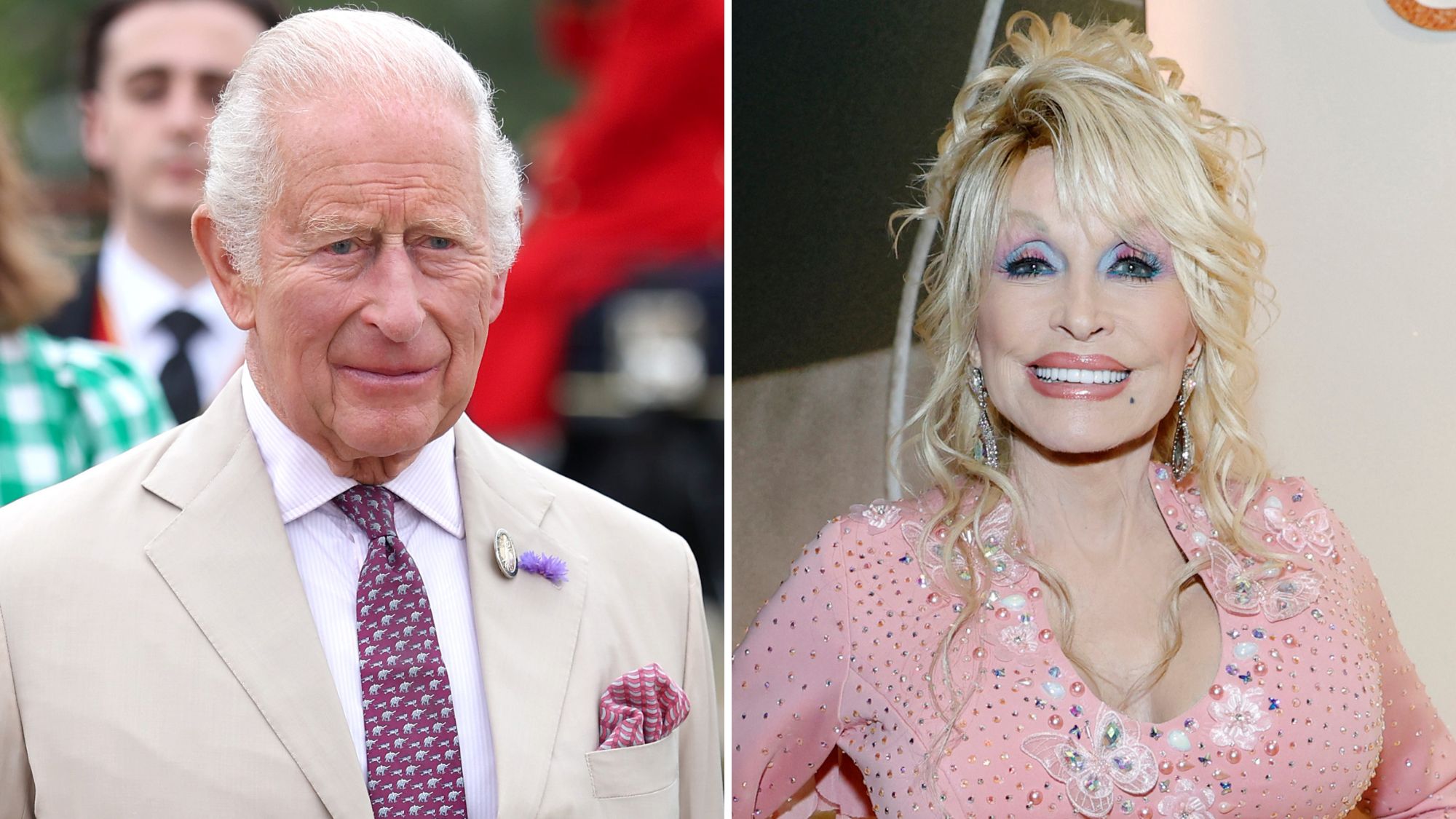
“Royal Soft Power at Its Finest”: King Charles’ Viral Tribute to Dolly Parton Showcases His PR Instinct
.jpg?crop=1080,720,x100,y0&trim=0,100,0,100&width=1200)
King Charles has once again demonstrated the power of a carefully timed royal gesture, following a moving tribute to country music icon Dolly Parton that quickly captured the attention of millions online. The tribute, which came shortly after the legendary singer’s death, combined British royal tradition with one of Parton’s most recognizable songs, creating a memorable moment that resonated far beyond the gates of Buckingham Palace.
Dolly Parton, widely regarded as one of the most influential figures in country music, received a special royal acknowledgment following her passing. Rather than issuing only a conventional statement of condolence, the royal household appeared to mark her legacy through music and ceremony.
Just one day after news of Parton’s death, the Band of the Coldstream Guards incorporated one of her best-known songs into their performance during the Changing of the Guard at Buckingham Palace. The military musicians opened their medley with “9 to 5,” Parton’s iconic 1980 hit, giving the traditional ceremony an unexpected and highly emotional twist.
The choice of song immediately attracted attention. “9 to 5” is not simply one of Parton’s most famous recordings; it is a cultural classic that has remained popular for generations. Its upbeat rhythm, instantly recognizable melody and connection to working life made it a particularly fitting way to celebrate the singer’s extraordinary career.
A video capturing the performance soon began circulating widely online. The footage attracted approximately 12 million views, turning what might otherwise have been a relatively small ceremonial tribute into a major viral moment.
The enormous response demonstrated just how effectively the British royal family can use cultural moments to connect with audiences around the world. Rather than relying exclusively on formal speeches or traditional royal appearances, the tribute allowed the monarchy to participate in a moment of shared public emotion through something familiar and accessible: music.
The performance also highlighted King Charles’ longstanding appreciation for the arts and his interest in popular culture. Throughout his public life, Charles has frequently demonstrated an ability to recognize influential figures from outside the traditional royal sphere. His approach often involves bringing together the formal world of the monarchy with elements of contemporary culture.
In this case, the tribute to Parton was particularly effective because it felt both respectful and light-hearted. The Changing of the Guard is one of Britain’s most recognizable royal traditions, associated with ceremony, discipline and centuries of history. Hearing the Coldstream Guards perform a Dolly Parton classic introduced an unexpected modern element without undermining the dignity of the occasion.
The juxtaposition was precisely what made the moment so shareable.
For many people watching online, the image of uniformed military musicians performing “9 to 5” outside Buckingham Palace was both surprising and entertaining. It offered a fresh perspective on a familiar royal ceremony and provided a fitting celebration of an artist whose music had crossed generations and national borders.
Parton’s influence extended far beyond country music. During a career spanning decades, she became a singer, songwriter, actress, author, entrepreneur and philanthropist. Her distinctive personality and unmistakable voice helped turn her into a global cultural icon.
“9 to 5,” released in 1980, remains one of her signature songs. Written for the film of the same name, the track became an anthem associated with the frustrations and ambitions of working people. Its enduring popularity meant that even audiences who might not consider themselves country music fans were likely to recognize the melody.
That familiarity helped make the royal tribute particularly effective.
The viral response also provides an interesting example of what is often described as royal “soft power.” Unlike traditional political influence, soft power relies on cultural connections, personal relationships, symbolism and public goodwill. For a modern monarchy, moments that feel authentic and relatable can help strengthen its relationship with the public.
The Dolly Parton tribute demonstrated this principle perfectly. There was no lengthy political statement or complicated message. Instead, the monarchy acknowledged a beloved cultural figure through a simple musical performance. The result was an emotional and highly shareable piece of content that reached millions of people.
The timing was equally important. Coming only one day after Parton’s death, the performance gave the impression of an immediate acknowledgment of her passing and her contribution to popular culture. It allowed the royal family to join the wider public in remembering a woman whose career had touched millions.
The tribute also benefited from the unique visual setting. Buckingham Palace is instantly recognizable around the world, and the Changing of the Guard is one of the most famous British ceremonial traditions. Combining those images with Parton’s music created a striking contrast between British royal heritage and American popular culture.
That combination made the video especially suitable for social media.
In an age when royal communication increasingly takes place online, moments such as this can be more powerful than conventional press releases. A carefully chosen musical performance can communicate warmth and personality while generating organic public interest.
The approximately 12 million views suggest that the strategy worked remarkably well.
For King Charles, this represents another example of how the monarchy can remain relevant by engaging with modern culture without abandoning its traditions. The royal family continues to operate within a framework steeped in history, but moments such as the Dolly Parton tribute demonstrate that tradition does not necessarily have to mean being disconnected from contemporary audiences.
The performance also showed the value of allowing members of the royal household to celebrate figures who have achieved global recognition. Parton’s career and personality made her a natural choice for such a tribute. She was not only a hugely successful musician but also an entertainer with a reputation for generosity, warmth and humor.
Those qualities made the tribute feel particularly appropriate.
For fans of Dolly Parton, the performance provided an unexpected way to remember her. For royal watchers, it offered another glimpse into the evolving communications strategy of the monarchy. And for casual viewers, it was simply an entertaining and touching moment that transformed a traditional ceremony into something they wanted to share.
Ultimately, the tribute illustrates why royal public relations can be most effective when it feels spontaneous, human and culturally relevant. The monarchy possesses an extraordinary platform, but the challenge lies in using that platform in ways that resonate with modern audiences.
In this instance, the formula was remarkably simple: a beloved global star, one of her most famous songs, a historic royal setting and a perfectly timed performance.
The result was a tribute that reached millions of viewers while honoring Dolly Parton in a uniquely British way.
It was, in many respects, royal soft power at its most effective. Rather than simply acknowledging Parton’s passing through formal words, King Charles’ household allowed music to deliver the message. The decision transformed a traditional Buckingham Palace ceremony into a viral celebration of a cultural legend.
And with around 12 million people watching the performance online, it is difficult to argue with the impact. The moment showed that even one of the world’s oldest royal traditions can find new life through popular culture—and that, when used thoughtfully, the monarchy’s ability to connect with audiences remains remarkably powerful.