Dani Olmo Rejects Roberto Ayala’s Apology After World Cup Final Clash: “He Is Not Being Honest”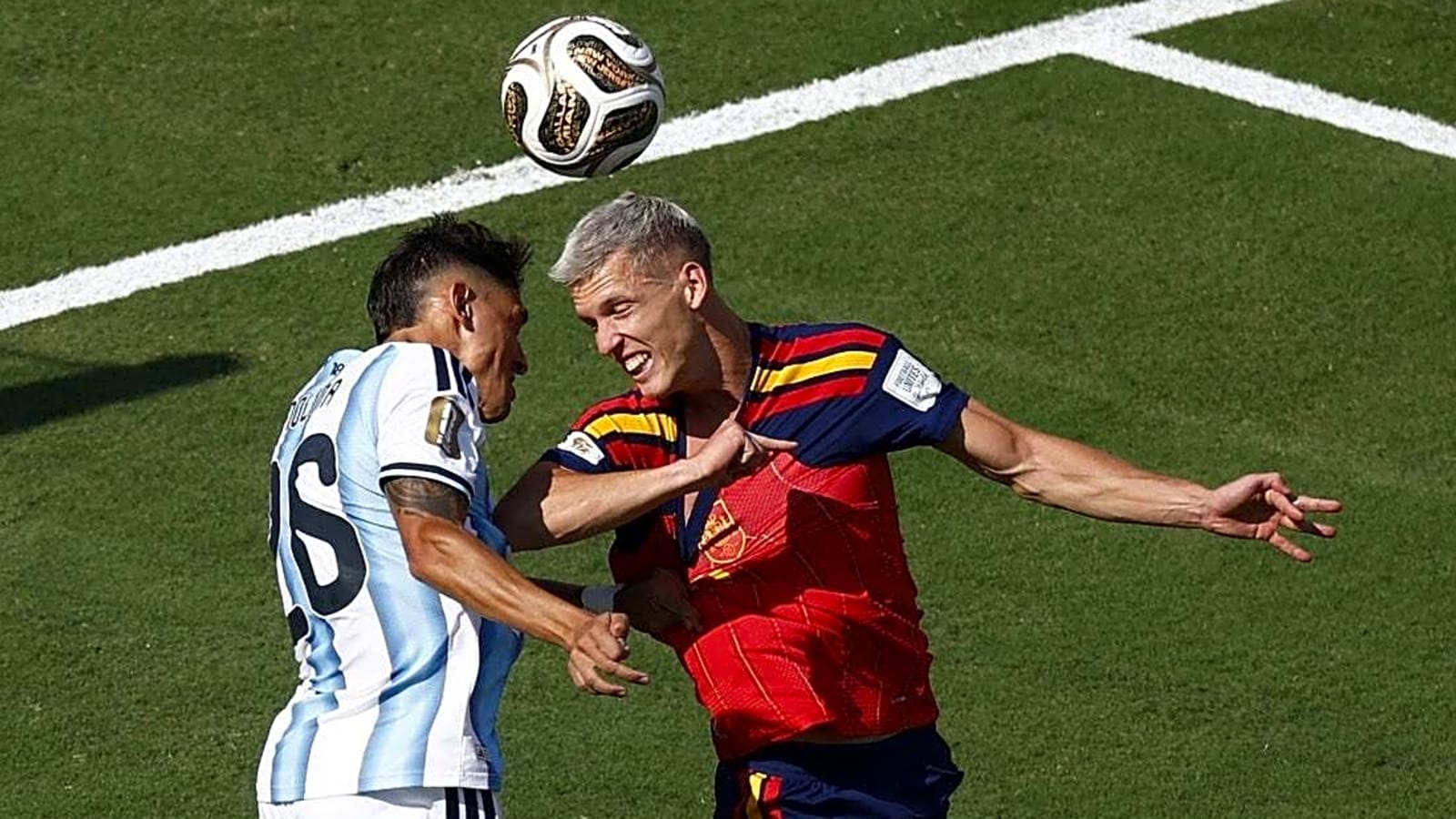
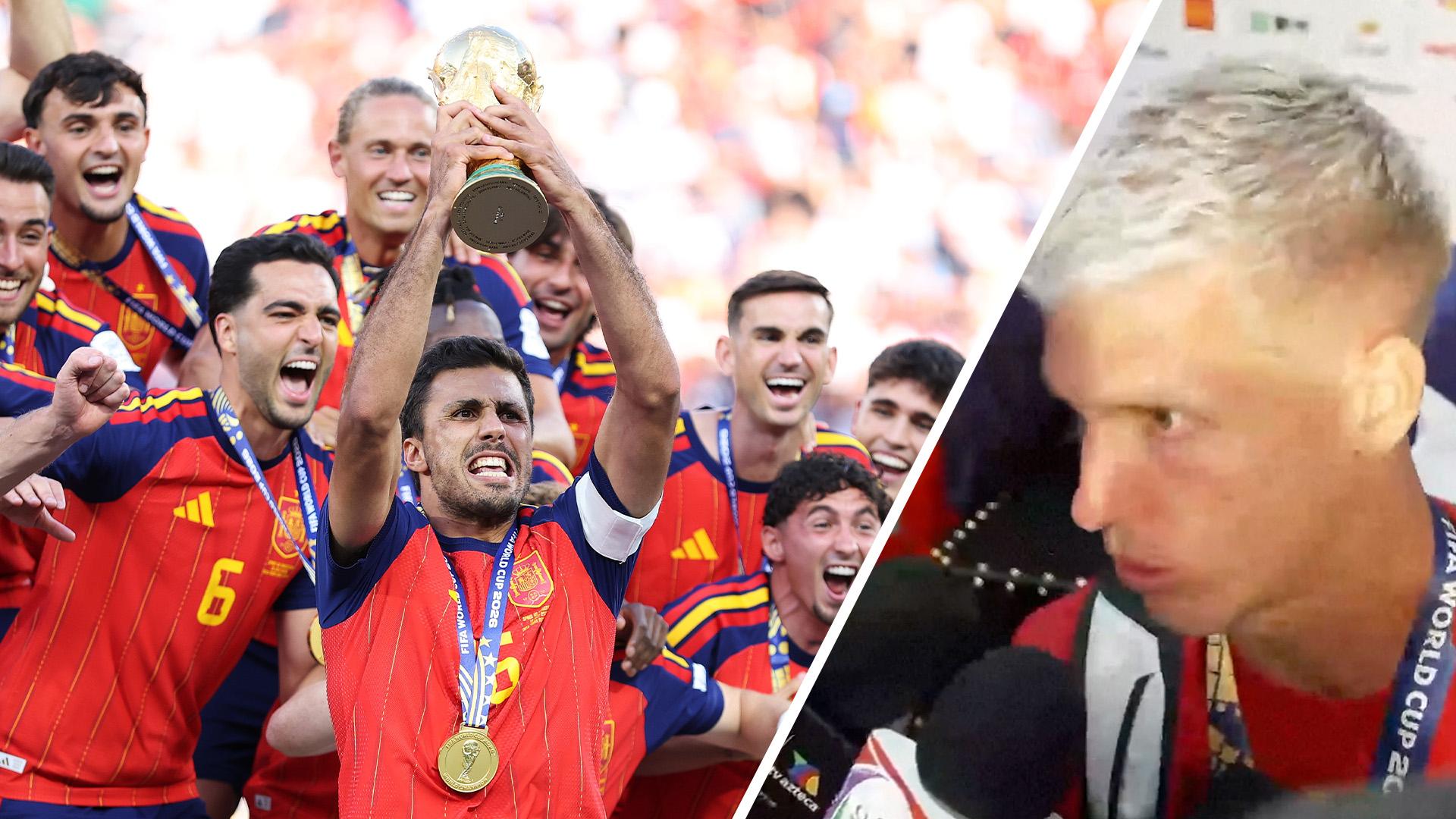
Spain midfielder Dani Olmo has rejected the apology offered by Argentina assistant coach Roberto Ayala following their heated confrontation after Spain’s World Cup final victory, accusing the former Argentina defender of failing to take full responsibility for his actions.
The incident occurred immediately after Spain defeated Argentina in the World Cup final, with tensions rising during the post-match celebrations. Television footage appeared to show Ayala making physical contact with Olmo by raising his hands toward the Barcelona midfielder’s neck area during a heated exchange between the two.
Ayala later addressed the incident publicly and apologized, but he also suggested that his reaction was triggered by something Olmo had said during the confrontation. That explanation did not satisfy Olmo, who argued that an apology cannot be considered genuine if it is accompanied by a justification for physical behavior.
Speaking to Catalan newspaper Diari de Terrassa, Olmo strongly criticized Ayala’s explanation and insisted that he had not provoked the situation.
“Someone who apologizes but then tries to justify a punch by saying it was a reaction to a comment is clearly not truly sorry, because he is not telling the truth,” Olmo said.
The Spain midfielder added that he had not said anything offensive to Ayala and therefore believed the Argentine coach’s explanation was unnecessary.
“I didn’t say anything to him, so there was no reason for him to react that way,” Olmo stated.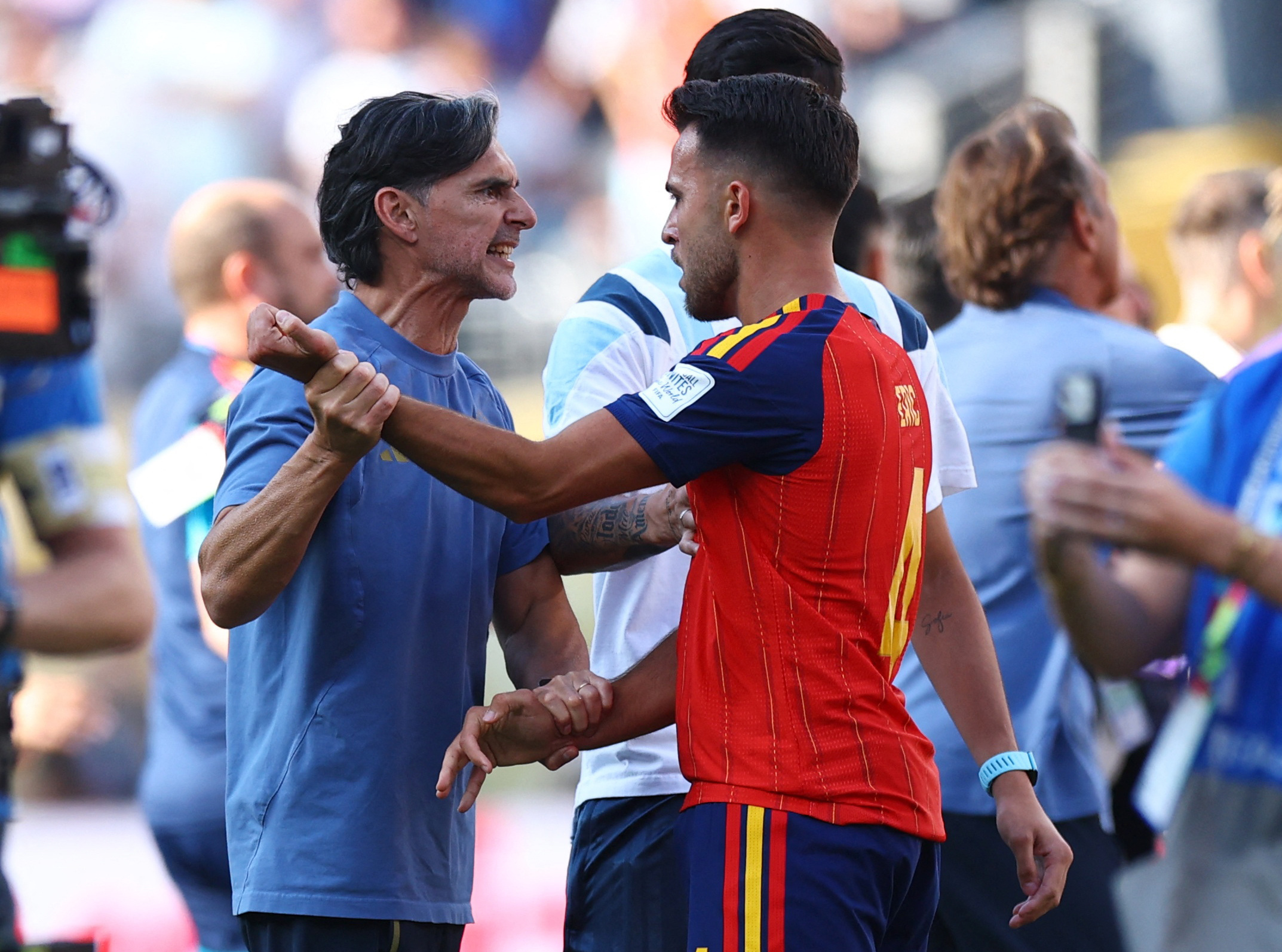
Olmo emphasized that the important issue was not simply making mistakes, but how people respond after those mistakes happen. He argued that genuine accountability requires honesty, humility, and the willingness to accept responsibility without excuses.
“What really defines us is not the mistake itself, but the courage to recognize it with humility, honesty, and dignity,” he explained.
The Spanish midfielder also highlighted the wider responsibility that comes with being a professional footballer. He said that players are role models for younger generations and that their behavior, especially during major international events, can influence millions of fans.
Olmo explained that when his children, family members, and supporters look back at the final, he wants them to remember not only Spain’s victory but also the way the team conducted itself.
“When my children, my family, and all the fans watch the match, I want them to feel proud of how we competed, how we won, and above all, how we behaved,” he said.
He added that footballers have a responsibility because children around the world watch their actions and often see them as examples to follow.
Olmo’s comments came after Ayala attempted to clarify the situation in an interview with Valencia Capital Radio.
The Argentina assistant coach expressed regret over the confrontation but disputed claims that he had punched Olmo. Ayala argued that the incident was more of a physical reaction or push rather than an intentional act of violence.
“Of course I am sorry,” Ayala said. “Given my position, I cannot allow emotions or whatever I receive from another person to influence my actions.”
The former Argentina international acknowledged that he should have controlled his reaction better, particularly because of his role as part of the coaching staff.
However, Ayala maintained that the incident had been exaggerated by some reports.
“We need to draw a line under it and move forward,” he explained. “It was more of a push than anything else. It wasn’t a punch as people are making it appear.”
Ayala also claimed that his reaction came after something Olmo said during the exchange, although he did not provide further details about the alleged comment.
“It was a reaction to something he said, but that’s all,” Ayala stated. “If I see him, I will obviously apologize to him personally.”
Despite Ayala’s attempt to explain the situation, Olmo remained unconvinced and continued to criticize the response.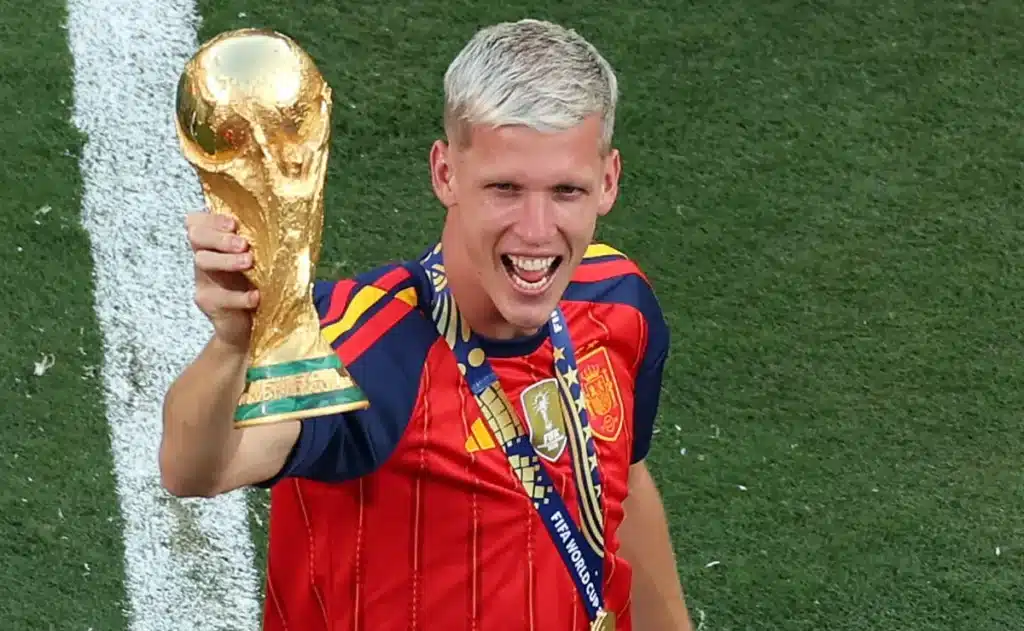
The confrontation became part of a larger debate surrounding Argentina’s behavior after the World Cup final. While the team’s sporting achievements were widely recognized, several incidents during and after the match attracted criticism.
Following Spain’s victory on July 19, some Argentina players and members of the coaching staff became involved in heated exchanges with their opponents. Midfielder Leandro Paredes was among those involved in physical confrontations with Spain players during the chaotic scenes after the final whistle.
The incidents led to widespread discussion about sportsmanship and the responsibilities of elite athletes during moments of intense emotion.
Critics argued that Argentina’s reactions failed to reflect the respect expected after such an important match, while supporters of the team suggested that emotions were understandable following the disappointment of losing a World Cup final.
For Olmo, however, the issue was not about the result but about behavior. Having helped Spain achieve major international success, the midfielder believes that winning should also involve maintaining discipline and respect.
The 2026 tournament marked another historic achievement for Olmo, who has now collected three major international honors with Spain: the World Cup, European Championship, and Nations League title.
His performances have established him as one of Spain’s key players, and his comments after the final demonstrated his belief that footballers must be accountable both on and off the field.
The controversy surrounding Ayala’s apology highlights a broader conversation in football about emotional control, responsibility, and the image players and coaches present to the public.
High-pressure matches often produce intense emotions, especially in finals where years of preparation and national pride are involved. However, players and officials are still expected to maintain professionalism regardless of the circumstances.
As the debate continues, Olmo’s message remains focused on the importance of integrity. He believes that acknowledging mistakes honestly is more valuable than attempting to explain them away.
For Spain, the World Cup victory will be remembered as a moment of sporting achievement. For Argentina, the defeat has been accompanied by questions about conduct and discipline.
Ultimately, the incident between Olmo and Ayala has become a reminder that football is judged not only by results but also by the manner in which those results are achieved.